


Thermoset plastic polymers possess unique qualities of high durability, temperature tolerance, and structural strength, which makes them essential in the automotive, electronics, and construction sectors. In contrast to thermoplastics, thermosets undergo a chemical curing process which increases rigidity and forms a cross-linked structure, ensuring a stable product. This guide focuses on thermoset plastic extrusion, covering the thermoset plastic extrusion process, equipment, types of materials, and post-extrusion finishing processes. It also discusses production optimization, application exploration, and thermoset manufacturing efficiency and quality.
Introduction to Thermoset Plastic Extrusion
What is Thermoset Plastic?
Thermoset plastics are polymers that cannot be remelted or reshaped after curing. Unlike thermoplastics which can be easily softened multiple times and reshaped, thermosets undergo a chemical reaction during curing that cross-links the polymer chains. This reaction makes thermosets very durable and heat resistant, which is advantageous for long-term stability. They are used for power electrical insulation, automotive components and parts for industrial machinery.
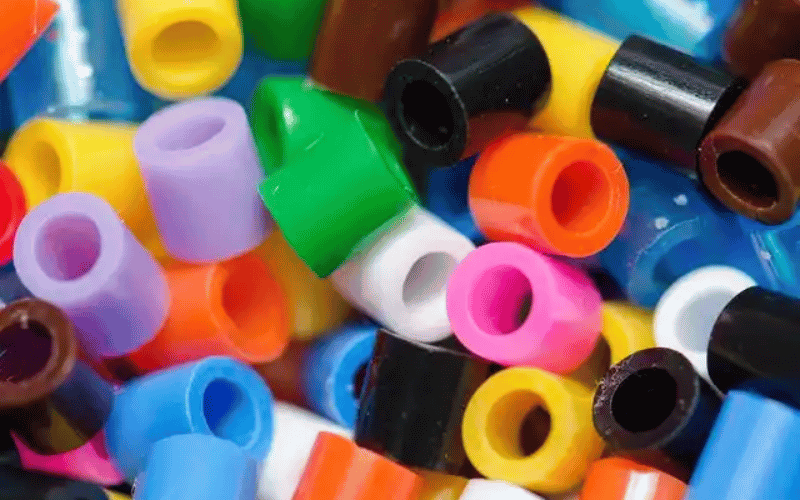
Overview of Plastic Extrusion Process
Plastic extrusion is a subprocess in manufacturing where raw materials are shaped into a continuous and consistent shape of products such as rods, sheets or tubes. In the case of thermoset plastics, the raw plastic is placed in an extruder where it is heated and mixed, this is called feeding. Thermosets are different from thermoplastics as they are partially cured during the extrusion process to take the desired shape and cured fully in a secondary process. This secondary process can be heating or chemical treatment.
Key steps in the extrusion process include:
- Material Feeding: Thermoset compounds are fed into the extruder through a hopper.
- Mixing and Heating: The material is mixed and heated to a specific temperature to initiate partial curing.
- Shaping Through the Die: The semi-cured material is forced through a die to create the desired profile.
- Post-Extrusion Curing: The extruded product undergoes additional curing to achieve its final properties.
Importance of Extrusion Lines in Production
Extrusion lines play a critical role in the production of thermoset plastics, ensuring efficiency, consistency, and scalability. Each component of the extrusion line is designed to handle the unique properties of thermoset materials, such as their curing behavior and heat resistance. Key benefits of well-designed extrusion lines include:
- Precision: Advanced dies and control systems ensure accurate shaping and dimensional consistency.
- Scalability: Extrusion lines can produce large volumes of thermoset products, meeting industrial demands.
- Customization: Modular designs allow manufacturers to adapt extrusion lines for specific applications, such as producing complex profiles or incorporating reinforcements.
- Quality Control: Integrated monitoring systems help maintain consistent processing conditions, reducing defects and waste.
Components of a Thermoset Plastic Extrusion Line
Extruder Machine: Function and Types
The foremost and most crucial part of a thermoset plastic extrusion line is the thermoset extrusion machine. It integrates the functions of mixing, heating, and partial curing of thermoset plastic before shaping it through a die. It also maintains steady material delivery, smooth flow, and control over the working thermoset plastic conditions which is vital thermoset plastics due to their curing nature.
For thermoset processing, there are two principal types of extruders:
- Single-Screw Extruders: This type is easier to construct and is appropriate for basic uses with low blending requirements.
- Twin-Screw Extruders: This type has more blending capability and works best with sophisticated mixtures where uniform distribution of all fillers is needed or in blends containing a higher concentration of additives.
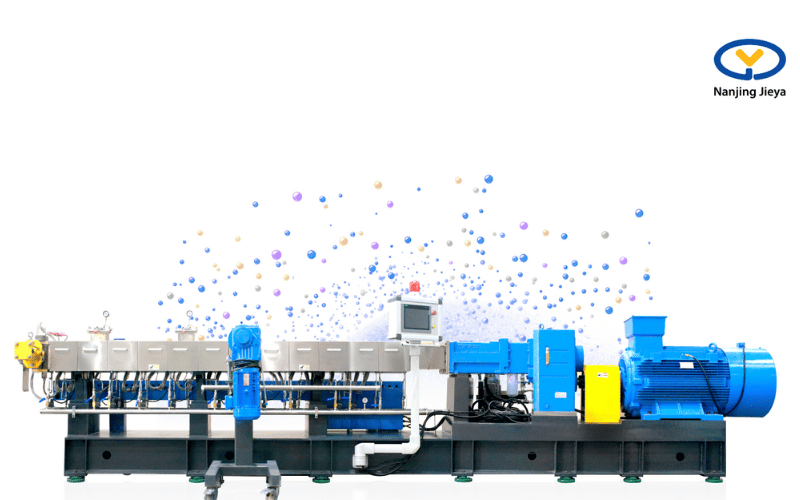
Twin-Screw Extruder vs. Single-Screw Extruder
When comparing twin-screw and single-screw extruders for thermoset processing, each has its advantages depending on the application:
- Mixing Efficiency: Twin-screw extruders excel in mixing and dispersing additives, making them ideal for thermoset compounds with complex formulations. Single-screw extruders are less effective in this regard.
- Material Versatility: Twin-screw extruders can handle a wider range of materials, including those with high viscosities or fillers. Single-screw extruders are better suited for simpler materials.
- Process Control: Twin-screw extruders offer more precise control over temperature and pressure, ensuring consistent quality. Single-screw extruders are less sophisticated but easier to operate and maintain.
- Cost: Single-screw extruders are more cost-effective for basic applications, while twin-screw extruders are an investment for advanced processing needs.
Role of the Screw in Thermoset Processing
The screw is a critical component in thermoset plastic extrusion, as it determines how the material is conveyed, mixed, and heated. Its design directly impacts the quality and efficiency of the process. Key roles of the screw include:
- Material Conveyance: The screw transports the thermoset material from the hopper to the die, ensuring a steady flow.
- Mixing and Dispersion: The screw’s geometry, such as its flights and kneading elements, ensures thorough mixing of additives and fillers.
- Heat Transfer: The screw helps distribute heat evenly, which is essential for initiating the partial curing of thermoset plastics.
- Pressure Build-Up: The screw generates the necessary pressure to push the material through the die, shaping it into the desired profile.
Customizing the screw design for specific thermoset formulations can significantly enhance processing efficiency and product quality.
Types of Thermosetting Plastics
Common Types of Thermosetting Polymers
Thermosetting plastics are a diverse group of materials that harden permanently after curing. Some of the most common types include:
- Epoxy Resins: Known for their excellent adhesive properties and chemical resistance, epoxy resins are widely used in coatings, adhesives, and composite materials.
- Phenolic Resins: These are heat-resistant and durable, making them ideal for electrical insulators, kitchenware, and automotive components.
- Polyester Resins: Commonly used in fiberglass-reinforced plastics, polyester resins offer good mechanical strength and resistance to corrosion.
- Melamine Formaldehyde: This polymer is used in laminates, tableware, and flame-retardant materials due to its hardness and heat resistance.
- Urea Formaldehyde: Often used in adhesives, finishes, and molded objects, this material is valued for its high tensile strength and low cost.
- Silicone: Known for its flexibility and thermal stability, silicone is used in sealants, medical devices, and cookware.
Application Areas of Thermosetting Plastics
Thermosetting plastics are used across a wide range of industries due to their durability, heat resistance, and structural integrity. Key application areas include:
- Automotive: Components like brake pads, gaskets, and under-the-hood parts benefit from the heat resistance and strength of thermosets.
- Electronics: Thermosetting plastics are used in circuit boards, connectors, and insulators due to their excellent electrical insulation properties.
- Construction: Materials like laminates, adhesives, and coatings provide durability and weather resistance in building applications.
- Aerospace: Lightweight and high-strength thermosets are used in composite materials for aircraft components.
- Consumer Goods: Products like kitchenware, furniture, and decorative laminates rely on thermosets for their durability and aesthetic appeal.
Comparison with Other Types of Plastic
Thermosetting plastics differ significantly from thermoplastics and elastomers in terms of properties and applications:
- Curing Behavior: Thermosets harden permanently after curing, while thermoplastics can be remelted and reshaped. Elastomers, on the other hand, are flexible and rubber-like.
- Heat Resistance: Thermosets excel in high-temperature environments, whereas thermoplastics may soften under heat.
- Durability: Thermosets offer superior mechanical strength and chemical resistance compared to thermoplastics.
- Recyclability: Unlike thermoplastics, thermosets cannot be remelted or recycled, which can be a limitation in sustainability-focused applications.
- Applications: Thermosets are preferred for structural and high-performance uses, while thermoplastics are more common in everyday consumer products.
Production Process in Thermoset Plastic Extrusion
Feeding and Compounding Materials
The manufacturing process starts from feeding and compounding materials. Thermoset compounds are received in the form of powders of granules and are fed to the extruder via hopper. Additives such as fillers, stabilizers, and colorants are dosed and blended to achieve the target thermoset compound. In addition, these materials are mixed and partially cured within the extruder to precision temperature and pressure. This process compounding is crucial in thermoset plastics because it guarantees the material homogeneity and material property consistency within the batch.
Co-rotating Twin-Screw Extruder Advantages
Co-rotating twin-screw extruders are widely used in thermoset plastic extrusion due to their superior performance. Key advantages include:
- Enhanced Mixing: The intermeshing screws provide thorough mixing, ensuring even distribution of additives and fillers.
- Process Flexibility: These extruders can handle a wide range of thermoset formulations, including those with high viscosities or complex compositions.
- Precise Control: Advanced temperature and pressure controls allow for consistent processing, reducing the risk of material degradation.
- High Throughput: Co-rotating twin-screw extruders achieve faster production rates, making them ideal for large-scale manufacturing.
Cooling and Forming of Plastic Profiles
After the material exits the extruder, it is shaped into the desired profile using a die. The semi-cured thermoset plastic then undergoes cooling to solidify its shape. Common cooling methods include:
- Water Baths: The extruded profile is passed through a water bath to quickly reduce its temperature and prevent deformation.
- Air Cooling: For profiles that require slower cooling, air systems are used to maintain dimensional stability.
Once cooled, the profiles are fully cured in a secondary process, such as heating in an oven or chemical treatment. This final curing step ensures the thermoset plastic achieves its full mechanical strength and heat resistance.
Coating and Finishing Techniques
Powder Coating Applications
An example of a finishing procedure for thermosets is powder coating, which is sought after for its beauty and resilience. In this procedure, a dry powder is electrostatically applied to the surface and cured under heat. During curing, the powder melts to a liquid and smooth uniform layer is formed. Long term powder coating is perfect for items that will undergo physical, chemical, or UV radiation stress; common uses include, but are not limited to:
- Automobile accessories: Used to augment the sleek look and durability of bumpers and trim pieces.
- Appliances: Used to shield the external parts of refrigerators, washing machines and other household equipment.
- Industrial equipment: Used to coat machinery and tools made of metal that is regularly subjected to harsh environments to add a protective coating.
Importance of Coating in Final Products
Coating plays a critical role in enhancing the performance and appearance of thermoset plastic products. It provides several key benefits:
- Protection: Coatings shield the product from environmental factors like moisture, chemicals, and UV rays, extending its lifespan.
- Aesthetics: A well-applied coating improves the visual appeal of the product, making it more attractive to consumers.
- Functionality: Specialized coatings, such as anti-slip or conductive finishes, add functional properties to the product.
- Ease of Maintenance: Coated surfaces are easier to clean and maintain, reducing long-term upkeep costs.
Masterbatch Usage in Thermoset Extrusion
Masterbatch is a concentrated mixture of additives, pigments, or fillers used to enhance the properties of thermoset plastics during extrusion. It simplifies the production process by allowing manufacturers to introduce these components in a controlled and consistent manner. Key applications of masterbatch in thermoset extrusion include:
- Color Masterbatch: Adding vibrant, uniform colors to the final product without affecting its mechanical properties.
- Additive Masterbatch: Enhancing specific characteristics, such as flame retardancy, UV resistance, or thermal stability.
- Filler Masterbatch: Reducing production costs by incorporating fillers like calcium carbonate or talc while maintaining product quality.
Using masterbatch ensures uniform dispersion of additives, improves processing efficiency, and allows for greater customization of thermoset plastic products.
Challenges and Solutions in Thermoset Extrusion
Common Issues in Extrusion Lines
Thermoset extrusion lines often face several challenges that can impact production efficiency and product quality. Some of the most common issues include:
- Material Inconsistencies: Variations in raw material quality can lead to uneven mixing or poor dispersion of additives, affecting the final product’s performance.
- Overheating: Excessive heat during extrusion can cause premature curing, leading to defects like brittleness or dimensional inaccuracies.
- Equipment Wear: The high shear forces in extrusion lines can cause wear and tear on screws, barrels, and dies, reducing their lifespan and efficiency.
- Die Swell: Thermoset materials can expand slightly after exiting the die, resulting in dimensional inconsistencies in the extruded profiles.
- Process Downtime: Frequent maintenance or adjustments to address these issues can lead to costly production delays.
Innovative Solutions for Improved Efficiency
To overcome these challenges, manufacturers are adopting innovative solutions that enhance the efficiency and reliability of thermoset extrusion lines:
- Advanced Material Testing: Regular testing of raw materials ensures consistent quality, reducing the risk of defects during processing.
- Optimized Screw Design: Customizing screw geometry for specific thermoset formulations improves mixing and minimizes overheating.
- Temperature Control Systems: Modern extrusion lines feature precise temperature controls to prevent premature curing and maintain consistent processing conditions.
- Wear-Resistant Components: Using durable materials for screws, barrels, and dies extends equipment lifespan and reduces maintenance costs.
- Real-Time Monitoring: Sensors and AI-driven systems provide real-time data on process parameters, enabling quick adjustments to maintain product quality and minimize downtime.
Future Trends in Thermoset Plastic Extrusion
The future of thermoset plastic extrusion is focused on sustainability, automation, and advanced material science. Emerging trends include:
- Recyclable Thermosets: Innovations in material chemistry are paving the way for thermosets that can be recycled, addressing environmental concerns.
- Smart Extrusion Systems: AI and IoT-enabled extrusion lines are becoming more common, offering predictive maintenance, real-time monitoring, and process optimization.
- Energy-Efficient Designs: Manufacturers are developing extrusion lines with lower energy consumption, reducing operational costs and environmental impact.
- Hybrid Extrusion Technologies: Combining traditional extrusion with advanced techniques like 3D printing is opening up new possibilities for creating complex, customized thermoset products.
- Sustainable Additives: The use of bio-based or eco-friendly additives is gaining traction, aligning with global sustainability goals.
Frequently Asked Questions
Q: What is a thermoset plastic extrusion line?
A: A thermoset plastic extrusion line is a specialized production system designed to process thermosetting plastics. Unlike thermoplastics, thermosets cannot be remelted or reshaped once cured. The extrusion line includes components like an extruder, screw, and barrel, which work together to transform raw materials into continuous plastic profiles.
Q: How does the plastic extrusion process work?
A: The plastic extrusion process begins with feeding raw thermoset materials into an extruder, where they are heated and mixed. The molten material is then forced through a die to form the desired shape. Precise temperature control is essential to ensure proper curing and maintain the material’s mechanical properties.
Q: What are the advantages of using a twin screw extruder for thermosetting plastics?
A: Twin screw extruders provide superior mixing capabilities, ensuring uniform distribution of additives like masterbatch and colorants. Their co-rotating design enhances the compounding process, making them ideal for thermosetting plastics. They also offer better control over temperature and material flow, resulting in high-quality products.
Q: What types of materials can be extruded using a thermoset plastic extrusion line?
A: Thermoset plastic extrusion lines can process materials like epoxy, phenolic, and polyester resins. These materials are commonly used in applications requiring high heat resistance, wear resistance, and chemical resistance, such as automotive components, electrical insulators, and construction materials.
Q: What is the difference between single screw and twin screw extruders?
A: Single screw extruders are simpler and typically used for thermoplastics, while twin screw extruders excel in mixing and are better suited for thermosetting plastics. Twin screw extruders provide better control over temperature and material dispersion, making them ideal for complex formulations.
Q: How do you achieve precise temperature control in the extrusion line?
A: Precise temperature control is achieved through advanced heating and cooling systems integrated into the extruder. These systems monitor and regulate the temperature of the screw and barrel, ensuring the material reaches the optimal curing temperature without overheating or degrading.
Q: Can thermoset plastics be used in injection molding?
A: Yes, thermoset plastics can be used in injection molding. Unlike thermoplastics, thermosets cure within the mold when heated to a specific temperature, forming a solid product that cannot be reshaped. This makes them ideal for applications requiring durability and heat resistance.
Q: What role does a kneader play in thermoset plastic processing?
A: A kneader is used to pre-mix thermosetting compounds before extrusion. It thoroughly blends materials like resin and fillers, ensuring a homogeneous mixture. This pre-mixing step is critical for achieving consistent quality and performance in the final extruded product.
Conclusion
Thermoset plastic extrusion is a precise and innovative material science process that results in the production of high performance and durable products. Reliability and consistency in quality for a variety of industries is possible through the use advanced extrusion lines, advanced coating techniques, and finishing processes. Emerging trends such as recyclable thermosets, smart extrusion systems, and sustainable additives, however, promise to increase efficiency and revolution the space thermosets occupy. With these changes, manufacturers maintain an edge in a competitive market while forgoing the passive approach of ignoring environmental practices.


 English
  Portuguese
  Spanish
  Korean
  Russian
  German