


Plastic compounding plays a pivotal role in modern manufacturing, yet many people find the concept intimidating or overly technical. Plastic compounding is the process of mixing polymers with additives, fillers, or reinforcements. This creates materials with special properties.
This process changes raw polymers into high-performance materials. These materials are used in car parts, medical devices, and electronics.
Industries need plastic compounding. Without it, they would struggle to meet the growing demand. This demand is for materials that are stronger, lighter, and more sustainable.
Think of plastic compounding as tailoring a suit. Just like a tailor changes fabric and design for a client, compounding engineers adjust polymer mixtures. They do this to get the right strength, flexibility, color, or heat resistance.
For example, adding glass fibers to a polymer can make it stronger for building uses. Also, using UV stabilizers can help outdoor products resist sun damage. These adjustments allow manufacturers to create materials that perform reliably in specific environments and applications.
I understand that the technical jargon surrounding plastic compounding can feel overwhelming, especially for those new to the topic. My goal is to simplify this complex process and make it accessible to readers of all backgrounds.
This guide is for everyone. It will explain the basics of plastic compounding. Whether you are experienced or new to polymers, you will find it clear and simple. By the end, you will understand how this process changes the materials that power our modern world.
What is Plastic Compounding?
Plastic compounding is the backbone of modern material innovation, allowing manufacturers to transform basic polymers into high-performance materials tailored for specific applications. By mixing polymers with specific additives, fillers, and reinforcements, we create materials. Industries such as automotive, electronics, and packaging use these materials. Let’s break it down further to understand its definition and why it’s indispensable.
Definition: The Process of Mixing Polymers with Additives
Plastic compounding is the skill of mixing base polymers with different ingredients. This process improves or changes their properties.
This process usually happens in a twin-screw extruder. The screws mix, melt, and blend the components under careful conditions. The goal is to create a uniform compound with consistent quality and performance.
For example, if you make materials for car parts, you might add glass fibers. This can help improve strength and rigidity. For food packaging, you could incorporate barrier additives to prevent oxygen or moisture from penetrating the material.
Each additive serves a specific purpose, whether it’s improving mechanical properties, enhancing thermal stability, or adding color. The key is to choose the right mix of ingredients. Then, process them in the best conditions to get the results you want.
Why It’s Essential: Tailored Solutions for Specific Applications
Plastic compounding is essential because it enables manufacturers to create materials that meet the unique requirements of their applications. Off-the-shelf polymers often lack the specialized properties needed for demanding environments, but compounding bridges that gap. By tailoring the material’s properties, manufacturers can ensure their products perform reliably and efficiently.
Take the automotive industry, for instance. Manufacturers use compounded materials to produce lightweight yet durable components, reducing vehicle weight and improving fuel efficiency. In electronics, flame-retardant compounds ensure safety and compliance with regulatory standards. Packaging materials benefit from additives that enhance clarity, flexibility, or recyclability, meeting both functional and environmental goals.
Without plastic compounding, industries would struggle to innovate and meet the growing demand for customized, high-performance materials. This process improves product performance and leads to sustainable solutions. These include biodegradable plastics and materials made from recycled content.
By understanding compounding, manufacturers can fully use polymers. This helps them create solutions that meet modern needs.
Key Components of Plastic Compounding
Plastic compounding is a carefully orchestrated process that relies on the interplay of materials, additives, and equipment. Each part has a specific role in creating the final product. Knowing these elements is important for getting the right performance and quality. Let’s break down the key components that make plastic compounding possible.
Base Materials: Common Polymers
The foundation of any compounded material lies in its base polymer. Commonly used polymers include polyethylene (PE), polypropylene (PP), and polyvinyl chloride (PVC), each offering unique properties suited to specific applications. For instance:
- Polyethylene (PE): Known for its flexibility and chemical resistance, PE is widely used in packaging, pipes, and consumer goods. High-density polyethylene (HDPE) is great for strong uses. Low-density polyethylene (LDPE) is better for films and flexible items.
- People know polypropylene (PP) for its strength, light weight, and heat resistance. It is a popular choice for car parts, fabrics, and food containers.
- Polyvinyl Chloride (PVC): With its excellent durability and versatility, PVC is commonly used in construction materials, medical devices, and electrical insulation.
Choosing the right base polymer is the first step in compounding. It affects the material’s main features and how well it works with additives.
Additives: Grouped by Purpose
Additives are the secret ingredients that transform base polymers into high-performance materials. These are grouped based on their purpose:
- Performance Enhancers: These additives improve the material’s functional properties. For example:
- Stabilizers protect the polymer from degradation caused by heat or UV exposure, ensuring long-term durability.
- Flame Retardants reduce flammability, making the material safer for applications in electronics or construction.
- Impact Modifiers enhance toughness, especially in brittle polymers like PVC.
- Aesthetic Modifiers: These additives focus on the material’s appearance. For instance:
- Colorants and Pigments provide vibrant, consistent colors for consumer products.
- Gloss Enhancers improve surface finish, giving the material a polished look.
- Cost Optimizers: These additives reduce production costs without compromising quality. Examples include:
- Fillers like talc, calcium carbonate, or glass fibers increase bulk and improve mechanical properties.
- Recycled Content to lower material costs and support sustainability goals.
The choice and amount of additives depend on the specific needs of the application. Even small changes can greatly affect the final product.
Equipment: Simplified Explanation of Extruders and Pelletizers
The equipment used in plastic compounding serves as the engine that drives the process. Twin-screw extruders are the main part of the operation. They mix, melt, and blend the base polymer and additives. The screws, configured with elements like kneading blocks and conveying sections, ensure thorough mixing and consistent material flow.
Once the compound exits the extruder, pelletizers take over to shape the material into uniform pellets. These pellets are easier to handle, transport, and use in downstream manufacturing processes like injection molding or film extrusion. Depending on the application, you might use strand pelletizers, underwater pelletizers, or air-cooled systems, each offering unique advantages for specific materials.
By understanding the role of base materials, additives, and equipment, you can approach plastic compounding with confidence and precision. Each component contributes to the process, ensuring the final material meets the exacting demands of modern applications.

The Plastic Compounding Process
Plastic compounding is a methodical process that transforms raw polymers into high-performance materials tailored for specific applications. Each step in the process builds on the last, ensuring the final product meets precise quality and performance standards. Let’s walk through the process step by step, breaking down the key actions and decisions that drive successful compounding.

Selecting and Testing Raw Materials
The process begins with selecting the right raw materials, including the base polymer and additives. This step is critical because the quality and compatibility of these materials directly impact the final product. For example, if you are working on automotive applications, you might use polypropylene (PP) as the main polymer. You can add glass fibers to make it stronger.
Testing the raw materials is equally important. Perform melt flow index (MFI) tests to check the polymer’s viscosity.
This ensures it meets your processing needs. For additives, verify their thermal stability, dispersion characteristics, and compatibility with the base polymer. Skipping this step can lead to processing issues or subpar material performance down the line.
Mixing and Heating Polymers with Additives
Once the raw materials are selected and tested, they are fed into a twin-screw extruder. This is where the magic happens.
The screws in the extruder have components such as kneading blocks and mixing zones. These help blend the polymer and additives well. The extruder applies heat and shear to melt the polymer and evenly distribute the additives throughout the material.
For example, if you add flame retardants to a polymer, the extruder must control the temperature carefully. This helps prevent the additive from breaking down.
Similarly, when using shear-sensitive materials, you need to change the screw speed and setup. This minimizes shear forces while still ensuring even mixing. Monitoring parameters like torque, pressure, and melt temperature during this step ensures consistent quality.
Cooling, Shaping, and Pelletizing the Final Product
After the polymer and additives are thoroughly mixed, the compound exits the extruder in a molten state. The next step is to cool and shape the material.
You may use a water bath, air cooling system, or spray cooling to solidify the compound. For example, in strand pelletizing, machines pull molten strands through a water bath. Then, they cut the material into uniform pellets.
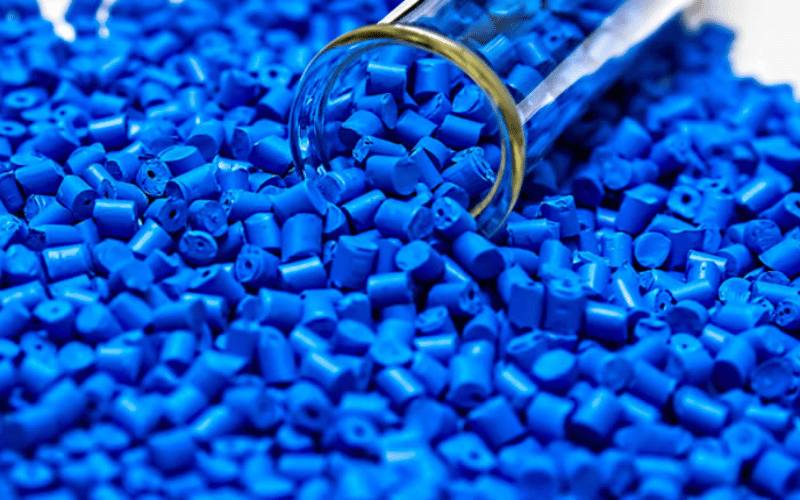
Pelletizing is the last step in the process. Here, workers cut the cooled material into small pellets. These pellets are the final product of compounding. They are ready for use in manufacturing, like injection molding or extrusion.
The pelletizing method can be strand, underwater, or air-cooled. The choice depends on several factors. These include material thickness, cooling needs, and production volume.
By following this step-by-step process, you can make sure your compounded materials are of high quality. Each stage, from choosing raw materials to pelletizing, is important. This process shapes the final product and makes plastic compounding precise and effective.
Applications of Plastic Compounding
Plastic compounding serves as the cornerstone for creating materials that meet the unique demands of various industries. By tailoring polymers with specific additives and reinforcements, manufacturers can produce materials that excel in performance, safety, and functionality. Let’s explore how plastic compounding drives innovation in key industries.
Automotive: Lightweight, Durable Materials for Structural and Interior Components
In the automotive industry, plastic compounding plays a pivotal role in reducing vehicle weight while maintaining strength and durability. Manufacturers often use lightweight materials, like glass fiber-reinforced polypropylene, for parts like bumpers, dashboards, and engine components. These materials not only improve fuel efficiency but also enhance crash performance by absorbing impact energy.
For interior parts, compounded plastics provide a good mix of looks and function. For instance, thermoplastic elastomers (TPEs) give a soft feel for steering wheels and armrests. UV stabilizers help these materials resist fading and wear over time. By choosing additives like impact modifiers and heat stabilizers, manufacturers can meet the tough needs of automotive use.
Electronics: Flame-Retardant and Conductive Plastics for Casings and Insulators
The electronics industry relies heavily on compounded plastics to ensure safety and performance. Flame-retardant compounds, such as those incorporating halogen-free additives, are essential for casings, connectors, and circuit boards. These materials prevent the spread of fire, meeting stringent safety standards like UL 94 V-0.
Conductive plastics are another critical application, used in components like electromagnetic shielding and antistatic housings. For instance, adding carbon fibers or conductive fillers to a polymer can create materials that dissipate static electricity, protecting sensitive electronic components. The ability to fine-tune properties like thermal conductivity and electrical resistance makes compounded plastics indispensable in electronics manufacturing.
Packaging: Barrier Properties for Food Safety and Durability
In the packaging industry, plastic compounding helps create materials with better barrier properties. These properties protect food and other perishable goods. For example, adding oxygen scavengers or nanoclays to polyethylene or polypropylene improves the material’s ability to block oxygen and moisture. This process extends shelf life and keeps products fresh.
Durability is another key consideration. Compounded plastics with impact modifiers and UV stabilizers ensure packaging can withstand rough handling and prolonged exposure to sunlight.
Additionally, colorants and gloss enhancers provide the aesthetic appeal that brands demand for their packaging. Compounded plastics provide the performance and look needed for many uses. This includes multilayer films for vacuum-sealed food and rigid containers for drinks.
Medical: Biocompatible and Sterilizable Compounds for Devices and Packaging
The medical industry demands materials that meet strict biocompatibility and sterilization requirements, and plastic compounding rises to the challenge. Manufacturers compound medical-grade polymers, such as polycarbonate or polyethylene, with additives like antimicrobial agents to prevent bacterial growth. People use these materials in applications ranging from surgical instruments to IV components.
Sterilization compatibility is another critical factor. Compounded plastics must withstand processes like autoclaving, gamma radiation, or ethylene oxide sterilization without degrading. For example, adding heat stabilizers to polypropylene ensures it retains its mechanical properties after repeated sterilization cycles. In medical packaging, barrier additives protect sensitive pharmaceuticals from moisture and oxygen, ensuring product integrity.
Plastic compounding helps create materials that meet the needs of different industries. This leads to new ideas and better performance in many uses. Whether it’s lightweight automotive parts, flame-retardant electronics, durable packaging, or biocompatible medical devices, compounded plastics provide the solutions that modern industries demand.

Benefits of Plastic Compounding
Plastic compounding is not just a technical process. It is a strategic tool for manufacturers.
It helps them create materials with precision, efficiency, and sustainability. By leveraging the flexibility of compounding, industries can address specific challenges while optimizing costs and environmental impact. Let’s dive into the key benefits that make plastic compounding indispensable.
Customization: Tailored Properties for Specific Needs
One of the biggest benefits of plastic compounding is that it allows us to customize materials. This helps meet specific performance needs. You can choose thermal resistance for high-temperature uses or flexibility for complex designs. Compounding helps you adjust properties accurately.
For example, adding flame retardants to a polymer can make it suitable for electrical housings, while incorporating impact modifiers ensures durability in automotive components. If your application requires enhanced chemical resistance, you can blend in specific stabilizers to protect the material from degradation. The modular design of twin-screw extruders makes it easy to change formulations. This ensures the final compound meets your needs perfectly.
Efficiency: Cost-Effective Solutions Using Fillers and Optimized Processes
Plastic compounding also delivers cost efficiency by optimizing material usage and production processes. Fillers such as talc, calcium carbonate, or glass fibers improve mechanical properties. They also lower the overall cost of the compound. For instance, adding 30% talc to polypropylene can improve stiffness while lowering material expenses.
Efficiency extends to the production process as well. Engineers design twin-screw extruders to handle high throughput with consistent quality, minimizing waste and downtime.
Advanced control systems let you watch things like torque and temperature in real time. This helps the process run smoothly and efficiently. By combining cost-effective fillers with optimized processing, compounding helps manufacturers achieve more with less.
Sustainability: Incorporating Recycled Materials and Reducing Waste
Sustainability is no longer optional—it’s a necessity. Plastic compounding supports sustainability efforts by enabling the use of recycled materials and reducing waste.
For example, post-consumer recycled (PCR) plastics can mix with new polymers. This creates high-quality materials for packaging or consumer goods. Additives like compatibilizers ensure the recycled content integrates seamlessly with the base polymer, maintaining performance and appearance.
Compounding also reduces waste by allowing manufacturers to repurpose scrap materials. Producers can compound regrind from production processes with stabilizers to restore its properties, minimizing material loss. Also, new ideas like biodegradable additives and bio-based polymers are creating more sustainable solutions. They help industries reach environmental goals while still being functional.
By offering customization, efficiency, and sustainability, plastic compounding provides a versatile and impactful solution for modern manufacturing challenges. To improve performance, cut costs, or help the environment, compounding can help. It provides the tools and flexibility you need to succeed.
Challenges and Future Trends
The plastic compounding industry is evolving rapidly, but it’s not without its challenges. Manufacturers must navigate environmental concerns, cost pressures, and the constant demand for high-quality materials. At the same time, emerging trends are reshaping the landscape, offering opportunities for innovation and growth. Let’s explore the key challenges and the future trends driving the industry forward.
Challenges: Environmental Concerns, Cost Pressures, and Maintaining Quality
One of the most pressing challenges in plastic compounding is addressing environmental concerns. Both governments and consumers want more sustainable solutions. This is pushing manufacturers to use less virgin plastic and reduce waste.
For example, meeting these expectations often means adding recycled content to compounds. This must be done without losing performance. It requires careful formulation and advanced processing methods.
Cost pressures also weigh heavily on the industry. Rising raw material prices and energy costs force manufacturers to find ways to optimize production without sacrificing quality. Using cost-effective fillers like talc or calcium carbonate can help reduce costs. This works only if the compounding process ensures even mixing and consistent material properties.
Maintaining quality in the face of these challenges is no small feat. Variability in raw materials, especially recycled content, can lead to inconsistencies in the final product. To address this, manufacturers need to invest in strong quality control systems and better equipment.
This includes twin-screw extruders that have real-time monitoring features. These tools allow for precise adjustments during production, ensuring the final compound meets stringent performance standards.
Trends: Sustainable Solutions, Advanced Materials, and Automation
While challenges remain, the future of plastic compounding is full of opportunities. New trends are set to change the industry.
Sustainable Solutions: Recycled and Biodegradable Compounds
Sustainability is at the forefront of industry trends, with a growing emphasis on recycled and biodegradable compounds. Manufacturers are increasingly blending post-consumer recycled (PCR) plastics with virgin polymers to create high-quality materials that meet environmental goals. For example, adding compatibilizers to a recycled PET and polyethylene blend can improve its mechanical properties, making it suitable for packaging applications.
Biodegradable compounds are also gaining traction, particularly in single-use products like food packaging and agricultural films. Researchers compound polymers such as polylactic acid (PLA) and polyhydroxyalkanoates (PHA) with performance-enhancing additives to expand their usability. These materials not only reduce environmental impact but also align with regulatory requirements for sustainable practices.
Advanced Materials: Smart Plastics and Sensor-Integrated Compounds
The rise of advanced materials is another exciting trend in plastic compounding. Smart plastics can react to changes in temperature or pressure. Many industries, including healthcare and consumer electronics, use them.
Shape-memory polymers can be mixed with special additives. You can use these materials in medical devices. They adjust to fit the human body.
Sensor-integrated compounds are also making waves, particularly in the automotive and electronics sectors. By embedding conductive fillers or piezoelectric materials into polymers, manufacturers can create components capable of monitoring performance or detecting faults in real time. These innovations open the door to smarter, more efficient products that enhance user experience and safety.
Automation: Real-Time Quality Control and Energy-Efficient Processes
Automation is revolutionizing the plastic compounding process, enabling real-time quality control and energy-efficient operations. Advanced twin-screw extruders have sensors and control systems.
They can monitor things like torque, temperature, and pressure. This allows them to make quick adjustments to keep quality consistent. The system can notice changes in raw material properties. When it does, it can automatically change the screw speed or temperature.
Energy efficiency is another area where automation shines. Engineers design modern extruders to optimize energy consumption by using high-efficiency motors and heat recovery systems. These advancements lower operational costs and help sustainability goals. They do this by reducing the carbon footprint of the compounding process.
The plastic compounding industry can grow and innovate by facing challenges and embracing new trends. Manufacturers who adjust to these changes will overcome challenges. They will also find new chances to provide high-quality, sustainable materials to the market.
FAQs
Q: What is the difference between a polymer and a plastic compound?
A: A polymer is a material made of long chains of repeating units. These units often come from natural or man-made sources. It serves as the base material in plastic production.
A plastic compound is a special material made by mixing a polymer with additives, fillers, and reinforcements. This process improves or changes the polymer’s properties. These properties include strength, flexibility, and thermal resistance. This helps meet specific application needs.
Q: How does plastic compounding contribute to sustainability?
A: Plastic compounding supports sustainability by enabling the use of recycled materials, reducing waste, and improving material efficiency. Manufacturers can mix recycled plastics with new polymers.
This creates high-quality materials that meet performance standards. Additionally, manufacturers increasingly use biodegradable additives and bio-based polymers to develop eco-friendly materials. By optimizing formulations and reducing reliance on virgin resources, plastic compounding helps industries meet environmental goals.
Q: What industries benefit the most from plastic compounding?
A: Several industries rely heavily on plastic compounding to meet their material needs. The automotive industry uses compounded plastics for lightweight, durable components that improve fuel efficiency. The electronics sector benefits from flame-retardant and conductive compounds for safe and reliable devices.
Packaging industries depend on barrier-enhanced materials to protect food and extend shelf life. Additionally, the medical field uses biocompatible and sterilizable compounds for devices and packaging. Each industry leverages plastic compounding to address its unique challenges and requirements.
Q: How are quality standards maintained in the compounding process?
A: Rigorous testing, precise process control, and advanced equipment maintain quality standards in plastic compounding. Manufacturers perform tests such as melt flow index (MFI) and mechanical property checks.
These tests ensure that raw materials and final products meet the required standards. Twin-screw extruders equipped with real-time monitoring systems allow for precise adjustments during production, ensuring consistent quality. Additionally, adherence to industry standards and certifications, such as ISO or UL, ensures the compounded materials meet regulatory and performance requirements.
Conclusion
Plastic compounding is important in modern manufacturing. It helps create custom materials for different industries’ needs. By leveraging this process, manufacturers can enhance performance, improve efficiency, and address sustainability goals. Explore innovative compounding solutions to unlock new possibilities and meet the specific needs of your applications.


 English
  Portuguese
  Spanish
  Korean
  Russian
  German