


The cable extruder is a critical piece of equipment in the manufacturing industry, particularly in the production of cables and wires. This versatile machine plays a vital role in transforming raw materials into high-quality insulated cables, sheathed wires, and other related products.
But what exactly is a cable extruder machine? How does it work? And what are its applications? In this blog post, we’ll explore the inner workings of the cable extruder, delving into its key elements, operational principles, and the diverse applications that leverage its capabilities.
What is a Cable Extruder Machine?
A cable extruder machine is a specialized piece of equipment used in the manufacturing of cables and wires. It is designed to coat or insulate conductive materials, such as copper or aluminum, with a protective polymer or plastic coating. This process ensures the durability, safety, and functionality of the cables in various applications.
The machine operates by feeding raw materials, such as plastic pellets, into a heated barrel. Inside the barrel, a rotating screw melts and mixes the material, preparing it for extrusion. The molten material is then forced through a die, which shapes it into a uniform coating around the cable or wire. This precise process ensures consistent insulation thickness and quality.
One of the key features of a cable extruder machine is its ability to handle different types of polymers, such as PVC, PE, or XLPE, depending on the specific requirements of the cable. Additionally, the machine’s design allows for efficient processing, minimizing material waste and ensuring high production output. This makes it an essential tool in the cable manufacturing industry, where precision and reliability are critical.
The Significance of Cable Extruders in Wire and Cable Manufacturing
In the wire and cable manufacturing industry, cable extrusion machines play a crucial role in coating and insulating conductive materials such as copper or aluminum. These machines ensure that wires and cables meet the required safety, durability, and performance standards for various applications. By precisely applying a protective layer of polymer or plastic, cable extruders enhance the functionality and longevity of the final product.
The extrusion process involves melting and mixing raw materials, such as PVC, PE, or XLPE, within a heated barrel. The rotating screw inside the machine generates the necessary shear forces to ensure thorough melting and uniform dispersion of additives or fillers. This results in a consistent and high-quality insulation layer that adheres perfectly to the wire or cable.
One of the most common uses of cable extruders is in the production of insulated power cables, communication cables, and specialty wires. These machines are designed to handle the unique properties of different polymers, offering precise temperature control and efficient processing. This ensures that the final product meets stringent industry standards, making cable extruders indispensable in modern wire and cable manufacturing.
Understanding the Difference Between Single Screw and Cable Extruders
When comparing single screw extruders to cable extruders, it’s essential to recognize their distinct roles and capabilities in manufacturing. While single screw extruders are versatile and commonly used for general extrusion processes, cable extruders are specifically designed to coat and insulate wires and cables with precision and efficiency.
The key difference lies in their design and application. Single screw extruders rely on a single rotating screw to melt and convey materials, making them suitable for straightforward tasks with less demanding requirements. In contrast, cable extruders are engineered to address the unique challenges of wire and cable production, such as achieving uniform insulation thickness and processing a variety of polymers, including PVC, PE, and XLPE.
Additionally, cable extruders provide superior control over temperature and material flow, ensuring consistent quality and performance. This level of precision is critical in wire and cable manufacturing, where even minor inconsistencies can compromise safety and functionality. While single screw extruders are ideal for general-purpose use, cable extruders are indispensable for producing high-quality, insulated wires and cables that meet stringent industry standards.
Cable Extruder Elements
A cable extrusion machine comprises several critical components, each playing a vital role in ensuring efficient, precise wire and cable manufacturing. Here’s an overview of its key elements:
Screws
The screws are the heart of the cable extruder. They rotate within the barrel to melt, mix, and convey the material. The screw design, including its length, diameter, and pitch, is tailored to the specific material and application, ensuring optimal performance and consistent insulation quality.
Barrel
The barrel encases the screws and provides the necessary temperature control for processing the material. It is divided into multiple zones, each with independent heating and cooling systems. This precise temperature management ensures consistent melting and extrusion of the polymer.
Feed Zone
This is the entry point where raw materials, such as plastic pellets or granules, are introduced into the extruder. The feed zone is designed to ensure smooth, consistent feeding, preventing blockages and maintaining a steady flow of material onto the screws.
Melting and Conveying Zones
As the material progresses along the screws, it enters the melting and conveying zones. Here, the combination of heat from the barrel and mechanical shear from the screws melts and plasticizes the material, preparing it for further processing.
Kneading and Mixing Zones
These zones are equipped with specialized screw elements, such as kneading blocks, that provide intensive mixing and shearing action. This ensures thorough homogenization of the material, resulting in a uniform melt that adheres perfectly to the wire or cable.
Venting and Vacuum Zones
To improve the quality of the extruded product, venting or vacuum zones are incorporated into the extruder. These zones remove air, moisture, and volatile components from the material, ensuring a defect-free, consistent insulation layer.
Die
The die is the final component of the cable extruder. It shapes the molten material into a uniform coating around the wire or cable. The die’s design is critical for achieving the desired insulation thickness and ensuring the final product meets industry standards.
By understanding the functions of these elements, manufacturers can optimize the performance of the cable extruder, ensuring high-quality, durable, and reliable wire and cable products for various applications.
How Does a Cable Extruder Work?
The cable extrusion process involves several key steps, each contributing to the precise coating and insulation of wires and cables. Here’s a step-by-step explanation of how a cable extruder works:
Material Feeding
The process begins with feeding raw materials, such as plastic pellets or granules, into the extruder through a hopper. This ensures a steady and controlled flow of material into the machine, setting the stage for consistent processing.
Conveying and Compression
As the screw rotates within the heated barrel, it conveys the raw material forward. During this stage, the material is compressed, and frictional forces begin to generate heat. This compression is essential for preparing the material for the melting phase.
Plasticization and Melting
As the material moves further along the screw, it encounters increasing heat from the barrel and shear forces from the screw. These combined factors melt and plasticize the material, transforming it into a homogeneous molten state suitable for extrusion.
Intensive Mixing and Homogenization
In this stage, the molten material undergoes thorough mixing and kneading. Specialized screw elements ensure the uniform dispersion of additives, fillers, or pigments, resulting in a consistent and high-quality melt that adheres perfectly to the wire or cable.
Melt Pumping and Die Formation
Once the material is fully melted and homogenized, it is pumped towards the die at the end of the barrel. The die shapes the molten material into a uniform coating around the wire or cable, ensuring precise insulation thickness and adherence to design specifications.
Cooling and Calibration
After exiting the die, the coated wire or cable undergoes cooling and calibration to solidify the insulation and ensure consistent dimensions. This step may involve water baths, air cooling systems, or sizing equipment, depending on the specific product requirements.
The cable extruder’s ability to precisely control each step of the process ensures high-quality, durable, and reliable wire and cable products. Its efficient design and operation make it an essential tool in modern cable manufacturing.
Advantages of Cable Extruder
Cable extruders offer numerous benefits that make them indispensable in the wire and cable manufacturing industry. Here are some of the key advantages:
Superior Coating Precision
Cable extruders are designed to apply a uniform and consistent layer of insulation or coating around wires and cables. This precision ensures the final product meets strict quality and safety standards.
High Production Efficiency
With their efficient design, cable extruders enable continuous processing, resulting in high output rates and increased production efficiency. This makes them ideal for large-scale manufacturing operations.
Versatility in Material Handling
Cable extruders can process a wide range of materials, including PVC, PE, XLPE, and other polymers. This versatility allows manufacturers to produce cables for various applications, from residential wiring to industrial power cables.
Precise Temperature Control
Equipped with multiple heating and cooling zones, cable extruders provide precise temperature management throughout the process. This is crucial for maintaining material integrity and achieving consistent insulation quality.
Improved Product Quality
By ensuring thorough melting, mixing, and homogenization, cable extruders produce high-quality insulation free of defects such as air pockets or uneven thickness.
Adaptability to Different Applications
The modular design of cable extruders allows for easy customization and reconfiguration to meet specific production requirements. This adaptability makes them suitable for a wide range of cable types and sizes.
Energy Efficiency
Cable extruders are designed to optimize energy usage, reducing operational costs and minimizing environmental impact. This energy efficiency is particularly beneficial for manufacturers aiming to lower their carbon footprint.
Durability and Reliability
Built for continuous operation, cable extruders are robust and reliable, ensuring consistent performance over extended periods. This durability reduces downtime and maintenance costs.
These advantages make cable extruders a vital tool for producing high-quality, durable, and reliable cables across various industries, from telecommunications to power distribution.
Types of Cable Extruders
Cable extruders are essential machines in the production of insulated and sheathed cables. They are designed to process and coat cables with various materials, ensuring durability, performance, and safety. Depending on the application and material requirements, cable extruders are classified into two main types: single screw cable extruders and twin screw cable extruders.
Single Screw Cable Extruder
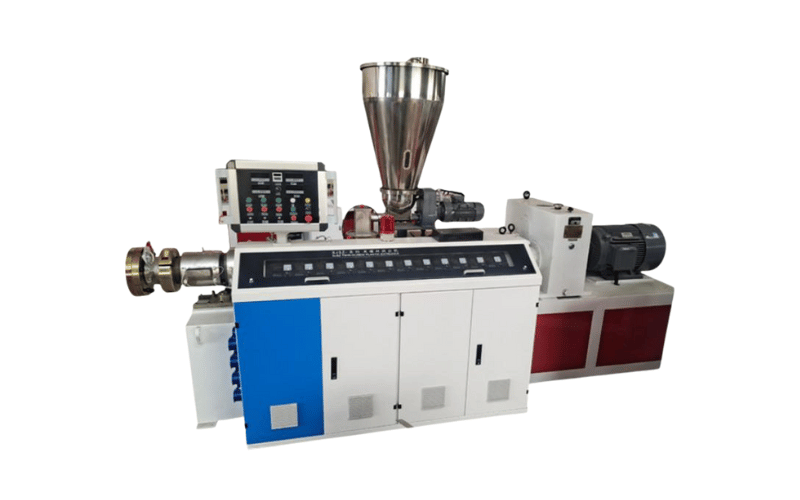
The single screw cable extruder is the most commonly used type in cable manufacturing. It features a single rotating screw that melts and pushes the material through a die to coat the cable. This type of extruder is ideal for processing standard thermoplastics such as PVC, PE, and PP. Its simple design makes it cost-effective and easy to operate, which is why it is widely used for general cable insulation and sheathing tasks. However, single screw extruders have limitations, as they may not provide the advanced mixing or processing capabilities required for more complex materials or high-performance cables.
Twin Screw Cable Extruder
Twin screw cable extruders are designed for more demanding applications and offer superior mixing, homogenization, and processing capabilities. They are further divided into two types: parallel twin screw cable extruders and conical twin screw cable extruders.

- The parallel twin screw cable extruder features two parallel screws that rotate either in the same direction (co-rotating) or in opposite directions (counter-rotating). Co-rotating screws ensure excellent mixing and uniform dispersion of additives, while counter-rotating screws provide better control over material flow and pressure. Parallel twin screw extruders are widely used for processing materials that require precise mixing, such as high-performance cable compounds with fillers or additives.
- The conical twin screw cable extruder, as the name suggests, features screws with a tapered design where the diameter decreases from the feed end to the discharge end. This conical design enables better pressure control and higher shear rates, making it particularly suitable for processing materials with high viscosity or abrasive fillers. Conical twin screw extruders are often used for producing specialty cables, such as those with reinforced or highly filled compounds.
Choosing the Right Cable Extruder
Selecting the right cable extruder depends on factors such as material properties, production requirements, and the desired characteristics of the final product. Manufacturers often work closely with extruder suppliers to determine the most suitable type and configuration, ensuring optimal performance and product quality.
Applications of Cable Extruder
Cable extruders are versatile machines that play a critical role in the production and processing of a wide range of cables. Their ability to handle diverse materials and deliver precise coatings makes them indispensable in multiple industries. Let’s explore some of the key applications of cable extruders:
Electrical Cable Manufacturing
Cable extruders are widely used in the production of electrical cables, where they apply insulation and sheathing materials to conductors. These materials, such as PVC, PE, and XLPE, provide essential protection against electrical faults, environmental factors, and mechanical damage. The precision and efficiency of cable extruders ensure consistent quality, making them a cornerstone of electrical cable manufacturing for residential, commercial, and industrial applications.
Fiber Optic Cable Production
In the telecommunications industry, cable extruders are essential for producing fiber-optic cables. These machines coat delicate optical fibers with protective layers to safeguard them from physical damage and environmental exposure. The extruders ensure uniform application of materials such as polyethylene or polyamide, which are critical to maintaining the performance and longevity of fiber-optic cables used for high-speed data transmission.
Automotive Wire and Cable Processing
The automotive industry relies heavily on cable extruders to produce the wires and cables used in vehicles. These extruders apply insulation and protective sheathing to automotive wires, ensuring they withstand high temperatures, vibrations, and chemical exposure. The precision of cable extruders is vital for meeting the stringent quality and safety standards required in automotive wiring systems.
Telecommunication Cable Manufacturing
Cable extruders are integral to the production of telecommunication cables, including coaxial and Ethernet cables. These machines apply insulation and shielding layers that protect the cables from electromagnetic interference and environmental factors. The high-performance capabilities of cable extruders ensure the reliability and durability of telecommunication cables, which are essential for modern communication networks.
Recycling and Reprocessing of Cable Materials
In addition to manufacturing, cable extruders contribute to sustainable practices by enabling the recycling and reprocessing of cable materials. They are used to recover and reprocess materials like PVC and PE from discarded cables, converting them into reusable compounds. This process reduces waste, promotes resource efficiency, and supports circular economy initiatives in the cable industry.
With their versatility and precision, cable extruders continue to drive innovation and ensure the production of high-quality cables across various industries. Their applications span from electrical and telecommunication cables to automotive and fiber optic solutions, making them indispensable in modern manufacturing processes.
Final Thought
The cable extruder is an indispensable machine that has transformed the cable manufacturing industry. From electrical and telecommunications cables to automotive and fiber-optic solutions, these machines have demonstrated their value through precision, efficiency, and versatility. Whether it’s applying insulation and sheathing materials, processing high-performance compounds, or contributing to sustainable recycling practices, cable extruders play a vital role in ensuring the quality and durability of modern cables.
If you’re looking to produce high-quality cables, explore advanced material processing, or adopt sustainable reprocessing solutions, a cable extruder can be the key to achieving your goals. Whether you need a single screw extruder for standard applications or a twin screw extruder for more demanding tasks, selecting the right machine is essential for meeting your specific requirements.
Visit our website to learn more about our range of cable extruders. We offer both Single Screw and Screw Extruders to provide comprehensive solutions for your manufacturing needs. If you need guidance in choosing the right extruder for your application, feel free to contact us today.
Frequently Asked Questions (FAQ)
1. What are the key business advantages of upgrading to a cable extruder?
Upgrading to a cable extruder offers significant business benefits, including enhanced production efficiency and improved product quality. Cable extruders provide precise control over material application, ensuring consistent insulation and sheathing. This leads to reduced material waste and lower production costs. Additionally, modern cable extruders are designed to handle a wide range of materials, offering greater flexibility to meet diverse manufacturing needs. By investing in a cable extruder, businesses can achieve higher output rates and maintain a competitive edge.
2. How can a cable extruder improve product quality and consistency?
Cable extruders are engineered to deliver uniform coating and insulation, which is critical for ensuring the durability and performance of cables. Advanced temperature and pressure control systems in these machines prevent material degradation and ensure consistent processing conditions. This level of precision results in cables with reliable insulation thickness, superior mechanical properties, and consistent quality across production batches. In industries like telecommunications and automotive, where quality is paramount, cable extruders are indispensable tools.
3. Is a cable extruder suitable for processing challenging materials?
Yes, cable extruders are highly versatile and can process challenging materials, including high-viscosity polymers, abrasive compounds, and heat-sensitive materials. Twin screw cable extruders, in particular, excel in handling complex formulations and materials that require high shear forces or precise mixing. Whether you’re working with PVC, XLPE, or highly filled compounds, a cable extruder can be customized with the appropriate screw configuration to meet your specific material-processing needs.
4. How can a cable extruder support sustainability and recycling goals?
Cable extruders play a vital role in promoting sustainability by enabling the recycling and reprocessing of cable materials. They can process post-consumer or post-industrial waste, turning discarded cables into reusable compounds or pellets. With features like venting zones to remove moisture and volatiles, cable extruders ensure high-quality output from recycled materials. By incorporating a cable extruder into your operations, you can reduce waste, lower raw material costs, and contribute to circular economy initiatives.
5. What is the potential ROI when investing in a cable extruder?
The return on investment (ROI) for a cable extruder is driven by factors such as increased production efficiency, improved product quality, and reduced material waste. Modern cable extruders are designed for energy efficiency, resulting in significant cost savings over time. While the initial investment may be substantial, the long-term benefits—such as higher throughput, reduced scrap rates, and the ability to process a broader range of materials—often result in a faster ROI. Consulting with an experienced supplier can help you evaluate the potential ROI based on your specific production requirements.


 English
  Portuguese
  Spanish
  Korean
  Russian
  German