


The masterbatch-making machine is a critical tool in the manufacturing industry, particularly for the production of masterbatches—concentrated mixtures of pigments, additives, and polymers. This advanced equipment plays a vital role in creating high-quality, customized formulations for a wide range of applications, from packaging to automotive components.
But what exactly is a masterbatch making machine? How does it work? And what are its applications? In this blog post, we’ll explore the inner workings of the masterbatch making machine, delving into its key components, operational principles, and the diverse applications that leverage its capabilities.
What is a Masterbatch Making Machine?
A masterbatch making machine is specialized equipment designed to produce masterbatches, which are concentrated mixtures of pigments, additives, and polymers. Unlike standard plastic processing machines, a masterbatch-making machine is specifically engineered to precisely blend and disperse these components, ensuring consistent quality and performance.
The machine’s design enables efficient mixing, kneading, and homogenization of the processed materials. As the screws rotate within the heated barrel, they create a self-wiping action that prevents material buildup on the barrel walls, ensuring uniform dispersion of pigments and additives. This feature is particularly advantageous when working with highly filled or heat-sensitive formulations, making the masterbatch-making machine an essential tool for industries that require precise color and additive formulations.
The Significance of Masterbatch Making Machines in Material Processing
In the material processing industry, masterbatch-making machines play a crucial role in blending, dispersing, and homogenizing pigments, additives, and polymers to produce high-quality masterbatches. The intermeshing screws within the machine generate shear forces that break down the components, ensuring thorough mixing and uniform dispersion. This results in a consistent, homogeneous masterbatch that can enhance the properties of base polymers across various applications.
One of the most common uses of masterbatch-making machines is the production of color and additive concentrates for plastics. These machines are designed to handle the precise requirements of masterbatch formulations, providing efficient mixing and accurate temperature control to ensure consistent quality. This makes them indispensable in industries such as packaging, automotive, and construction, where high-performance materials are essential.
Understanding the Difference Between Single-Screw and Twin-Screw Masterbatch Machines
Compared to single-screw masterbatch machines, twin-screw masterbatch machines offer several distinct advantages. They are renowned for their superior mixing capabilities, which are critical for achieving uniform dispersion of pigments, additives, and fillers. Additionally, twin-screw machines can handle a broader range of materials, including highly viscous or abrasive compounds, making them more versatile for diverse masterbatch production needs.
The primary difference lies in their design and operational principles. Single-screw masterbatch machines rely on a single rotating screw to convey and melt the material, which is suitable for simpler formulations. In contrast, twin-screw machines use two intermeshing screws to provide enhanced mixing, kneading, and shearing. This design also allows for better control over residence time and temperature, enabling precise processing of heat-sensitive or complex formulations.
These differences make twin-screw masterbatch machines the preferred choice for demanding applications, while single-screw machines remain suitable for straightforward material processing tasks.
Masterbatch Making Machine Components
A masterbatch making machine is a sophisticated piece of equipment with several key components that work together to ensure efficient operation and high-quality output. Let’s explore these components in detail:
1. Screws
The screws are the core of the machine and come in various designs to suit specific applications:
- Co-rotating Screws: Both screws rotate in the same direction, providing high mixing and kneading action for uniform dispersion.
- Counter-rotating Screws: These screws rotate in opposite directions, offering unique mixing and shearing capabilities, especially for applications requiring high compression and shear forces.
- Intermeshing Screws: The screws intermesh, ensuring optimal material conveyance, melting, and mixing. This design generates high shear forces, promoting thorough homogenization and dispersion of pigments and additives.
2. Barrel
The screws are housed in a heated barrel that provides precise temperature control for melting and processing materials. The barrel is divided into multiple zones, each with independent temperature settings to manage the temperature profile along the extrusion path.
3. Feed Zone
This is where raw materials, such as pigments, additives, and polymers, are introduced into the machine. The feed zone ensures smooth and consistent feeding of materials onto the screws for further processing.
4. Melting and Conveying Zones
As the material progresses along the screws, it enters these zones, where heat from the barrel and shear forces from the screws gradually melt and plasticize the material, preparing it for mixing.
5. Kneading and Mixing Zones
These zones are equipped with specialized screw elements, such as kneading blocks or mixing sections, that provide intensive mixing and shearing action. This ensures thorough dispersion and homogenization of the masterbatch components.
6. Venting and Vacuum Zones
Masterbatch-making machines often include venting or vacuum zones to remove volatile components, moisture, or trapped air from the material. This improves the quality and consistency of the final masterbatch.
7. Die
The die is the final component of the machine, where the molten and homogenized material is forced through a shaped orifice to form the desired product, such as pellets or granules.
By understanding the functions and interactions of these key components, manufacturers can optimize the performance of masterbatch-making machines, ensuring consistent, high-quality results across a wide range of applications.
How Does a Masterbatch Making Machine Work?
The working principle of a masterbatch-making machine is to efficiently blend, melt, and homogenize pigments, additives, and polymers to produce high-quality masterbatches. Let’s break down the process step by step:
1. Material Feeding
The process begins with the introduction of raw materials, such as pigments, additives, and base polymers, into the machine through a hopper. This ensures a consistent and controlled flow of materials onto the screws for further processing.
2. Conveying and Compression
As the screws rotate, they convey the raw materials along the barrel. During this stage, the intermeshing screw design compresses and kneads the materials, generating heat through shear forces and friction, which prepares the materials for melting.
3. Plasticization and Melting
As the materials progress along the screws, the combination of heat from the heated barrel and the mechanical action of the screws gradually melts and plasticizes the materials. This transforms the raw materials into a homogeneous molten mixture.
4. Intensive Mixing and Homogenization
The screws are equipped with specialized elements that provide intensive mixing and kneading action. This ensures thorough dispersion of pigments and additives, resulting in a consistent and uniform masterbatch with enhanced properties.
5. Melt Pumping and Die Formation
Once the materials are fully melted and homogenized, the screws pump the molten mixture towards the die. The die shapes the material into the desired form, such as pellets or granules, depending on the application.
6. Cooling and Calibration
After exiting the die, the masterbatch undergoes cooling and calibration to achieve the required dimensions and properties. This may involve water baths, air cooling systems, or sizing equipment to ensure consistent quality.
The masterbatch making machine’s design, featuring intermeshing screws and precise temperature control, ensures efficient processing and high-quality output. Its ability to handle a wide range of materials and formulations makes it indispensable in industries that require advanced materials solutions.
Advantages of Masterbatch Making Machines
Masterbatch making machines offer several distinct advantages, making them an essential tool for producing high-quality masterbatches across various industries. Let’s explore some of the key benefits they provide:
1. Superior Mixing and Homogenization
Masterbatch making machines are designed with intermeshing screws that generate high shear forces, ensuring uniform dispersion of pigments, additives, and fillers. This results in consistent and high-quality masterbatches.
2. High Output Rates and Throughput
The efficient design and self-wiping action of the screws enable continuous processing, resulting in higher production efficiency and higher output rates.
3. Versatility in Material Processing
These machines can handle a wide range of materials, from highly viscous polymers to low-viscosity fluids, including abrasive or filled compounds. This versatility makes them suitable for a wide range of masterbatch formulations.
4. Precise Temperature Control
With multiple heating and cooling zones along the barrel, masterbatch-making machines provide precise temperature control, which is crucial for processing temperature-sensitive materials and achieving specific product properties.
5. Improved Melt Quality
The machines produce a homogeneous, consistent melt, free of thermal degradation or localized overheating, ensuring superior product quality.
6. Reduced Residence Time
Continuous material flow and efficient conveying reduce residence time, which is particularly beneficial for heat-sensitive materials, thereby minimizing the risk of degradation.
7. Modular Design
The modular configuration allows for easy reconfiguration or replacement of screw elements, enabling adaptability to different processing requirements and enhancing operational flexibility.
8. Energy Efficiency
Masterbatch-making machines often consume less energy than traditional systems, making them cost-effective and environmentally friendly.
These advantages make masterbatch-making machines a versatile and efficient solution for industries such as plastics, automotive, and construction, driving innovation and ensuring high-quality material processing.
Types of Masterbatch Making Machines
Masterbatch-making machines are available in different configurations to cater to specific material-processing needs. Two primary types are widely used across industries:
1. Single-Screw Masterbatch Machine
This type of masterbatch machine features a single rotating screw within a heated barrel.
- Design and Function: The single screw conveys, compresses, and melts the material through basic shear and friction.
- Applications: Single-screw machines are suitable for simpler masterbatch formulations, such as blending pigments and additives with base polymers. They are commonly used in applications where intensive mixing or dispersion is not required.
- Advantages: These machines are cost-effective, easy to operate, and ideal for straightforward material processing with lower complexity.
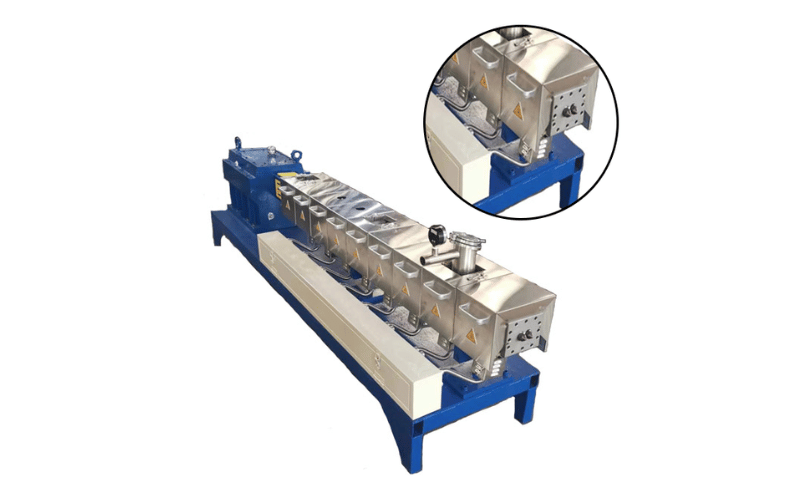
2. Twin-Screw Masterbatch Machine
Twin-screw machines feature two intermeshing screws that rotate within a heated barrel, offering enhanced mixing and processing capabilities.
- Co-Rotating Twin-Screw Machines: Both screws rotate in the same direction, providing high mixing and kneading action, making them ideal for uniform dispersion of pigments and additives.
- Counter-Rotating Twin-Screw Machines: The screws rotate in opposite directions, offering unique shearing and compression capabilities for processing highly viscous or heat-sensitive materials.
- Applications: Twin-screw machines are versatile and widely used for complex masterbatch formulations, including highly filled or reinforced compounds.
- Advantages: They provide superior mixing, precise temperature control, and the ability to handle a wide range of materials, making them suitable for demanding applications.
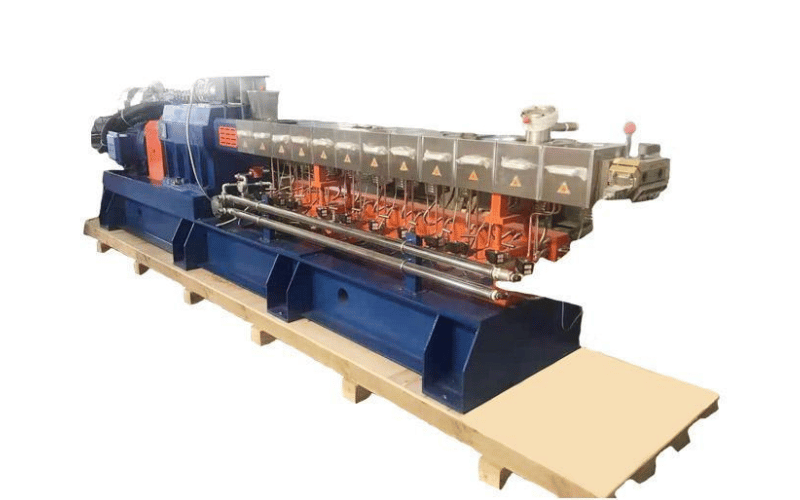
The choice between single-screw and twin-screw masterbatch machines depends on factors such as material properties, processing requirements, and desired product characteristics. Manufacturers often collaborate with suppliers to select the most suitable machine for their specific needs, ensuring optimal performance and product quality.
Applications of Masterbatch Making Machines
Masterbatch-making machines are versatile tools that play a crucial role in various industries by enabling the efficient production of high-quality masterbatches. Let’s explore some of their key applications:
1. Plastics Industry
Masterbatch-making machines are widely used in the plastics industry to produce color and additive concentrates. These masterbatches are essential for enhancing the properties of plastic products, including pipes, profiles, sheets, films, and cables used in construction, automotive, packaging, and consumer goods.
2. Packaging Industry
In the packaging industry, masterbatch-making machines produce masterbatches that enhance the visual appeal, durability, and functionality of packaging materials. These include color masterbatches for vibrant designs and additive masterbatches for UV resistance, anti-static properties, and barrier performance.
3. Automotive Industry
The automotive industry relies on masterbatch-making machines to produce masterbatches that enhance the performance and aesthetics of plastic components. These include masterbatches for color matching, flame retardancy, and mechanical reinforcement, used in interior trims, bumpers, and under-the-hood applications.
4. Textile and Fiber Industry
Masterbatch-making machines are used in the textile and fiber industry to produce masterbatches for synthetic fibers, such as polyester and polypropylene. These masterbatches provide color, UV resistance, and other functional properties, ensuring high-quality and durable textile products.
5. Recycling and Reprocessing
Masterbatch-making machines contribute to sustainability by enabling the production of masterbatches from recycled materials. They help in converting post-consumer or post-industrial plastic waste into high-quality masterbatches, promoting circular economy practices and reducing environmental impact.
With their ability to process diverse materials and produce customized masterbatches, these machines are indispensable in driving innovation and ensuring high-quality material solutions across various industries.
Final Thought
The masterbatch making machine is an essential tool that has transformed material processing across various industries. From plastics and packaging to automotive and textiles, these machines have demonstrated their value through superior mixing capabilities, high efficiency, and the ability to handle a wide range of formulations.
Whether you’re looking to produce high-quality color and additive concentrates, enhance the properties of your materials, or adopt sustainable recycling practices, a masterbatch making machine can be the key to achieving your goals and driving innovation in your business.
Visit our website to learn more about Masterbatch Making Machines. We also offer Single-Screw and Twin-Screw Masterbatch Machines to provide a comprehensive solution. If you’re looking for guidance in selecting the right machine for your specific needs, please get in touch with us now.
Frequently Asked Questions (FAQ)
1. What are the benefits of using a masterbatch making machine for material formulation?
Masterbatch making machines offer superior mixing and homogenization, which are essential for achieving uniform dispersion of pigments, additives, and fillers. This leads to higher-quality masterbatches with consistent properties, making them ideal for advanced material formulations.
2. How does a masterbatch-making machine improve product quality?
The intermeshing screw design of a masterbatch-making machine generates high shear forces, ensuring thorough blending of the materials. Precise temperature control along the barrel prevents thermal degradation, resulting in a homogeneous and high-quality masterbatch that enhances the performance of end products.
3. Can a masterbatch-making machine handle high-viscosity materials?
Absolutely. Masterbatch making machines are highly versatile and excel at processing challenging materials, including high-viscosity polymers, abrasive compounds, and heat-sensitive formulations. Specialized screw configurations can be tailored to meet specific material requirements.
4. What factors should be considered when selecting a masterbatch making machine?
Key considerations include the type of materials to be processed, desired output rates, mixing requirements, and temperature sensitivity. It’s also essential to evaluate the machine’s modularity, screw design, and compatibility with specific applications to ensure optimal performance.
5. What is the ROI for investing in a masterbatch-making machine?
The return on investment for a masterbatch making machine is driven by factors such as increased throughput, improved product quality, and reduced waste. While the initial cost may be significant, the long-term benefits of enhanced productivity and efficiency often lead to faster ROI. Consulting with an expert supplier can help you analyze the potential ROI for your specific needs.


 English
  Portuguese
  Spanish
  Korean
  Russian
  German