


Underwater pelletizing plays a critical role in polymer production, transforming molten polymers into uniform pellets that are easy to handle, transport, and process. This method stands out for its ability to produce high-quality pellets across a wide range of materials, from standard thermoplastics to high-performance engineering polymers. However, like any complex process, underwater pelletizing comes with its own set of challenges that can disrupt production and compromise pellet quality.
Common issues include pellet inconsistency, where variations in size or shape affect downstream processing. Die freezing often occurs when molten polymer solidifies prematurely, leading to production delays and material waste. Additionally, the generation of fines—small, unwanted particles—can reduce yield and create handling difficulties. These challenges not only impact efficiency but also increase operational costs if left unaddressed.
This article focuses on providing practical, actionable solutions to these common problems. By addressing the root causes and offering targeted strategies, the goal is to help you achieve reliable output and maintain the high standards required in polymer production. Whether you’re troubleshooting an existing system or optimizing a new setup, these insights will guide you toward more consistent and efficient pelletizing operations.
Table of Contents
ToggleCommon Issues in Underwater Pelletizing and Their Solutions
Underwater pelletizing systems are intricate machines that demand precision and attention to detail. When issues arise, they can disrupt production, compromise pellet quality, and increase operational costs. Let’s explore the most common challenges and their solutions, breaking them down into key areas for clarity and actionable guidance.
Material and Feed-Related Issues
Material inconsistencies and feed problems often serve as the root cause of many pelletizing challenges.
Causes: Contaminants in raw materials, inconsistent feed rates, or improper drying can lead to uneven pellet quality, fines, or even equipment damage. Contaminants like metal particles or oversized granules can block die holes or damage cutting blades. Inconsistent feed rates disrupt the flow of material, causing variations in pellet size. Improperly dried materials introduce moisture, leading to die freezing or poor pellet formation.
Solutions: Tighten raw material specifications to ensure consistent quality. Install advanced filtration systems, such as melt filters or screen changers, to remove contaminants before the material reaches the die. Optimize drying processes by using desiccant dryers or vacuum dryers to achieve the correct moisture levels for your specific polymer. Regularly calibrate feeders to maintain a steady and uniform material flow.
Temperature and Melt Control
Temperature fluctuations and improper melt control can wreak havoc on pellet quality and production efficiency.
Causes: Improper die temperature or uneven thermal zones in the extruder can cause die freezing, irregular pellet shapes, or material degradation. These issues often stem from poorly maintained heating elements, inadequate insulation, or incorrect temperature settings.
Solutions: Maintain proper temperature windows for your specific polymer by regularly inspecting and calibrating heating elements. Use thermal imaging tools to map the temperature profile across the die plate and extruder barrel, identifying and addressing any hot or cold spots. Insulate the die plate and barrel to minimize heat loss and ensure consistent thermal performance. For polymers with narrow processing windows, consider using advanced temperature controllers with real-time feedback loops.
Die Plate and Cutting Mechanics
The die plate and cutting system are at the heart of underwater pelletizing, and any issues here can directly impact pellet quality.
Causes: Worn die plates or cutting blades, misalignment between the die and cutter, and blocked die holes are common culprits. These problems can lead to uneven pellet sizes, fines, or production stoppages.
Solutions: Regularly inspect and replace worn die plates and cutting blades to maintain sharpness and alignment. Misaligned components can cause uneven cuts, so ensure proper alignment during installation and after maintenance. Clean die holes frequently to prevent blockages caused by material buildup or contaminants. For high-wear applications, consider using die plates and blades made from wear-resistant materials like tungsten carbide.
Water System and Cooling
The water system plays a critical role in cooling and transporting pellets, and any instability here can disrupt the entire process.
Causes: Unstable water flow, improper water temperature, or poor water quality can lead to uneven cooling, fines, or pellet clumping. Insufficient flow rates may fail to cool pellets effectively, while poor water quality can introduce contaminants that affect pellet appearance and quality.
Solutions: Set minimum water flow rates based on your system’s specifications to ensure consistent cooling. Use water treatment systems, such as filtration or deionization, to maintain high water quality and prevent contamination. Optimize dryer settings to remove excess moisture from pellets, reducing the risk of clumping or fines. Regularly inspect and maintain pumps, filters, and heat exchangers to ensure stable water flow and temperature control.
By addressing these common issues with targeted solutions, you can enhance the reliability and efficiency of your underwater pelletizing system. Each challenge presents an opportunity to fine-tune your process, ensuring consistent pellet quality and minimizing downtime.
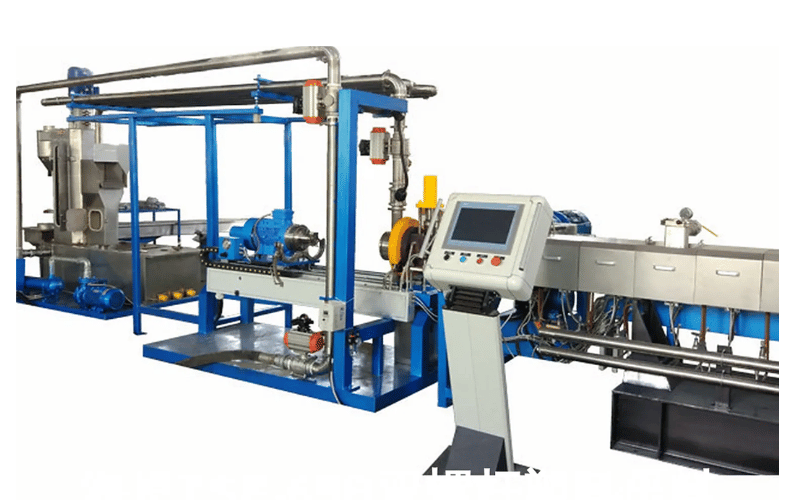
SHJ-36 Twin Screw Extruder with Underwater Pelletizing from Nanjing Jieya
Key Factors Affecting Pellet Quality
Achieving consistent pellet quality requires a deep understanding of the factors that influence size, shape, moisture content, and surface finish. Each variable in the pelletizing process plays a role, and addressing these factors with precision can significantly improve output. Let’s explore the key factors and their solutions in detail.
Pellet Size and Shape
Pellet size and shape directly impact downstream processing, whether for injection molding, extrusion, or compounding. Variations can lead to feeding issues, inconsistent melt flow, or product defects.
Causes: A poorly adjusted knife gap can result in uneven cuts, producing pellets of varying sizes. Worn die holes lose their precision, leading to irregular shapes or rough edges. Melt instability, caused by inconsistent temperature or pressure, can also distort pellet formation.
Solutions: Adjust the knife gap to ensure clean and uniform cuts. Use feeler gauges or precision tools to set the gap according to the die plate’s specifications. Replace worn die plates promptly to maintain consistent hole geometry. Stabilize the melt by fine-tuning barrel temperatures, screw speed, and feed rate. For materials prone to melt instability, consider using a melt pump to regulate pressure and flow.
Residual Moisture
Residual moisture in pellets can cause clumping, poor flowability, or defects in downstream applications. Controlling moisture levels is critical for maintaining pellet quality.
Causes: Porous pellets, often resulting from improper cooling or high melt temperatures, retain excess moisture. Inefficient drying systems fail to remove this moisture effectively. Environmental humidity can also reintroduce moisture during storage or handling.
Solutions: Optimize dryer settings to match the material’s moisture removal requirements. Use desiccant or vacuum dryers for materials with low moisture tolerance. Control ambient conditions in storage and handling areas by maintaining low humidity levels. For porous pellets, adjust cooling water temperature and flow rate to ensure proper solidification without trapping moisture.
Fines and Tails
Fines and tails not only reduce yield but also create handling and processing challenges. These imperfections often indicate wear or misalignment in the pelletizing system.
Causes: Worn components, such as cutting blades or die plates, fail to produce clean cuts, leading to fines and tails. High melt temperatures can cause material to smear rather than cut cleanly. Misaligned die plates or cutters exacerbate these issues, producing uneven pellets.
Solutions: Replace worn cutting blades and die plates regularly to maintain sharpness and alignment. Monitor melt temperature closely and adjust barrel heating zones to prevent overheating. Align the die plate and cutter during installation and after maintenance to ensure precise cuts. For high-wear applications, consider using hardened or coated components to extend their lifespan.
By addressing these key factors with targeted solutions, you can significantly improve pellet quality and reduce waste. Each adjustment, whether to knife gaps, dryer settings, or die alignment, brings you closer to a more efficient and reliable pelletizing process.
Best Practices for Consistent Pellet Quality
Consistent pellet quality doesn’t happen by chance—it requires a deliberate approach to process control, equipment maintenance, and material handling. By implementing these best practices, you can minimize variability, reduce downtime, and ensure your pellets meet the highest standards. Let’s break down the key actions you should take.
Maintain Proper Polymer Velocity and Die Temperature
Polymer velocity and die temperature are critical for achieving uniform pellet size and shape. Any imbalance in these parameters can lead to irregularities or defects.
Actionable Guidance: Adjust screw speed and feed rate to maintain a steady polymer velocity through the die. Sudden changes in velocity can cause uneven flow, leading to inconsistent pellet formation. Keep die temperature within the recommended range for your polymer to prevent die freezing or material degradation. Use thermal imaging tools to identify and correct any hot or cold spots on the die plate.
Regularly Inspect and Replace Worn Components
Worn components are a common culprit behind pellet inconsistencies. Neglecting regular inspections can lead to fines, tails, or even equipment failure.
Actionable Guidance: Schedule routine inspections for critical components like die plates, cutting blades, and heaters. Look for signs of wear, such as dull blades or deformed die holes, and replace these parts promptly. Use wear-resistant materials, such as tungsten carbide, for components exposed to high abrasion. Keep spare parts on hand to minimize downtime during replacements.
Use Appropriate Filtration Systems to Prevent Die-Hole Blockage
Contaminants in the melt can block die holes, disrupting pellet formation and reducing throughput. Effective filtration is essential to maintain smooth operation.
Actionable Guidance: Install melt filters or screen changers upstream of the die to capture contaminants before they reach the die plate. Choose a filtration system with a mesh size appropriate for your polymer and application. Regularly clean or replace filter screens to maintain optimal flow and prevent pressure buildup. For highly filled or abrasive materials, consider using backflush filters to extend filter life.
Optimize Centrifugal Dryer Settings for Residual Moisture Control
Residual moisture in pellets can lead to clumping, poor flowability, or downstream defects. Proper dryer settings are key to achieving the desired moisture levels.
Actionable Guidance: Adjust centrifugal dryer speed and airflow to match the material’s moisture removal requirements. Use desiccant dryers for polymers with low moisture tolerance. Monitor pellet moisture levels regularly using moisture analyzers, and fine-tune dryer settings as needed. Ensure the dryer’s water separation system is functioning correctly to prevent reintroduction of moisture.
Monitor and Adjust Process Parameters Based on Material Properties
Every polymer behaves differently during pelletizing, and process parameters must align with the material’s unique characteristics.
Actionable Guidance: Continuously monitor key parameters such as melt temperature, pressure, and screw speed. Use real-time data from sensors to make adjustments on the fly. For new materials, conduct trial runs to determine the optimal settings before full-scale production. Document these parameters for future reference to ensure consistency across production batches.
By following these best practices, you can take control of your pelletizing process and achieve consistent, high-quality results. Each step, from maintaining proper die temperature to optimizing dryer settings, contributes to a more efficient and reliable operation.
Troubleshooting Guide
Even the most well-designed pelletizing systems can encounter issues that disrupt production and compromise pellet quality. When problems arise, a systematic troubleshooting approach can quickly identify and resolve the root cause. Below, I’ll walk you through common challenges and actionable solutions to get your process back on track.
Pellet Inconsistency
Inconsistent pellet size or shape can create downstream processing issues, from feeding problems to uneven melt flow. Addressing this issue requires a close look at the die and material flow.
Actionable Steps:
- Check die-hole velocity and temperature: Ensure the polymer flow through each die hole is uniform. Variations in velocity or temperature can lead to uneven pellet formation. Adjust screw speed, feed rate, or die temperature as needed to stabilize the flow.
- Inspect for die-hole blockages or contaminants: Blocked die holes disrupt material flow and create irregular pellets. Clean the die plate regularly to remove buildup or debris. Use filtration systems upstream to prevent contaminants from reaching the die.
Fines and Tails
Fines and tails not only reduce yield but also indicate wear or misalignment in the pelletizing system. These imperfections can often be traced back to the die or cutting mechanism.
Actionable Steps:
- Replace worn die or blade: Dull blades or worn die holes fail to produce clean cuts, resulting in fines and tails. Inspect these components regularly and replace them with wear-resistant materials like tungsten carbide when necessary.
- Align die and cutter: Misalignment between the die plate and cutting mechanism can cause uneven cuts. During maintenance, ensure proper alignment using precision tools.
- Adjust melt temperature: High melt temperatures can cause smearing, leading to tails. Monitor and fine-tune barrel heating zones to maintain the optimal temperature for your polymer.
Residual Moisture
Excess moisture in pellets can lead to clumping, poor flowability, or defects in downstream applications. Controlling moisture levels is essential for maintaining pellet quality.
Actionable Steps:
- Optimize dryer airflow and pellet temperature: Adjust the centrifugal dryer’s airflow and speed to ensure effective moisture removal. Use desiccant dryers for materials with low moisture tolerance.
- Address environmental humidity and condensation risks: High ambient humidity or condensation during storage can reintroduce moisture into pellets. Store pellets in climate-controlled environments and use dehumidifiers if necessary. Inspect storage bins and transport systems for condensation and address any leaks or temperature fluctuations.
By systematically addressing these common issues, you can minimize downtime and maintain consistent pellet quality. Each troubleshooting step, from inspecting die holes to optimizing dryer settings, ensures your system operates at peak performance.
FAQs About Underwater Pelletizing
Q: What causes pellet tails in underwater pelletizing?
A: Pellet tails often result from worn cutting blades, misaligned die plates, or high melt temperatures. Replace dull blades, realign the die plate and cutter, and adjust melt temperature to ensure clean cuts.
Q: How does water temperature affect pellet size and hardness?
A: Water that is too cold can cause pellets to harden prematurely, leading to irregular shapes. Conversely, overly warm water may soften pellets, making them prone to deformation. Maintain water temperature within the recommended range for your polymer to achieve consistent size and hardness.
Q: Why do die holes freeze during startup?
A: Die holes freeze when the polymer cools too quickly, often due to insufficient die temperature or low initial flow. Preheat the die plate to the correct temperature and ensure a steady material flow during startup to prevent freezing.
Q: What knife materials work best with glass-filled resins?
A: Tungsten carbide or other wear-resistant materials work best with glass-filled resins. These materials resist abrasion and maintain sharpness longer, ensuring clean cuts and reducing wear-related downtime.
Q: How do you set the correct knife to die face gap?
A: Use feeler gauges to set the knife gap according to the die plate specifications. The gap should be tight enough to ensure clean cuts but not so tight that it causes excessive wear on the die face or blades.
Q: What is the ideal water flow rate per throughput?
A: The ideal water flow rate depends on the polymer and throughput but typically ranges from 1.5 to 2.5 gallons per minute per kilogram of material. Monitor flow rates to ensure consistent cooling and pellet transport.
Q: How do you reduce fines in high MFR polyolefins?
A: Lower the melt temperature to reduce smearing, and ensure the cutting blades are sharp and properly aligned. Use a filtration system to remove contaminants that can contribute to fines.
Q: What are best practices for drying PET before pelletizing?
A: Dry PET to a moisture level below 50 ppm using a desiccant dryer. Set the drying temperature between 160°C and 180°C and ensure the residence time in the dryer is sufficient to remove moisture completely.
Q: How do you prevent cavitation in the water loop?
A: Prevent cavitation by maintaining proper water flow rates and pressure. Inspect pumps and filters regularly for blockages or wear, and ensure the water temperature stays within the recommended range to avoid vapor formation.
Q: When should a die plate be resurfaced instead of replaced?
A: Resurface the die plate when minor wear or scratches affect performance but the overall structure remains intact. Replace the die plate if wear has deformed the holes or compromised its integrity.
Q: How do you diagnose vibration on the cutter motor?
A: Check for loose mounting bolts, worn bearings, or misaligned components. Inspect the cutting blades for uneven wear, which can cause imbalance. Use a vibration analyzer to pinpoint the source of the issue.
Q: What dryer settings reduce sticking without making pellets brittle?
A: Adjust the dryer’s airflow and temperature to remove surface moisture without over-drying. For most polymers, keep the dryer temperature slightly below the material’s softening point to prevent sticking while maintaining pellet integrity.
Q: How do additives like wax impact die face cutting?
A: Additives like wax can lubricate the die face, reducing friction and wear on the cutting blades. However, excessive wax may cause smearing or fines. Balance the additive concentration to optimize cutting performance.
Q: What KPIs matter most for underwater pelletizing stability?
A: Key performance indicators include pellet size consistency, residual moisture levels, water flow rate, die temperature stability, and cutter motor vibration. Regularly monitor these metrics to maintain stable operation.
Q: How do you design a grade changeover to limit scrap?
A: Minimize scrap by purging the system with a compatible transition material. Adjust process parameters, such as temperature and screw speed, to match the new grade. Use trial runs to fine-tune the changeover process and document the optimal settings for future use.
Conclusion
Addressing common underwater pelletizing issues ensures consistent pellet quality, reduces downtime, and improves overall efficiency. Regular maintenance and process optimization play a critical role in preventing problems like die freezing, fines, and residual moisture. Consult equipment manufacturers to develop tailored solutions that align with your specific materials and production goals, ensuring long-term operational success.


 English
  Portuguese
  Spanish
  Korean
  Russian
  German