


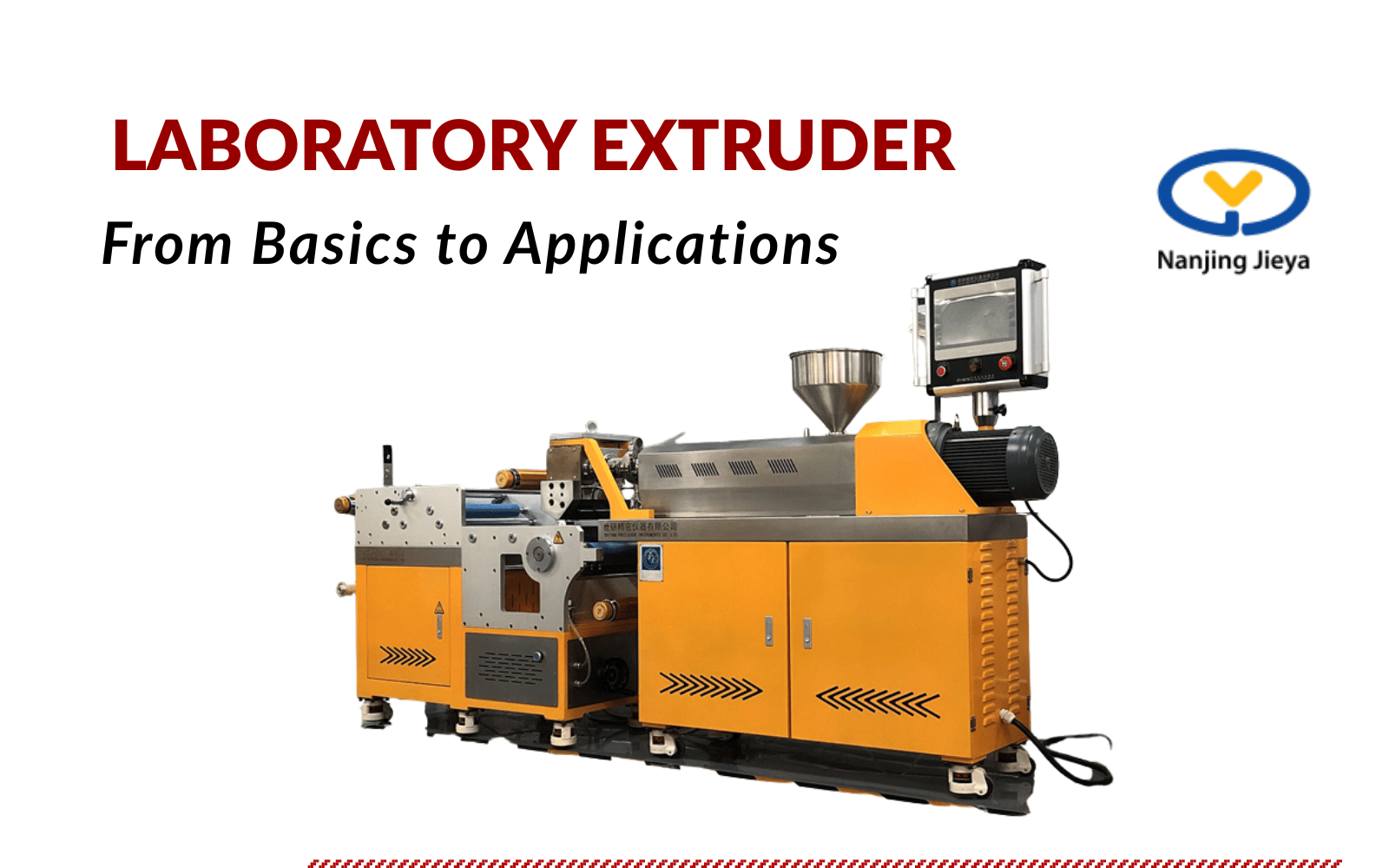
The laboratory extruder is a versatile and essential tool for research and development, particularly for testing and formulating polymers, plastics, and other materials. This compact yet powerful machine plays a crucial role in transforming raw materials into testable samples, enabling innovation and quality control in various industries.
But what exactly is a laboratory extruder? How does it work? And what are its applications? In this blog post, we’ll explore the inner workings of the laboratory extruder, delving into its key components, operational principles, and the diverse applications that leverage its capabilities.
What is a Laboratory Extruder?
A laboratory extruder is a specialized piece of equipment designed for small-scale testing and material development, particularly polymers and plastics. Unlike industrial extruders, laboratory extruders are compact and designed for research and development, enabling precise control over processing parameters.
The design of a laboratory extruder enables efficient mixing, melting, and controlled extrusion of materials. As the material is processed, the extruder ensures consistent and uniform output, making it ideal for testing formulations, studying material behavior, or developing new products. This feature is particularly beneficial for applications requiring precise experimentation with small material batches.
The Significance of Laboratory Extruders in R&D and Testing
In research and development, laboratory extruders play a crucial role in testing, formulating, and optimizing materials for various applications. These machines are designed to process small batches of material, allowing researchers to study the behavior of polymers under controlled conditions. Precise control of parameters such as temperature, pressure, and screw speed ensures accurate, repeatable results.
One of the most common applications of laboratory extruders is in the development of new polymer formulations. These machines are ideal for testing additives, fillers, or reinforcements, ensuring thorough mixing and dispersion. Laboratory extruders provide valuable insights into material properties, enabling manufacturers to refine their processes and achieve consistent quality in full-scale production.
Understanding the Difference Between Laboratory and Industrial Extruders
Compared to industrial extruders, laboratory extruders are designed for small-scale testing and development purposes. They are known for their precise control over processing parameters, which is essential for experimenting with new formulations or studying material behavior. Additionally, laboratory extruders handle smaller material quantities, making them more suitable for research and development applications.
The difference between laboratory and industrial extruders lies in their scale and purpose. Laboratory extruders are compact and optimized for testing, while industrial extruders are larger and built for high-volume production. Industrial extruders focus on efficiency and throughput, processing large quantities of material for manufacturing. In contrast, laboratory extruders prioritize flexibility and precision, enabling researchers to fine-tune processes and achieve consistent results in material development.
Laboratory Extruder Components
The laboratory extruder is a sophisticated piece of equipment with several key components that enable precise operation and performance. Each element plays a vital role in ensuring efficient material testing and development.
1. Screws
The screws are the core elements of the laboratory extruder, designed to convey, mix, and process materials.
Co-rotating Screws: Both screws rotate in the same direction, ideal for applications that require high mixing and kneading.
Counter-rotating Screws: These screws rotate in opposite directions, providing unique shearing and compression capabilities for specific materials.
2. Barrel
The screws are housed in a heated barrel that provides precise temperature control for melting and processing materials. The barrel is divided into multiple zones, each with independent temperature settings for optimal control.
3. Feed Zone
This is where raw materials, such as pellets or powders, are introduced into the extruder. The feed zone ensures smooth and consistent material flow onto the screws.
4. Melting and Conveying Zones
As the material progresses along the screws, it enters these zones, where heat from the barrel and shear forces from the screws gradually melt and plasticize the material.
5. Kneading and Mixing Zones
These zones feature specialized screw elements, such as kneading blocks, that provide intensive mixing and shearing action. This ensures thorough homogenization of the material.
6. Venting and Vacuum Zones
Laboratory extruders often include venting or vacuum zones to remove volatile components or trapped air, improving the quality and consistency of the processed material.
7. Die
The die is the final component, where the molten and homogenized material is shaped into the desired form as it exits the extruder.
By understanding the functions of these components, researchers can optimize the laboratory extruder’s performance, enabling precise material testing and development for a wide range of applications.
How Does a Laboratory Extruder Work?
The working principle of a laboratory extruder is based on its ability to process small batches of material with precision, making it ideal for research and development. Let’s discuss how a laboratory extruder works step by step.
-
Material Feeding
The process begins by introducing raw materials, such as pellets, granules, or powders, into the barrel through a hopper. This ensures a consistent and controlled flow of material onto the screws for further processing. -
Conveying and Compression
As the screws rotate, they convey the raw material along the barrel. During this process, the screws compress and knead the material, generating heat through shear forces and friction, which prepares it for melting. -
Plasticization and Melting
As the material progresses, the combination of heat from the heated barrel and the shearing action of the screws gradually melts and plasticizes the material, converting it into a homogeneous molten mixture. -
Intensive Mixing and Homogenization
The screws provide a high degree of mixing and kneading action, ensuring thorough dispersion of additives, fillers, or reinforcements. This step results in a consistent and uniform melt, crucial for accurate testing and development. -
Melt Pumping and Die Formation
Once the material is fully melted and homogenized, the screws pump the molten mixture towards the die. The die shapes the material into the desired form, such as strands, sheets, or other test samples, depending on the application. -
Cooling and Calibration
As the extruded material exits the die, it undergoes cooling and calibration processes. This may involve water baths, air cooling, or other systems to solidify the material and ensure consistent dimensions and properties.
The laboratory extruder’s precise control over processing parameters and its ability to handle small material quantities make it an indispensable tool for material testing, formulation development, and quality assurance in various industries.
Advantages of Laboratory Extruders
Laboratory extruders offer several distinct advantages, making them an essential tool for research and development in material processing. Let’s explore some of the key benefits they provide.
-
Precise Control and Testing
Laboratory extruders allow for precise control over processing parameters, such as temperature, pressure, and screw speed. This precision is crucial for testing new formulations and studying material behavior under controlled conditions. -
Small Batch Processing
Designed for small-scale operations, laboratory extruders enable efficient processing of limited material quantities, reducing waste and costs during research and development. -
Versatility in Material Testing
Capable of handling a wide range of materials, including polymers, composites, and specialty compounds, laboratory extruders are ideal for testing diverse formulations and applications. -
Enhanced Mixing and Homogenization
With advanced screw designs, laboratory extruders ensure thorough mixing and dispersion of additives, fillers, or reinforcements, resulting in consistent and uniform material properties. -
Quick Setup and Adaptability
Laboratory extruders feature modular designs, allowing for easy reconfiguration or replacement of components, such as screws or dies. This adaptability supports a variety of testing requirements and material types. -
Energy Efficiency
Due to their compact size and efficient design, laboratory extruders consume less energy than industrial-scale machines, making them cost-effective for R&D.
These advantages make laboratory extruders a valuable asset for material testing, formulation development, and quality assurance across industries such as plastics, pharmaceuticals, and specialty materials.
Types of Laboratory Extruders
Laboratory extruders come in various types, each designed to meet specific testing and development needs. Two main categories of laboratory extruders are widely used in research and development:
Single-Screw Laboratory Extruder
This type of laboratory extruder features a single rotating screw within a heated barrel.
- Single-screw extruders are known for their simplicity and ease of operation, making them suitable for basic material testing and straightforward applications.
- They are commonly used for processing thermoplastics, where the focus is on melting and conveying the material rather than intensive mixing.
- Single-screw laboratory extruders are ideal for applications that require lower shear forces and are often used in the initial stages of material development.
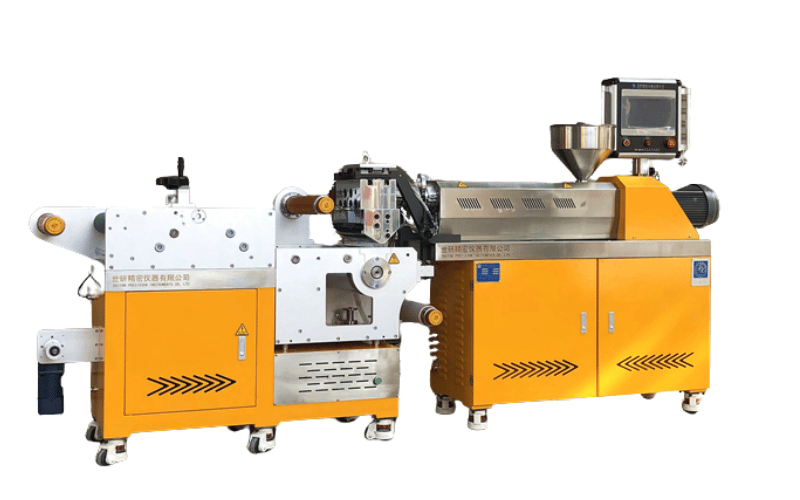
Twin-Screw Laboratory Extruder
As the name suggests, this type of laboratory extruder features two screws that rotate within a heated barrel, either co-rotating or counter-rotating.
- Twin-screw extruders are known for their superior mixing and homogenization capabilities, making them suitable for testing complex formulations or materials requiring uniform dispersion of additives or fillers.
- They are commonly used for processing highly viscous or filled compounds, as well as for reactive extrusion and devolatilization applications.
- Twin-screw laboratory extruders are versatile and can handle a wide range of materials, including specialty polymers and composites.
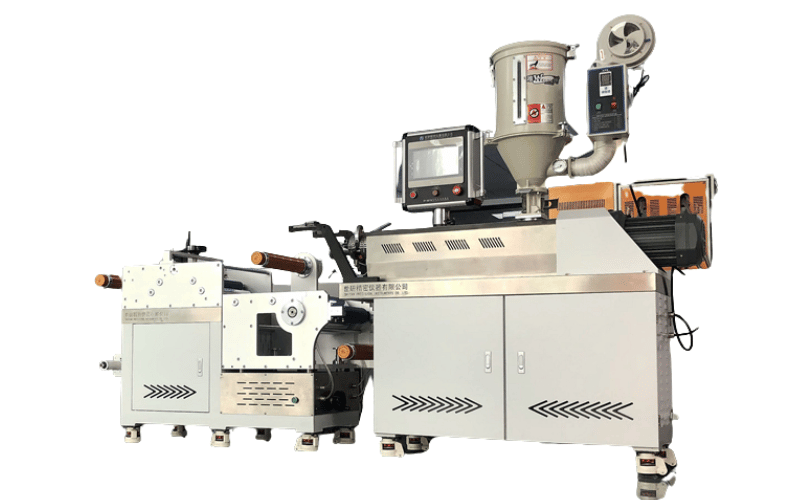
The choice between a single-screw or twin-screw laboratory extruder depends on factors such as the material being tested, the desired level of mixing, and the specific requirements of the research or development project. Manufacturers often collaborate with equipment suppliers to select the most suitable type for their applications, ensuring accurate and reliable testing results.
Applications of Laboratory Extruders
Laboratory extruders are versatile tools used in research, development, and small-scale production. Let’s explore some of the key applications of laboratory extruders:
-
Material Development
Laboratory extruders play a crucial role in developing new materials and formulations. They allow researchers to test and optimize polymer blends, composites, and specialty compounds under controlled conditions, enabling innovation in material science. -
Quality Control and Testing
In quality assurance processes, laboratory extruders are used to evaluate the performance and consistency of materials. They help identify issues such as thermal stability, melt flow behavior, and mechanical properties, ensuring that materials meet required standards. -
Additive and Filler Dispersion
Laboratory extruders are ideal for testing the dispersion of additives, fillers, or reinforcements in polymer matrices. They ensure uniform distribution and compatibility, which is critical for achieving desired material properties in the final product. -
Small-Scale Production
For niche applications or pilot-scale production, laboratory extruders provide an efficient solution. They enable the production of small batches of extruded products, such as filaments, sheets, or profiles, for testing or limited commercial use.
With their precision, flexibility, and ability to handle diverse materials, laboratory extruders are indispensable in advancing material research, ensuring quality, and supporting small-scale manufacturing across various industries.
Final Thought
The laboratory extruder is an indispensable tool that has transformed research and development processes across various industries. From material development and quality control to additive dispersion and small-scale production, these versatile machines have proven their value through precision, flexibility, and efficiency.
Whether you’re looking to develop innovative materials, ensure consistent quality, or produce small batches of extruded products, a laboratory extruder can be the key to achieving your goals. Its ability to handle diverse materials and provide precise control makes it an essential asset for advancing material science and manufacturing innovation.
Visit our website to learn more about Laboratory Extruders. We also offer a range of industrial extruders for comprehensive solutions. If you’re looking for guidance in selecting the right extruder for your specific needs, feel free to contact us today.
Frequently Asked Questions (FAQ)
1. What are the benefits of using a laboratory extruder for R&D?
Laboratory extruders provide precise control over processing parameters, enabling researchers to test and optimize new formulations. They allow for small-scale material testing, reducing waste and costs while accelerating innovation in material development.
2. How does a laboratory extruder improve material testing?
With advanced mixing and homogenization capabilities, laboratory extruders ensure uniform dispersion of additives and fillers. They also allow for accurate simulation of processing conditions, providing reliable data on material performance and properties.
3. Can a laboratory extruder simulate industrial-scale processes?
Yes, laboratory extruders are designed to replicate industrial-scale processes on a smaller scale. This allows researchers to evaluate material behavior and optimize formulations before scaling up to full production, ensuring seamless transitions.
4. What factors should be considered when selecting a laboratory extruder?
Key factors include the type of materials to be processed, desired output, mixing requirements, and compatibility with specific testing needs. It’s also important to consider the extruder’s flexibility, modularity, and ease of operation for diverse applications.
5. What is the ROI for investing in a laboratory extruder?
The return on investment for a laboratory extruder is driven by its ability to accelerate R&D, reduce material waste, and improve product quality. While the initial cost may be significant, the long-term benefits of innovation, efficiency, and reduced development time often lead to faster ROI. Consulting with an expert supplier can help you analyze the potential ROI for your specific needs.


 English
  Portuguese
  Spanish
  Korean
  Russian
  German