


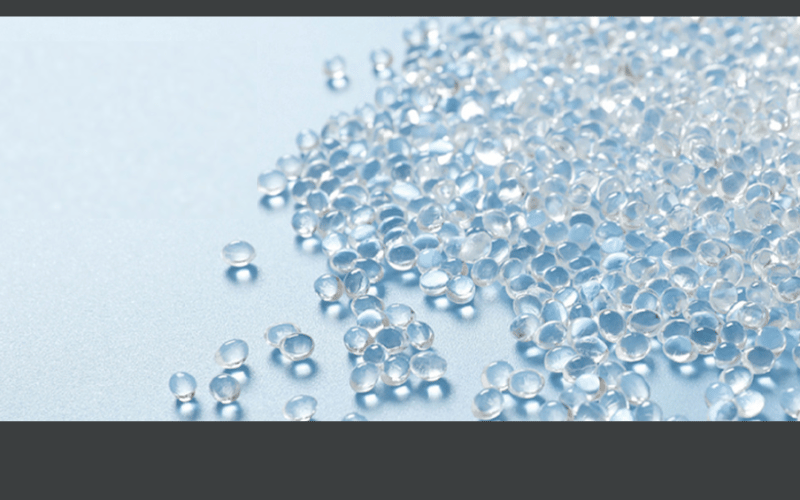
Thermoplastic elastomers (TPEs) offer the benefits of both rubber and plastic, and thus have transformed manufacturing. Their elasticity, chemical resistance, and recyclability make them essential materials in the automotive and construction sectors as well as in medicine and consumer goods. This guide covers the basics of TPE extrusion which includes the extrusion procedure, kinds of extruders, compounding methods, and quality control procedures. Learning these areas will help in the optimization of production, exploring newer applications, enhanced efficiency, and better product performance.
Understanding TPE and Thermoplastic Elastomers
Definition of TPE
Thermoplastic Elastomers (TPEs) are a group of polymers that incorporate elasticity of rubber with the versatility of thermoplastics. Compared to conventional rubber, TPEs possess the ability to be melted, reshaped, and reused, thus making them much more sustainable. The presence of both hard and soft segments within the materials is what gives TPEs their distinctive flexibility and toughness.
Properties of Thermoplastic Elastomers
TPEs exhibit a range of properties that make them suitable for diverse applications:
- Elasticity: They can stretch and return to their original shape without permanent deformation.
- Temperature Resistance: TPEs maintain their performance across a wide temperature range, making them ideal for both hot and cold environments.
- Chemical Resistance: These materials resist oils, solvents, and other chemicals, ensuring durability in harsh conditions.
- Lightweight: TPEs are significantly lighter than traditional rubber, reducing overall product weight.
- Recyclability: Unlike thermoset rubbers, TPEs can be reprocessed and recycled, contributing to eco-friendly manufacturing practices.
Applications of TPEs in Various Industries
Thermoplastic Elastomers are used across numerous industries due to their adaptability and performance:
- Automotive: TPEs are used in seals, gaskets, and interior components, offering durability and flexibility.
- Medical: Their biocompatibility makes them ideal for medical tubing, seals, and wearable devices.
- Consumer Goods: TPEs are found in products like toothbrush grips, phone cases, and sports equipment, providing comfort and grip.
- Electronics: They are used in cable insulation and flexible connectors due to their electrical resistance and flexibility.
- Construction: TPEs are employed in weatherproofing materials, adhesives, and sealants for their resilience and longevity.
The Extrusion Process for TPE
Overview of the Extrusion Process
The extrusion process is a manufacturing method used to shape Thermoplastic Elastomers (TPEs) into continuous profiles like tubes, sheets, or cables. It involves melting the TPE material and forcing it through a shaped die to create the desired form. This process is widely used due to its efficiency, scalability, and ability to produce consistent results.
Key Stages in TPE Extrusion
- Material Feeding: TPE pellets or granules are fed into the extruder’s hopper, where they are gradually moved toward the barrel.
- Melting and Mixing: Inside the barrel, the material is heated and mixed using rotating screws. This ensures the TPE reaches a uniform molten state.
- Shaping Through the Die: The molten TPE is pushed through a die, which determines the final shape of the product. Dies can be customized for specific applications.
- Cooling and Solidifying: The extruded material is cooled, often using water baths or air, to solidify its shape.
- Cutting and Finishing: The continuous profile is cut into desired lengths or further processed for finishing, such as surface treatments or coatings.
Common Challenges in TPE Extrusion
- Material Inconsistencies: Variations in TPE formulations can lead to uneven melting or poor product quality. Using high-quality, consistent materials minimizes this issue.
- Die Swell: TPEs can expand slightly after exiting the die, affecting dimensional accuracy. Proper die design and process control help mitigate this.
- Overheating: Excessive heat can degrade TPE properties, leading to discoloration or reduced performance. Maintaining optimal temperature settings is crucial.
- Surface Defects: Issues like rough surfaces or bubbles can occur due to improper cooling or trapped air. Adjusting cooling methods and ensuring proper venting can resolve these problems.
Extruders for TPE: Types and Functions
Types of Extruders Used for TPE
Extruders are essential for processing Thermoplastic Elastomers (TPEs) into various shapes and forms. The two main types of extruders used for TPE are:
-
Single-Screw Extruders: These are the most common and versatile extruders. They use a single rotating screw to melt and push the TPE through a die. Single-screw extruders are ideal for straightforward applications like tubing or profiles.
-
Twin-Screw Extruders: These extruders feature two intermeshing screws that provide better mixing and control. They are perfect for applications requiring precise blending of additives or colorants with TPE.
Choosing the Right Extruder for TPE Applications
Selecting the right extruder depends on the specific requirements of your TPE application. Consider the following factors:
- Material Properties: For TPEs with complex formulations, twin-screw extruders offer superior mixing capabilities.
- Product Design: Single-screw extruders are sufficient for simple shapes, while twin-screw extruders handle intricate designs better.
- Production Volume: High-volume production often benefits from twin-screw extruders due to their efficiency and consistency.
- Additive Requirements: If your TPE product requires additives like UV stabilizers or colorants, twin-screw extruders ensure even distribution.
Maintenance and Optimization of TPE Extruders
Proper maintenance and optimization are crucial for ensuring the longevity and performance of TPE extruders:
- Regular Cleaning: Clean the screws and barrel frequently to prevent material buildup, which can affect product quality.
- Temperature Monitoring: Maintain optimal temperature settings to avoid overheating or underheating the TPE material.
- Screw Inspection: Check screws for wear and tear, as damaged screws can lead to inconsistent extrusion.
- Die Maintenance: Ensure the die is free from obstructions and properly aligned to maintain product accuracy.
- Lubrication: Keep moving parts well-lubricated to reduce friction and extend the life of the extruder.
TPE Compounding and Production
The TPE Compounding Process
TPE Compounding is the processes of adding certain polymers in a blend with a base polymer to achieve the required characteristics and properties. This process is initiated by base materials acquisition which in this case requires the thermoplastic and elastomer base parts polymers. These base polymers are blended with stabilizers, colorants, and fillers which enhance their durability, flexibility and general appearance.
The materials are fed to the machine that performs the TPE compounding, the materials are melted and mixed thoroughly. A twin screw extruder is used at this step. These machines do a good job at this part of the process too. The compound is cooled before the next step which may involve granulation, molding of or machining.
Granulation Techniques for TPE Compounds
Granulation is a critical step in TPE production, converting the compounded material into uniform pellets for easy handling and processing. Two common techniques include:
-
Hot Die Face Cutting: The molten TPE is extruded through a die and cut into pellets immediately upon exiting. This method is efficient and produces smooth, uniform granules.
-
Strand Pelletizing: The TPE is extruded into long strands, cooled in a water bath, and then cut into pellets. This technique is ideal for materials requiring precise pellet size and shape.
Both methods ensure the TPE compound is ready for use in various applications, from injection molding to extrusion.
Quality Control in TPE Production
Maintaining high-quality standards is essential in TPE production to ensure consistent performance and reliability. Key quality control measures include:
- Material Testing: Regularly test raw materials for purity and consistency to avoid defects in the final product.
- Process Monitoring: Continuously monitor temperature, pressure, and mixing parameters during compounding to maintain uniformity.
- Pellet Inspection: Check granules for size, shape, and surface quality to ensure they meet specifications.
- Performance Testing: Conduct tests like tensile strength, elasticity, and thermal resistance to verify the compound’s properties align with application requirements.
Extrusion Machines and Production Lines
Components of an Extrusion Machine
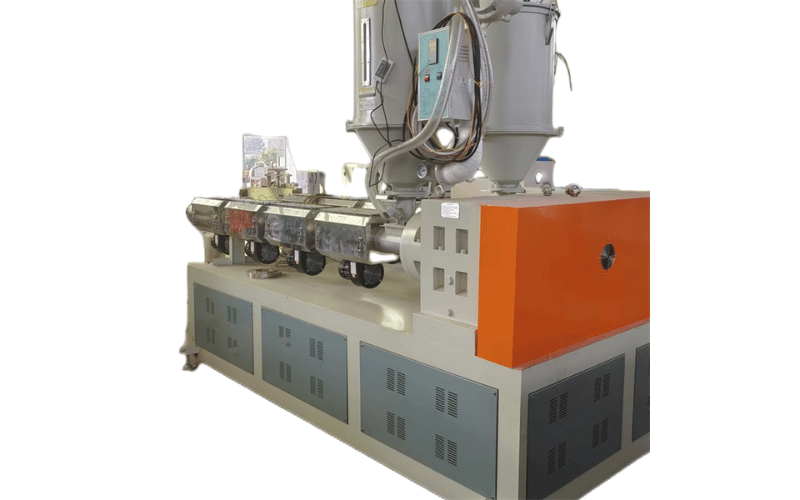
An extrusion machine is a critical piece of equipment for processing Thermoplastic Elastomers (TPEs). Its main components include:
- Hopper: This is where TPE pellets or granules are loaded. The hopper ensures a steady feed of material into the machine.
- Barrel and Screw: The barrel houses the rotating screw, which melts and mixes the TPE. The screw’s design is crucial for achieving uniform melting and consistent output.
- Heaters and Cooling System: These regulate the temperature within the barrel, ensuring the TPE reaches the correct molten state without degradation.
- Die: The die shapes the molten TPE into the desired profile, such as tubes, sheets, or cables.
- Drive System: This powers the screw, controlling its speed and torque for precise material flow.
- Control Panel: Modern extrusion machines feature advanced control panels for monitoring and adjusting parameters like temperature, pressure, and screw speed.
Designing an Efficient Extrusion Line for TPE
Creating an efficient extrusion line for TPE involves careful planning and optimization. Key considerations include:
- Material Flow: Ensure a smooth and consistent flow of TPE from the hopper to the die to avoid defects or interruptions.
- Cooling System: Incorporate effective cooling methods, such as water baths or air cooling, to solidify the extruded material quickly and evenly.
- Automation: Use automated systems for feeding, monitoring, and cutting to improve efficiency and reduce manual errors.
- Die Design: Customize the die to match the specific product requirements, ensuring accurate dimensions and surface quality.
- Energy Efficiency: Opt for energy-efficient components, such as variable frequency drives (VFDs), to reduce operational costs and environmental impact.
Future Trends in TPE Extrusion Technology
The extrusion industry is evolving rapidly, with new technologies enhancing efficiency and sustainability. Emerging trends include:
- Smart Extrusion Systems: Advanced sensors and AI-driven controls are enabling real-time monitoring and optimization of extrusion processes.
- Recyclable TPEs: Innovations in material science are leading to TPE formulations that are easier to recycle, aligning with global sustainability goals.
- 3D Extrusion: Combining extrusion with 3D printing technology is opening up new possibilities for creating complex, customized TPE products.
- Energy-Saving Designs: Manufacturers are focusing on reducing energy consumption through improved machine designs and renewable energy integration.
Frequently Asked Questions
Q: What is the TPE extrusion process?
A: The TPE extrusion process involves melting thermoplastic elastomer materials and shaping them into continuous profiles using an extruder. The process includes feeding, heating, extruding through a die, and cooling, ensuring consistent quality and precise shapes for various applications.
Q: How does a TPE extruder work?
A: A TPE extruder feeds raw TPE material into a heated barrel, where it is melted and mixed. The molten TPE is then pushed through a die to form the desired shape. The type of extruder, whether single-screw or twin-screw, affects mixing efficiency and the final product’s properties, such as elasticity and strength.
Q: What are the advantages of using a twin-screw extruder for TPE production?
A: Twin-screw extruders provide superior mixing and dispersion of additives, better control over processing conditions, and higher efficiency. These features ensure consistent, high-quality TPE pellets suitable for demanding applications like automotive components and medical devices.
Q: What materials are commonly used in TPE compounding?
A: TPE compounding typically uses thermoplastic elastomers like SEBS, SBS, and TPU. These are blended with fillers, plasticizers, stabilizers, and colorants to achieve specific properties such as flexibility, hardness, and processability, tailored to meet application requirements.
Q: What is involved in the manufacture of TPE?
A: TPE manufacturing includes material selection, compounding, extrusion, and cooling. During compounding, raw materials are blended to create a uniform formulation. The mixture is then extruded into pellets or sheets, which are further processed into final products. Quality control ensures consistency and performance at every stage.
Q: How does the extrusion line affect TPE production efficiency?
A: The extrusion line significantly impacts TPE production efficiency. Factors like extruder design, cooling systems, and automation determine output rates and product quality. An optimized extrusion line reduces cycle times, improves material utilization, and enhances overall efficiency.
Q: What are the differences between TPE and traditional rubber?
A: TPEs differ from traditional rubber in that they can be melted, reshaped, and recycled, while rubber requires curing processes like vulcanization. TPEs combine the elasticity of rubber with the processability of plastics, making them more versatile for applications requiring complex shapes and efficient manufacturing.
Q: What is underwater pelletizing and how is it used in TPE production?
A: Underwater pelletizing converts molten TPE into pellets by cutting the extrudate underwater. This method ensures uniform pellet size, rapid cooling, and minimal material degradation, making it ideal for temperature-sensitive TPE formulations.
Q: What are the key mechanical properties of TPE materials?
A: TPE materials exhibit elasticity, tensile strength, and hardness, which can be customized through specific formulations. These properties allow TPEs to provide soft-touch surfaces, durability, and resistance to environmental factors, meeting diverse application needs.
Conclusion
The TPE extrusion process merits consideration for its operational flexibility and productivity in producing quality and multifunctional products. Manufacturers focusing on extrusion process accuracy, appropriate machinery selection, and system quality checkpoints to meet industrial output will easily satisfy the increasing supply needs for sustainable high-performance materials. The TPE extrusion process will increasingly foster innovations in manufacturing productivity and environmental sustainability due to the emergence of new technologies for the extrusion process and recyclable TPE blends.


 English
  Portuguese
  Spanish
  Korean
  Russian
  German