


Laboratory extruders are vital tools in materials science. They support research and development, small-scale production, and quality control. These machines process and shape materials, allowing scientists and engineers to test formulations, study material behavior, and refine production techniques.
Whether you’re developing new polymers, testing additives, or ensuring product consistency, laboratory extruders offer the precision and flexibility needed for innovation.
Researchers and manufacturers often use laboratory extruders to bridge the gap between concept and production. These machines enable controlled experimentation, helping teams identify the best formulations before scaling up to full production.
For small-scale production, laboratory extruders provide a cost-effective way to create prototypes or limited product runs. In quality control, they ensure materials meet required standards and offer valuable insights into performance and durability.
This article simplifies the technical aspects of laboratory extruders. It provides actionable insights to help professionals make informed decisions and unlock the full potential of these versatile machines.
What is a Laboratory Extruder?
A laboratory extruder is a compact but powerful tool used for small-scale material testing and development. It acts as a workhorse in materials science, transforming raw materials into valuable insights.
Its main purpose is to simulate the extrusion process on a smaller scale. This allows researchers and engineers to experiment, refine, and perfect formulations before moving to industrial production.
The Basics of Extrusion
Extrusion is a simple yet clever process. It involves pushing material—like polymers, food products, or metals—through a die to create continuous shapes.
Think of squeezing toothpaste out of a tube. The nozzle determines the shape of the paste. Similarly, the die in an extruder shapes the final material.
Laboratory extruders replicate this process with precision. They let users test how materials respond to specific conditions, such as temperature, pressure, and shear.
Key Role: Bridging Research and Production
Laboratory extruders play a key role in connecting research with real-world production. They help turn ideas from research labs into products ready for industrial use.
By mimicking large-scale extrusion conditions, these devices allow professionals to:
- Troubleshoot potential issues.
- Optimize formulations.
- Ensure product consistency.
All of this is achieved without the cost and complexity of full-scale machinery.
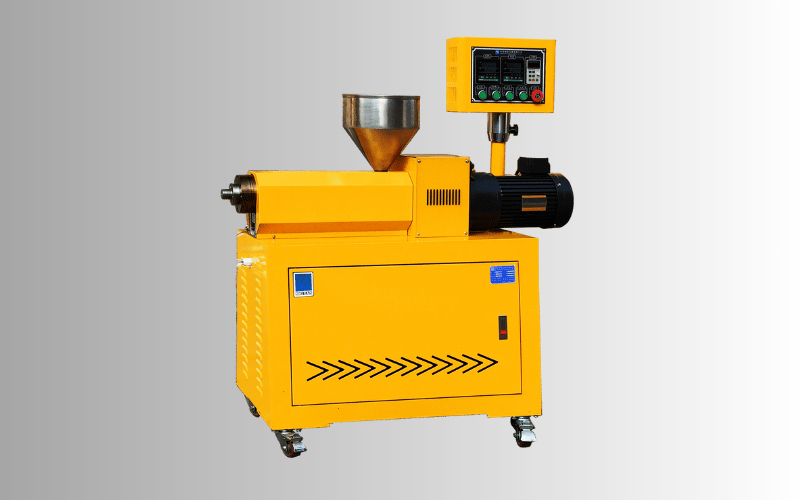
Why Are Laboratory Extruders Important?
Laboratory extruders are essential tools in material development. They offer precision, adaptability, and efficiency in a compact form. These machines are more than just tools—they are problem-solvers and innovation drivers for industries that rely on material testing and development.
Let’s break down their importance into actionable insights.
Cost-Effective Testing
Laboratory extruders help reduce the financial risks of trial-and-error in material development. Instead of committing to expensive full-scale production runs, you can test formulations on a smaller scale.
This approach allows you to:
- Identify flaws.
- Optimize recipes.
- Refine processes.
For example, if you’re developing a new polymer blend, a laboratory extruder can help you find the ideal temperature and shear settings. This saves both time and money by minimizing waste and operational costs.
Flexibility
Laboratory extruders are designed for adaptability. They allow quick adjustments to parameters like screw speed, temperature, and feed rate.
For instance, if you’re testing a new pharmaceutical ingredient, you can tweak the process in real-time. This provides immediate feedback and enables rapid iteration.
Such flexibility is invaluable in industries where innovation moves fast, and time-to-market is critical.
Scaling Up
Moving from research to industrial production can be challenging, but laboratory extruders simplify the process. They provide critical data on:
- Material behavior.
- Process parameters.
- Product quality.
For example, in the food industry, a laboratory extruder can help determine the optimal moisture content and extrusion temperature for a new snack product. This ensures efficiency and quality when scaling up to full production.
Wide Industry Applications
The versatility of laboratory extruders makes them valuable across many industries:
- Plastics: Testing new polymer blends and additives.
- Pharmaceuticals: Developing drug delivery systems like pellets and tablets.
- Food Science: Creating and refining products like cereals and protein bars.
- Niche Industries: Supporting innovations in bioplastics and advanced composites.
Their ability to handle diverse materials and processes makes laboratory extruders indispensable for innovation and quality in any field.
How Laboratory Extruders Work
Laboratory extruders are precision instruments that transform raw materials into usable forms through a carefully controlled process. To truly understand their value, it’s essential to break down how they operate and the components that make them so effective. Let’s dive into the mechanics and explore the materials they handle with ease.
The Extrusion Process
The extrusion process is a symphony of steps, each playing a critical role in shaping the final product. Here’s how it unfolds:
- Feeding Materials into the Hopper
The process begins at the hopper, where raw materials—whether polymers, powders, or granules—are introduced. The hopper acts as the gateway, ensuring a steady and controlled feed into the extruder. Consistency here is key, as uneven feeding can disrupt the entire process. - Melting and Mixing in the Barrel
Once inside the barrel, the materials encounter the screw, which rotates to convey them forward. As the materials move, they are subjected to heat and shear forces, causing them to melt and mix. This stage is where the magic happens—additives are evenly distributed, and the material achieves the desired consistency. For twin screw extruders, the intermeshing screws provide superior mixing, making them ideal for complex formulations. - Shaping Through the Die
After achieving the right melt state, the material is forced through a die, which determines its final shape. Whether it’s a cylindrical strand, a flat sheet, or a custom profile, the die is the sculptor, giving the material its intended form. Precision at this stage ensures the product meets exact specifications. - Cooling and Collecting the Final Product
The shaped material exits the die and enters the cooling phase, often involving water baths or air cooling systems. This step solidifies the material, locking in its shape and properties. Finally, the product is collected, ready for testing or further processing.
Key Components
Every laboratory extruder relies on a set of core components, each designed to perform a specific function:
- Hopper: The starting point for feeding materials into the system.
- Barrel: The chamber where heating, melting, and mixing occur.
- Screw: The heart of the extruder, responsible for conveying and mixing materials. Twin screw designs excel in handling complex formulations.
- Die: The tool that shapes the material into its final form.
- Drive System: The motor and gearbox that power the screw’s rotation, ensuring consistent operation.
Each component works in harmony, and understanding their roles helps you optimize performance and troubleshoot issues effectively.
Types of Materials Processed
Laboratory extruders are versatile machines capable of handling a wide range of materials. Here are some examples:
- Polymers: From thermoplastics to elastomers, extruders process materials for applications like films, fibers, and profiles.
- Ceramics: Used to shape advanced ceramics for industries like aerospace and electronics.
- Pharmaceuticals: Ideal for creating drug delivery systems, such as pellets and sustained-release tablets.
- Food Ingredients: Extruders play a key role in producing snacks, cereals, and protein-enriched products.
This adaptability makes laboratory extruders indispensable across industries, providing the precision and control needed to meet diverse material requirements.
Types of Laboratory Extruders
Laboratory extruders come in different types, each designed for specific testing and development needs. The right choice depends on your material, desired output, and required precision. Let’s explore the main types and their unique strengths.
Single-Screw Extruders
Single-screw extruders are the simplest type of laboratory extruder. They feature a single rotating screw inside a barrel, making them easy to use and maintain.
Applications:
- Melt flow testing to study material behavior under heat and pressure.
- Producing simple shapes like rods or sheets where advanced mixing isn’t needed.
Advantages:
- Simple design means lower costs and easier operation.
- Ideal for labs needing reliable performance without the complexity of twin-screw systems.
Twin-Screw Extruders
Twin-screw extruders are designed for advanced mixing and compounding. They use two intermeshing screws to ensure even distribution of additives, fillers, and other components.
Applications:
- Reaction extrusion, where chemical reactions occur during the process.
- Processing complex materials like polymer blends or pharmaceutical compounds.
- Creating products that require precise control over material properties, such as advanced composites or drug delivery systems.
Advantages:
- Superior control over shear, temperature, and residence time.
- Highly adaptable for fine-tuning processes and handling challenging formulations.
Specialized Configurations
For niche applications, specialized laboratory extruders provide tailored solutions beyond standard designs.
Examples:
- Miniature Film Extruders: Perfect for producing thin films on a small scale. Useful for testing properties like tensile strength and transparency.
- Reactive Extruders: Designed for chemical reactions during extrusion, ideal for creating materials like cross-linked polymers or bio-based plastics.
- Custom Designs: Includes extruders with multiple feed ports or advanced cooling systems, catering to industries like food science, ceramics, and pharmaceuticals.
Choosing the Right Extruder
Each type of laboratory extruder offers unique capabilities. Understanding their strengths helps you select the right tool for your needs.
Whether you’re conducting basic tests or working on complex formulations, there’s a laboratory extruder designed to help you achieve precision and efficiency.
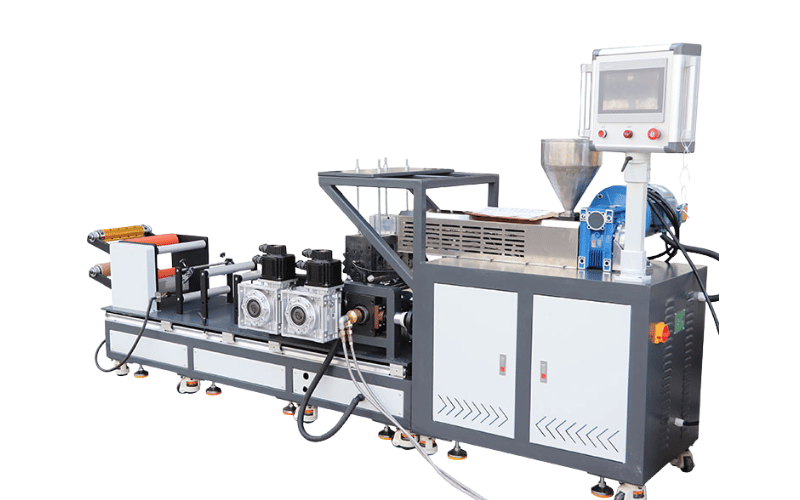
Applications of Laboratory Extruders
Laboratory extruders are more than just machines—they are essential tools for innovation. They bridge the gap between ideas and production, offering precision and control to solve complex challenges. Let’s explore their applications in material development, process optimization, pharmaceuticals, and food science.
Material Development
Laboratory extruders are vital for creating new materials. They provide a controlled environment for testing and refining formulations before scaling up to industrial production.
Creating New Polymer Blends and Additives:
- Develop high-strength polymers for automotive use or biodegradable plastics for packaging.
- Adjust parameters like temperature, screw speed, and feed rate to achieve the desired material properties.
Testing Thermal and Mechanical Properties:
- Evaluate how materials respond to heat, pressure, and shear.
- Test properties like melt flow index or tensile strength to ensure performance standards are met.
Process Optimization
Laboratory extruders excel at simulating industrial conditions on a smaller scale, making them ideal for process improvement.
Simulating Industrial Conditions:
- Replicate full-scale extrusion conditions to identify issues and optimize parameters.
- Test material behavior under different shear rates or residence times for a smoother production transition.
Reducing Material Waste:
- Work with smaller material quantities during early-stage development to minimize waste.
- Save costs and speed up development with quick, actionable insights.
Pharmaceuticals
In the pharmaceutical industry, laboratory extruders are crucial for developing drug delivery systems. Their precision and adaptability make them ideal for handling sensitive materials.
Hot Melt Extrusion for Drug Delivery:
- Combine active pharmaceutical ingredients with polymers to create tablets, pellets, or films.
- Improve drug solubility and bioavailability for effective patient delivery.
- Test different polymer-drug combinations to achieve the desired release profile.
Food Science
Food scientists use laboratory extruders to innovate and refine products, ensuring they meet consumer expectations and regulatory standards.
Developing New Textures and Testing Ingredients:
- Experiment with ingredient combinations and process settings to create unique textures and flavors.
- Test how protein sources behave under extrusion to develop plant-based meat alternatives.
- Optimize the crunchiness of cereal products or other snacks.
Empowering Innovation
Laboratory extruders provide precision, control, and versatility across industries. Whether you’re developing materials, improving processes, or creating new products, these machines are indispensable tools for pushing the boundaries of innovation.
Key Operational Parameters
Operating a laboratory extruder effectively requires a deep understanding of its key parameters. Each setting plays a critical role in determining the quality and consistency of the final product. Let’s break down the most important operational parameters and how to manage them for optimal performance.
Temperature Control
Temperature control is the backbone of any extrusion process. Laboratory extruders are equipped with multiple heating zones along the barrel, each of which can be independently controlled. This allows for precise temperature management, which is essential for processing materials with varying thermal properties.
- Setting and Monitoring Heating Zones: The material’s melting point and thermal stability dictate the temperature settings for each zone. For example, when working with a polymer blend, you might set the initial zones to preheat the material, while the middle zones handle melting and mixing. The final zones can be adjusted to stabilize the material before it reaches the die. Monitoring these zones in real-time ensures that the material doesn’t degrade or overheat, which could compromise product quality.
- Practical Tip: Use thermocouples and automated feedback systems to maintain consistent temperatures. Even minor fluctuations can lead to inconsistencies in the final product, so precision is key.
Screw Speed and Residence Time
The screw speed, measured in revolutions per minute (RPM), directly impacts the material flow, mixing intensity, and residence time within the extruder. These factors must be carefully balanced to achieve the desired material properties.
- Adjusting RPM to Control Material Flow and Mixing: Higher screw speeds increase shear and mixing, which is beneficial for dispersing additives or achieving uniformity in complex formulations. However, excessive speed can lead to overheating or material degradation. For instance, when processing heat-sensitive pharmaceuticals, a lower RPM might be necessary to prevent active ingredients from breaking down.
- Residence Time Considerations: Residence time—the duration the material spends in the barrel—affects the extent of mixing and thermal exposure. Shorter residence times are ideal for materials prone to thermal degradation, while longer times may be needed for thorough compounding.
Die Design
The die is the final gatekeeper of the extrusion process, shaping the material as it exits the extruder. Its design has a significant impact on product quality, from dimensional accuracy to surface finish.
- How Different Dies Affect Product Shape and Quality: A simple round die might be used for producing strands, while a more complex profile die could create intricate shapes like tubing or films. The die’s geometry also influences material flow and pressure, which must be optimized to prevent defects like warping or uneven thickness. For example, in food extrusion, a die with multiple small openings can create textured protein products, mimicking the structure of meat.
- Practical Tip: Regularly inspect and clean dies to prevent buildup, which can alter flow dynamics and compromise product quality.
Data Collection
Modern laboratory extruders are equipped with automation and software tools that make data collection and analysis seamless. These systems provide valuable insights into the extrusion process, enabling precise control and repeatability.
- Using Automation and Software for Precise Parameter Tracking: Sensors and software can monitor variables like temperature, pressure, and torque in real-time. This data not only helps maintain consistent quality but also provides a record for troubleshooting and process optimization. For instance, if a batch shows unexpected properties, you can review the data to identify anomalies in the process.
- Practical Tip: Invest in software that integrates with your extruder to visualize trends and generate reports. This makes it easier to fine-tune parameters and scale up processes with confidence.
By mastering these operational parameters, you can unlock the full potential of your laboratory extruder. Each adjustment, no matter how small, contributes to the precision and efficiency of the process, ensuring that your materials meet the highest standards of quality.
Choosing the Right Laboratory Extruder
Selecting the right laboratory extruder is not just about picking a machine—it’s about aligning the extruder’s capabilities with your specific needs. Whether you’re focused on research, teaching, or small-scale production, the right choice can make all the difference in efficiency and results. Let’s explore the key considerations and a practical checklist to guide your decision.
Key Considerations
Before diving into technical specifications, it’s essential to define your goals and constraints. Each factor below plays a critical role in narrowing down your options.
- Purpose: R&D, Teaching, or Small-Scale Production
Start by identifying the primary purpose of the extruder. For R&D, you’ll need a machine with precise control over parameters to test and refine formulations. Teaching applications may prioritize ease of use and visibility, such as clear barrels for demonstration purposes. Small-scale production, on the other hand, requires an extruder capable of consistent output and scalability. - Material Type: Heat-Sensitive, Reactive, or Standard Polymers
The type of material you plan to process heavily influences your choice. For heat-sensitive materials like pharmaceuticals, look for extruders with advanced cooling systems and precise temperature control. Reactive materials may require twin-screw extruders with specialized configurations to handle in-barrel chemical reactions. Standard polymers, such as polyethylene or polypropylene, can often be processed with simpler setups. - Output Volume: Small-Batch Testing or Pilot-Scale Production
Consider the scale of your operations. If you’re conducting small-batch testing, a compact extruder with lower throughput will suffice. For pilot-scale production, opt for a machine with higher output capacity and the ability to replicate industrial conditions. - Modularity: Flexibility for Future Upgrades
A modular design allows you to adapt the extruder as your needs evolve. For example, you might start with a basic setup for single-screw extrusion and later upgrade to a twin-screw configuration or add specialized dies for new applications. This flexibility ensures that your investment remains relevant as your projects grow in complexity.
Checklist for Selection
Once you’ve defined your requirements, use this checklist to evaluate potential extruders and ensure they meet your needs:
- Screw Type: Decide between single-screw and twin-screw extruders based on your material and mixing requirements. Twin-screw extruders are ideal for complex formulations, while single-screw models are sufficient for simpler tasks.
- L/D Ratio (Length-to-Diameter Ratio): The L/D ratio affects the residence time and mixing efficiency. A higher ratio (e.g., 40:1) provides more opportunities for mixing and reaction, while a lower ratio (e.g., 20:1) is better suited for straightforward extrusion tasks.
- Control Systems: Look for extruders with advanced control systems that allow you to monitor and adjust parameters like temperature, screw speed, and pressure in real-time. Automation and data logging capabilities are particularly valuable for R&D applications.
- Budget: While it’s tempting to focus solely on upfront costs, consider the long-term value of the extruder. A slightly higher initial investment in a modular, high-quality machine can save you money in the long run by reducing downtime and maintenance costs.
By carefully evaluating these factors and using the checklist as a guide, you can select a laboratory extruder that not only meets your current needs but also supports your future ambitions. The right machine is more than a tool—it’s an innovation partner, ready to help you tackle challenges and achieve breakthroughs.
SHJ-20 Twin Screw Laboratory Extruder parameters
| Model | Screw Diameter (mm) | L/D | Screw RPM | Main motor KW | Torque Grade T/N3 | Capacity kg/h |
|---|---|---|---|---|---|---|
| SHJ-20 | 21.7 | 32-68 | 400/500/600 | 4 | 5.8 | 0.5-15 |
| SHJ-30 | 30 | 32-68 | 400/500/600 | 11 | 5.8 | 5-50 |
| SHJ-36 | 35.6 | 32-68 | 500/600/700/800 | 15-18.5-22 | 5.7 | 20-80 |
SHJ-30 Twin Screw Lab Extruder with Underwater Pelletizing parameters
| Model | Screw Diameter (mm) | L/D | Screw RPM | Main motor KW | Torque Grade T/N3 | Capacity kg/h |
|---|---|---|---|---|---|---|
| SHJ-20 | 21.7 | 32-68 | 400/500/600 | 4 | 5.8 | 0.5-15 |
| SHJ-30 | 30 | 32-68 | 400/500/600 | 11 | 5.8 | 5-50 |
| SHJ-36 | 35.6 | 32-68 | 500/600/700/800 | 15-18.5-22 | 5.7 | 20-80 |
SHJ-36 Twin Screw Extruder with Underwater Cutting parameters
| Model | Screw Diameter (mm) | L/D | Screw RPM | Main motor KW | Torque Grade T/N3 | Capacity kg/h |
|---|---|---|---|---|---|---|
| SHJ-20 | 21.7 | 32-68 | 400/500/600 | 4 | 5.8 | 0.5-15 |
| SHJ-30 | 30 | 32-68 | 400/500/600 | 11 | 5.8 | 5-50 |
| SHJ-36 | 35.6 | 32-68 | 500/600/700/800 | 15-18.5-22 | 5.7 | 20-80 |
Maintenance and Safety Tips
A laboratory extruder is a precision instrument, and like any high-performance machine, it demands regular care and attention to operate at its best. Proper maintenance not only extends the lifespan of your equipment but also ensures consistent results. At the same time, safety protocols are non-negotiable when working with high temperatures, moving parts, and potentially hazardous materials. Let’s explore actionable maintenance practices and safety measures to keep your extruder running smoothly and your team safe.
Maintenance Best Practices
Routine maintenance is the backbone of reliable extruder performance. Neglecting these tasks can lead to inefficiencies, costly downtime, or even equipment failure. Here’s how to stay ahead of potential issues:
- Regular Cleaning of Screws and Barrels
Residual material buildup inside the barrel or on the screws can compromise mixing efficiency and lead to contamination between batches. After each use, disassemble the screws and clean them thoroughly using appropriate tools and solvents. For heat-sensitive materials, ensure that no charred residue remains, as it can degrade subsequent batches. - Inspecting Heating Elements and Sensors
Heating elements and temperature sensors are critical for maintaining precise thermal control. Periodically inspect these components for wear, damage, or calibration drift. For example, a faulty thermocouple can result in inaccurate temperature readings, leading to material degradation or inconsistent product quality. Replace any worn-out parts promptly to avoid disruptions. - Calibration for Accurate Readings
Over time, sensors and control systems can lose accuracy, affecting the reliability of your process data. Schedule regular calibration checks for temperature, pressure, and torque sensors. Use certified calibration tools to ensure that your readings align with industry standards. Accurate data is essential for both quality control and process optimization.
Safety Protocols
Laboratory extruders operate under extreme conditions, making safety a top priority. Implementing robust safety measures protects both your team and your equipment.
- Managing High Temperatures and Moving Parts
Extruders often operate at temperatures exceeding 200°C, with screws rotating at high speeds. Always use heat-resistant gloves and protective eyewear when working near the barrel or die. Ensure that all guards and safety interlocks are in place to prevent accidental contact with moving parts. For instance, never attempt to remove material from the die while the extruder is running—always shut down the machine first. - Handling Hazardous Materials Safely
Some materials, such as reactive polymers or pharmaceutical compounds, can pose health risks if not handled properly. Use appropriate ventilation systems to manage fumes and wear personal protective equipment (PPE) like masks and gloves. When working with powders or granules, avoid creating dust clouds, as they can be both a respiratory hazard and a fire risk.
By integrating these maintenance and safety practices into your routine, you can ensure that your laboratory extruder remains a reliable and safe tool for innovation. A well-maintained machine not only delivers consistent results but also fosters a safer working environment for everyone involved.
Frequently Asked Questions
Q: How does a laboratory extruder differ from an industrial extruder?
A: A laboratory extruder is smaller and designed for testing, research, and small-scale production. It allows precise control over parameters like temperature, screw speed, and pressure, making it ideal for experimentation. Industrial extruders, on the other hand, are built for large-scale production and focus on high throughput rather than flexibility. Laboratory extruders bridge the gap between concept and full-scale manufacturing.
Q: What is the typical sample size for lab extrusion?
A: The typical sample size for lab extrusion ranges from 50 grams to a few kilograms, depending on the machine and material. This small-scale capacity allows researchers to test formulations without wasting large amounts of material, making it cost-effective and efficient for R&D purposes.
Q: Can single-screw extruders handle complex formulations?
A: Single-screw extruders struggle with complex formulations that require intensive mixing or precise dispersion of additives. They work best for straightforward tasks like melt flow testing or processing homogenous materials. For complex formulations, twin-screw extruders provide better mixing and control, making them the preferred choice.
Q: Why is the L/D ratio important in extrusion?
A: The L/D ratio (length-to-diameter ratio) determines how long the material stays in the barrel and how much mixing or reaction occurs. A higher L/D ratio, such as 40:1, provides more opportunities for thorough mixing and heat transfer, which is crucial for complex formulations. A lower ratio, like 20:1, suits simpler processes where extended residence time isn’t necessary.
Q: How often should the equipment be cleaned?
A: Clean the equipment after every use to prevent material buildup and contamination. For heat-sensitive or reactive materials, clean the screws and barrel immediately to avoid residue hardening. Regular cleaning ensures consistent performance and extends the lifespan of the extruder.
Conclusion
Laboratory extruders play a vital role in driving innovation and ensuring quality control across industries. They empower researchers and manufacturers to test, refine, and optimize materials with precision, bridging the gap between R&D and industrial production. By leveraging their capabilities, you can accelerate development, reduce waste, and achieve consistent results. To unlock their full potential, explore advanced extruder models or consult with experts who can guide you toward tailored solutions that meet your specific needs.


 English
  Portuguese
  Spanish
  Korean
  Russian
  German