


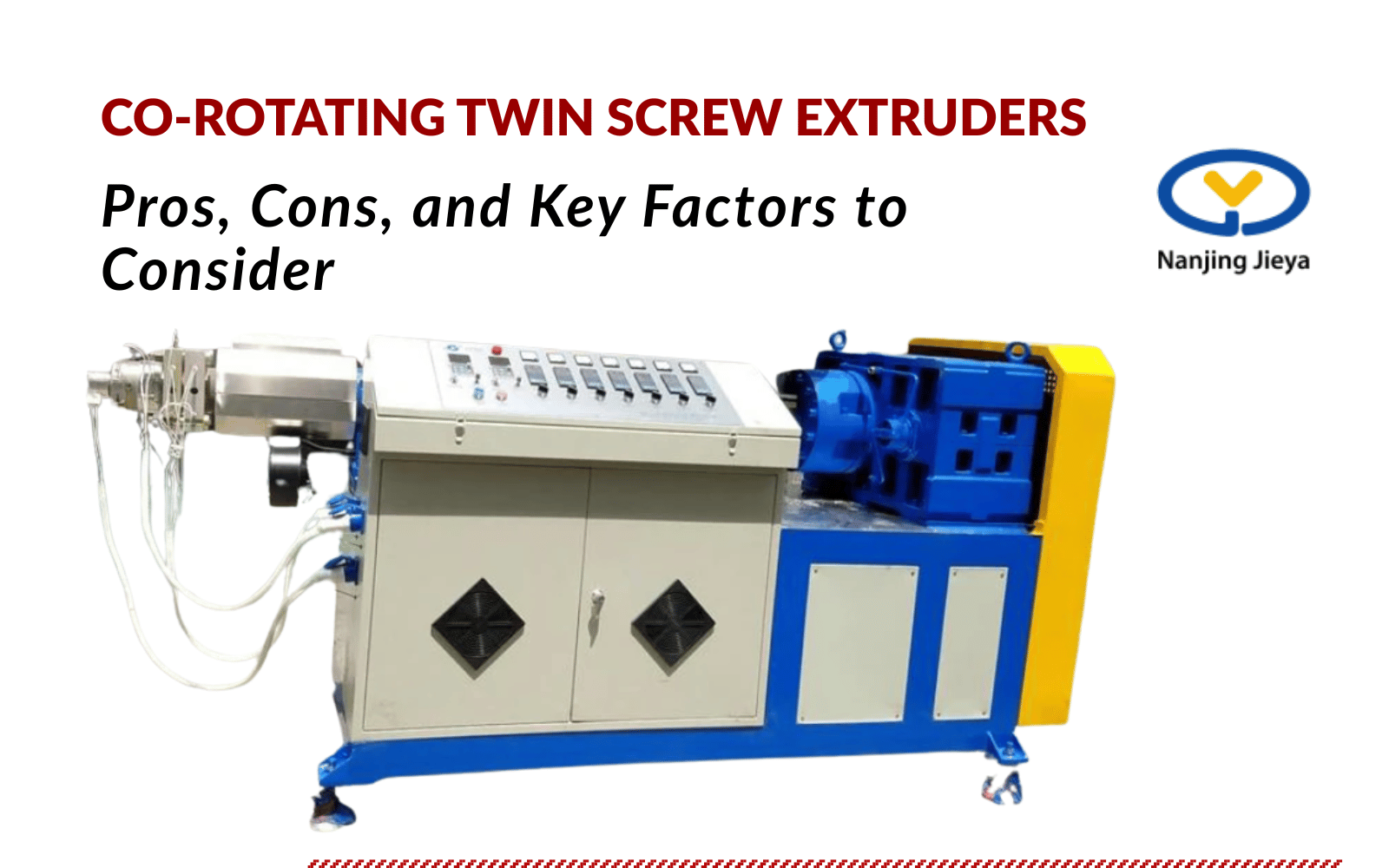
Co-rotating twin screw extruders have become an essential technology in the polymer and plastics industry since their initial development in the mid-20th century. Renowned for their exceptional mixing capabilities and process flexibility, these machines are a cornerstone for compounding a vast array of materials, from bulk plastics to specialized compounds. Their design enables high control over shear, temperature, and residence time, making them a go-to solution for creating new polymer alloys and filled materials. However, with advancements in processing technology, other options have also emerged. While co-rotating twin screw extruders remain a dominant choice, it’s crucial to understand their complete profile. In this article, we will explore the pros and cons of co-rotating twin screw extruders, compare them with other processing options, and help you determine if this technology is the right fit for your application.
What Are Co-Rotating Twin Screw Extruders?
A co-rotating twin screw extruder is a highly versatile machine used for compounding and processing materials with precision. It is defined by its two intermeshing screws that rotate in the same direction within a fixed barrel. The core components include the screws, the barrel, and the drive system that powers the rotation. These elements work together to convey, melt, mix, and pressurize materials like polymers. The process allows for excellent mixing and controlled temperature profiles, making it essential for creating complex plastic compounds, specialty foods, and pharmaceutical formulations. This technology is widely used across industries such as plastics, food processing, and pharmaceuticals to produce consistent, high-quality end products.

Key Characteristics of Co-Rotating Twin Screw Extruders
- Design: Features intermeshing screws that provide efficient and self-wiping action.
- Function: Delivers high shear forces and exceptional mixing capabilities.
- Flexibility: Allows for adjustable screw configurations to suit various materials and processes.
- Output: Produces a consistent, uniform, and high-quality end product.
- Applications: Ideal for compounding, devolatilization, and reactive extrusion processes.
Pros of Co-Rotating Twin Screw Extruders
Co-rotating twin screw extruders remain a preferred choice for many industrial applications due to several key benefits:
- Versatility
One of the most significant advantages is their ability to process an extensive range of materials and applications. From sensitive biopolymers to highly filled composites, these machines can be configured for compounding, reactive extrusion, devolatilization, and more, making them a flexible asset for diverse production needs. - High Efficiency
Co-rotating twin screw extruders offer excellent mixing and melting capabilities. The intermeshing, self-wiping screw geometry ensures materials are thoroughly and homogeneously mixed, while providing superior heat transfer. This leads to shorter processing times and increased throughput compared to other systems. - Customizability
The modular design of the screws and barrels allows for extensive customization. Screw elements can be arranged in specific sequences to control shear, mixing intensity, and residence time. This adaptability means the process can be precisely tailored to meet the unique requirements of any given material or end-product specification. - Energy Efficiency
Modern co-rotating twin screw extruders are designed for optimized energy consumption. The efficient transfer of mechanical energy into the material for melting and mixing reduces the reliance on external barrel heating. This results in lower operational costs and a more sustainable manufacturing process. - Scalability
The principles of co-rotating twin screw extrusion are highly scalable. Processes developed on small, laboratory-scale machines can be reliably scaled up to large-scale production systems. This makes them suitable for everything from initial research and development to high-volume manufacturing. - Durability
These extruders are engineered to be robust and durable, built to withstand the high pressures and temperatures required for processing advanced polymers and compounds. The use of high-strength, wear-resistant materials for screws and barrels ensures a long service life even under demanding conditions. - Improved Product Quality
The precise control over the process results in a highly consistent and uniform output. The excellent dispersive and distributive mixing eliminates gels and agglomerates, leading to improved mechanical properties, better appearance, and overall higher quality in the final product.
Cons of Co-Rotating Twin Screw Extruders
Despite their many advantages, co-rotating twin screw extruders also have some drawbacks that businesses should be aware of:
- High Initial Cost
The advanced technology and precision engineering of these machines make them expensive to purchase and set up. This significant upfront investment can be a barrier for smaller companies or startups, making it less accessible than simpler, single-screw systems. - Complex Operation
Optimal performance requires skilled operators with specialized training. The complexity of managing screw configurations, temperature profiles, and feed rates means that inexperienced personnel can lead to inefficient production, material wastage, and potential damage to the equipment. - Maintenance Requirements
Regular and thorough maintenance is crucial to ensure the longevity and reliability of a twin screw extruder. The intricate design of the screws, barrel, and gearbox requires scheduled downtime for cleaning, inspection, and component replacement, which can impact overall productivity. - Energy Consumption
While designs are optimized for efficiency, co-rotating twin screw extruders still consume a significant amount of energy, particularly when processing high-viscosity or highly filled materials. The powerful motors and multiple heating zones contribute to higher operating costs compared to less-intensive mixing systems. - Wear and Tear
The screws and barrels are subject to wear over time, especially when processing abrasive or corrosive materials like glass-filled polymers or certain minerals. This wear can reduce processing efficiency and product quality, necessitating costly replacement of these key components. - Space Requirements
Production-scale twin screw extruders, along with their ancillary equipment such as feeders, cooling systems, and pelletizers, can require a large operational footprint. This can be a challenge for facilities with limited floor space, requiring careful planning for installation and workflow.
Alternatives to Co-Rotating Twin Screw Extruders
While co-rotating twin screw extruders are a powerful and popular option, there are other processing machines available that may offer better performance depending on your specific needs.
- Single Screw Extruders
Single screw extruders are one of the most common alternatives. They are simpler in design and more cost-effective, making them ideal for straightforward extrusion tasks. However, they offer limited mixing capabilities and are less versatile for complex compounding applications. - Counter-Rotating Twin Screw Extruders
Counter-rotating twin screw extruders are an excellent choice for processing shear-sensitive materials like PVC. Their screw design provides positive material conveyance and high-pressure build-up. However, they are less suited to the intensive mixing tasks that co-rotating extruders excel at. - Kneaders and Mixers
For applications focused solely on intensive mixing without extrusion, batch mixers or continuous kneaders are suitable. They provide excellent distributive and dispersive mixing but cannot shape or pump the material, requiring a separate extrusion step.
Is a Co-Rotating Twin Screw Extruder Right for You?
Co-rotating twin screw extruders provide a versatile, high-performance solution for processors aiming to enhance mixing precision and product quality. However, their effectiveness depends heavily on your specific material requirements and production scale. If you are evaluating this technology, it is vital to assess your unique goals, including the desired throughput, available budget, and the complexity of your application.
Working with experienced manufacturers allows you to navigate the pros and cons of these systems and ensures you select the ideal configuration. Industry experts can assist you in optimizing the extruder design to maximize efficiency and durability while minimizing potential downsides. Relying on professional guidance helps guarantee that your investment delivers consistent, high-quality results.
Reach out to our specialists today for more information and assistance in selecting the right extruder


 English
  Portuguese
  Spanish
  Korean
  Russian
  German