


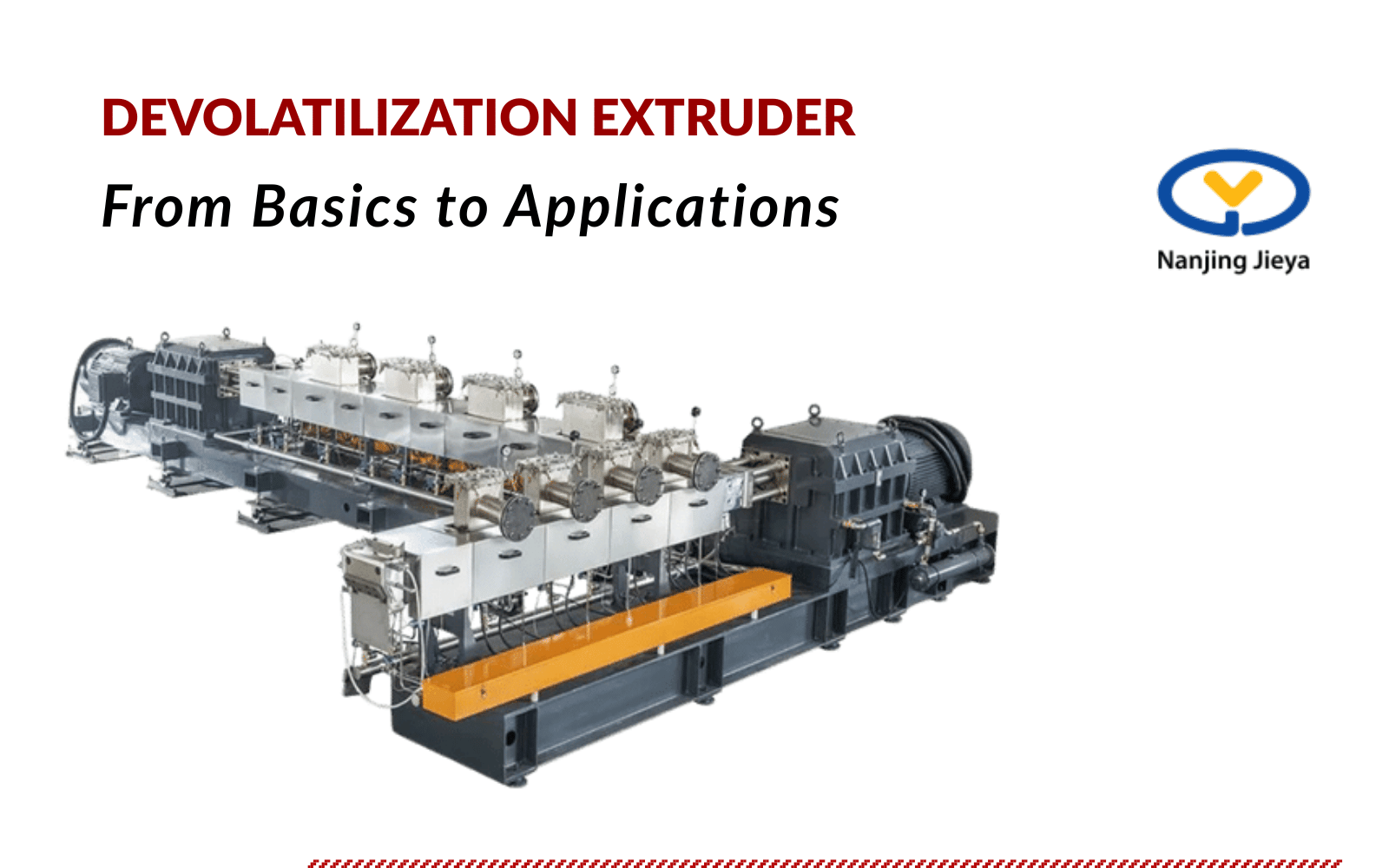
The devolatilization extruder is a vital and highly specialized piece of equipment in modern manufacturing, essential for purifying polymers, plastics, and other sensitive materials. This sophisticated machine plays a critical role in removing unwanted volatile components, such as moisture, solvents, and residual monomers, from raw materials during processing.
But what exactly is a devolatilization extruder? How does it function? And in which industries are its applications most crucial? In this blog post, we’ll explore the fundamentals of the devolatilization extruder, breaking down its key components, operational principles, and the diverse applications that depend on its unique capabilities.
What is a Devolatilization Extruder?
A devolatilization extruder is a specialized machine designed to remove volatile substances from a polymer melt continuously. While standard extruders focus primarily on melting, mixing, and shaping materials, a devolatilization extruder adds a crucial purification step. Its primary purpose is to remove unwanted components such as residual monomers, solvents, moisture, and oligomers that can compromise the quality, stability, and safety of the final product.
The key difference lies in its design, which incorporates one or more venting zones along the barrel. These vents are typically connected to a vacuum system, creating a low-pressure environment that encourages the volatile substances to flash off from the molten polymer. By effectively degassing the material during the extrusion process, it ensures a higher-purity output, which is essential for applications in food packaging, medical devices, and high-performance engineering plastics. This integrated process is far more efficient than separate, post-extrusion purification steps.
The Significance of Devolatilization Extruders in Material Processing
The role of devolatilization extruders in material processing is paramount for ensuring the final product meets stringent quality and performance standards. By removing volatile impurities directly within the production line, these machines eliminate potential defects, enhance material properties, and ensure safety. Without effective devolatilization, residual solvents, moisture, or monomers can lead to issues like surface blemishes, reduced mechanical strength, poor dimensional stability, and even the release of harmful substances.
The process is critical across a wide range of industries. In polymer manufacturing, devolatilization is essential for producing high-purity resins for food-grade packaging and medical devices, where any contamination is unacceptable. In the pharmaceutical sector, it is used to create stable drug delivery systems and to remove residual solvents from medicinal compounds. The food processing industry also relies on this technology to produce textured vegetable proteins and other extruded foods, ensuring they are free from unwanted moisture and off-flavors, thereby improving texture and shelf life.
Understanding the Difference Between Standard Extruders and Devolatilization Extruders
While both standard and devolatilization extruders are fundamental to polymer processing, their designs and primary functions serve distinct purposes. A standard extruder, whether single or twin screw, is primarily engineered for melting, mixing, and conveying material to a die for shaping. Its main goal is to create a homogeneous molten stream ready for forming into a final product. The process is straightforward: raw material is fed, melted, mixed, and pushed out.
In contrast, a devolatilization extruder is a more complex system designed with an additional, crucial objective: purification. Its core design incorporates specialized venting ports along the extruder barrel, which are connected to vacuum systems. This feature enables the active removal of volatile substances—such as moisture, solvents, and unreacted monomers—directly from molten polymer. While a standard extruder processes the material, a devolatilization extruder simultaneously processes and purifies it, resulting in a higher-quality, more stable end product. This makes it indispensable for applications where material purity is non-negotiable, a capability that standard extruders cannot inherently provide.
Key Elements of a Devolatilization Extruder
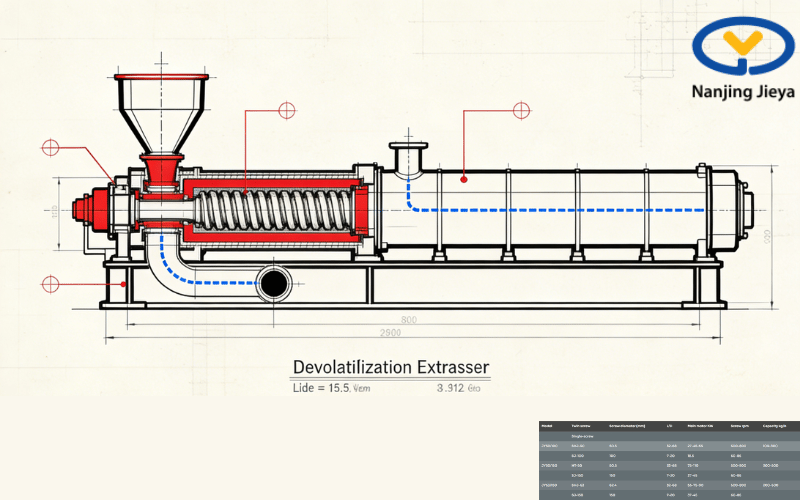
Understanding the function of a devolatilization extruder begins with its core components. Each element is meticulously designed to work in concert, ensuring efficient melting, mixing, purification, and shaping of the material.
- Screws: The heart of the extruder, the screws (often twin-screw configurations) are responsible for conveying, melting, and mixing the material. Their specific design includes deep-flighted sections that create large surface areas, exposing more of the polymer melt to the low-pressure environment in the devolatilization zones. This geometry is crucial for maximizing the efficiency of volatile removal.
- Barrel: The barrel houses the screws and is segmented into different zones, each with precise temperature control. It contains openings, or vents, that lead to the vacuum system. Maintaining an optimal temperature profile along the barrel is critical to keep the polymer molten and at a low enough viscosity for volatiles to escape, without degrading the material itself.
- Feed Zone: The entry point where raw material, in pellet or powder form, is introduced into the extruder. In this initial section, the material is conveyed forward and begins to compact and heat up before it enters the primary melting and devolatilization stages.
- Devolatilization Zones: These specialized sections set this extruder apart. They consist of vents in the barrel connected to a powerful vacuum system. As the molten polymer passes through these zones, the low pressure causes volatile components such as moisture, solvents, and residual monomers to vaporize and be extracted from the melt.
- Die: Located at the end of the extruder, the die is a precisely machined tool that shapes the purified, molten polymer into its final form, such as pellets, sheets, or profiles. The design of the die determines the cross-sectional shape of the extruded product.
How Does a Devolatilization Extruder Work?
The operational process of a devolatilization extruder is a systematic, multi-stage journey designed to both process and purify material simultaneously. Each stage builds upon the last, transforming raw inputs into a high-quality, purified polymer melt ready for final shaping. The process can be broken down into four key steps.
- Material Feeding and Initial Processing: The process begins at the feed throat, where raw polymer material, often in pellet or powder form, is introduced into the extruder. As the screws start to rotate, they grab the material and convey it forward into the heated barrel. In this initial zone, the material is compacted and begins to melt due to the heat from the barrel and the shear forces generated by the screws.
- Conveying, Melting, and Pressurization: As the material moves along the screw channels, it continues to melt and becomes a viscous fluid. The screw design creates pressure, ensuring the molten polymer fills the screw channels. This step is crucial for creating a “melt seal” just before the devolatilization zone. This seal prevents the vacuum from pulling air back through the feed opening, ensuring the low-pressure environment is maintained.
- Devolatilization via Vacuum Venting: This is the core of the process. Once past the melt seal, the molten polymer enters a decompression zone, where the screw channels deepen. This reduces pressure and increases the melt’s surface area. Simultaneously, a vacuum pump connected to vents in the barrel creates a strong low-pressure environment. This combination causes volatile contaminants—such as moisture, solvents, or unreacted monomers—to vaporize and be rapidly drawn out of the polymer.
- Homogenization and Shaping: After passing through the devolatilization zones, the now-purified polymer is re-pressurized and thoroughly mixed to ensure complete homogeneity. It is then conveyed to the end of the extruder and forced through a die. The die shapes the molten material into the desired profile, such as strands for pelletizing, films, or specific product shapes, before it is cooled and solidified.
Advantages of Devolatilization Extruders
The adoption of devolatilization extruders in manufacturing offers significant benefits, primarily centered around achieving superior product purity and process efficiency. These machines are engineered to address the specific challenge of removing unwanted volatile components, leading to a host of advantages that standard extruders cannot match.
- Superior Volatile Removal: The primary advantage is their exceptional ability to remove volatile substances such as moisture, solvents, residual monomers, and oligomers. This purification process results in high-purity materials essential for sensitive applications, such as medical-grade plastics and food-contact packaging, where contamination is unacceptable.
- Enhanced Product Quality and Consistency: By eliminating volatiles that can cause defects like voids, surface blemishes, or structural weaknesses, devolatilization extruders produce a final product with significantly improved mechanical properties, appearance, and dimensional stability. This leads to greater batch-to-batch consistency and fewer rejected parts.
- Versatility in Processing: These extruders are highly adaptable and can process a wide range of polymers and materials, including heat-sensitive or prone-to-degradation materials. The precise control of temperature and pressure enables the safe processing of materials that might otherwise be compromised.
- Increased Efficiency and Reduced Environmental Impact: Integrating devolatilization into the extrusion process eliminates the need for separate, energy-intensive post-processing steps like pellet drying. This streamlined, continuous operation saves time, reduces energy consumption, and minimizes the release of volatile organic compounds (VOCs) into the atmosphere, contributing to a more sustainable manufacturing footprint.
Types of Devolatilization Extruders
Devolatilization extruders are primarily categorized by screw configuration: single-screw or twin-screw. While both are designed to remove volatiles, their mechanical differences make them suitable for distinct applications and material types. The choice between them depends on the required mixing level, the material’s viscosity, and the required devolatilization efficiency.
Single-Screw Devolatilization Extruders
Single-screw devolatilization extruders represent a more straightforward and more cost-effective solution for basic purification needs. They consist of a single rotating screw within a vented barrel. While effective for high-permeability, low-viscosity materials, their mixing capability is limited. Devolatilization relies heavily on exposing the material’s surface to the vacuum vents as it is conveyed along the barrel. These machines are best suited for straightforward applications, like drying hygroscopic polymers, where intensive mixing is not a primary requirement.
Twin-Screw Devolatilization Extruders
Twin-screw devolatilization extruders are far more advanced and versatile. Featuring two intermeshing, co-rotating, or counter-rotating screws, they provide superior mixing, surface area renewal, and conveying control. The interaction between the screws constantly churns and reorients the polymer melt, dramatically increasing the surface area exposed to the vacuum. This makes them exceptionally efficient at removing volatiles from high-viscosity materials and for reactive extrusion processes. Their modular screw design also allows for customized configurations, making them ideal for complex applications that demand high-purity outputs and process flexibility.
Applications of Devolatilization Extruders
The unique ability of devolatilization extruders to purify materials during processing makes them indispensable across a diverse range of high-stakes industries. From creating medical-grade plastics to ensuring food safety, their applications are critical where material purity, quality, and performance are non-negotiable. The technology’s versatility allows it to handle everything from sensitive compounds to robust industrial polymers.
- Polymer Processing: This is one of the most common applications. Devolatilization extruders are essential for removing residual monomers, oligomers, solvents, and moisture from a wide array of polymers. In the production of polycarbonate (PC) and polymethyl methacrylate (PMMA), for instance, removing unreacted monomers is crucial for achieving optical clarity and mechanical strength. Similarly, removing moisture from hygroscopic materials such as nylon and PET prevents degradation during processing and ensures the final product’s integrity.
- Pharmaceutical Industry: In pharmaceutical manufacturing, purity is paramount. Devolatilization extruders are used in hot-melt extrusion (HME) processes to create solid dispersions for drug delivery systems. The process allows for the removal of residual solvents used in synthesis, which could be harmful to patients. This ensures the final drug formulation is stable, safe, and meets strict regulatory standards for purity and consistency.
- Food Industry: The food industry utilizes devolatilization extruders to enhance product quality, safety, and shelf life. In the production of textured vegetable proteins (TVPs) and other plant-based meat analogs, the process removes unwanted moisture and off-flavors, resulting in improved texture and taste. It is also used to degas snack foods and cereals, ensuring a desirable crunch and preventing sogginess.
- Recycling and Reprocessing: As the demand for sustainable solutions grows, devolatilization plays a key role in plastics recycling. When processing post-consumer or post-industrial waste, these extruders are highly effective at removing contaminants such as moisture, ink residues, and adhesives from the plastic melt. This purification step is vital for upgrading the quality of recycled material, allowing it to be used in higher-value applications.
Final Thoughts on Devolatilization Extruders
In conclusion, devolatilization extruders are not just an alternative to standard machines; they are a fundamental necessity for industries where material purity and product quality are paramount. From enhancing the safety of food packaging to ensuring the efficacy of pharmaceuticals, their ability to remove unwanted volatiles directly within the production process is a game-changer. This integrated purification step leads to superior products, greater process efficiency, and a more sustainable manufacturing footprint.
As you consider the requirements for your material processing line, we encourage you to explore the capabilities of devolatilization extruders. Understanding their function is the first step toward unlocking a higher standard of quality and performance in your products. Consider how this technology can address your specific challenges and elevate your manufacturing output.
FAQ (Frequently Asked Questions)
1. What are the main advantages of using a devolatilization extruder compared to standard equipment?
Using a devolatilization extruder allows you to integrate purification directly into the manufacturing process. Unlike standard extruders, these machines are equipped with specialized venting zones and vacuum systems that actively remove unwanted volatiles, such as moisture, solvents, and residual monomers, from the melt. This results in superior product purity, improved mechanical properties, and the elimination of separate, time-consuming drying steps, ultimately boosting your production efficiency.
2. Can a devolatilization extruder handle highly sensitive or viscous materials?
Yes, they are specifically designed for this purpose. Twin-screw devolatilization extruders, in particular, excel at creating surface area renewal, which exposes more of the polymer melt to the vacuum vents. This ensures efficient degassing even for high-viscosity materials. Furthermore, precise temperature controls along the barrel prevent thermal degradation, making them safe for processing heat-sensitive polymers used in medical or food-grade applications.
3. In which industries is devolatilization extrusion most critical?
This technology is essential in industries where material purity is non-negotiable. Key sectors include:
- Polymer Manufacturing: For removing unreacted monomers to ensure safety and stability.
- Pharmaceuticals: For creating safe drug delivery systems by removing residual solvents.
- Food Processing: For degassing textured vegetable proteins and snacks to improve texture and flavor.
- Recycling: For removing moisture, inks, and contaminants from post-consumer waste.
4. How does the devolatilization process support sustainability and recycling efforts?
Devolatilization extruders are a cornerstone of modern recycling operations. When reprocessing post-consumer plastics, moisture and volatile contaminants (such as cleaning agents or degradation byproducts) can compromise the quality of the recycled pellets. By effectively stripping these volatiles under vacuum during extrusion, the machine improves the quality of the recycled material, enabling its reuse in higher-value applications and supporting a circular economy.
5. Is the investment in a devolatilization extruder worth it for my production line?
While the initial investment is higher than that of a standard extruder due to the added vacuum technology and screw complexity, the ROI is often realized quickly through process consolidation. By combining melting, mixing, and purification into a single continuous step, you reduce the need for pre-drying equipment and separate purification processes. This leads to lower energy consumption, reduced floor space requirements, and a consistent, high-quality output that minimizes scrap rates.


 English
  Portuguese
  Spanish
  Korean
  Russian
  German