


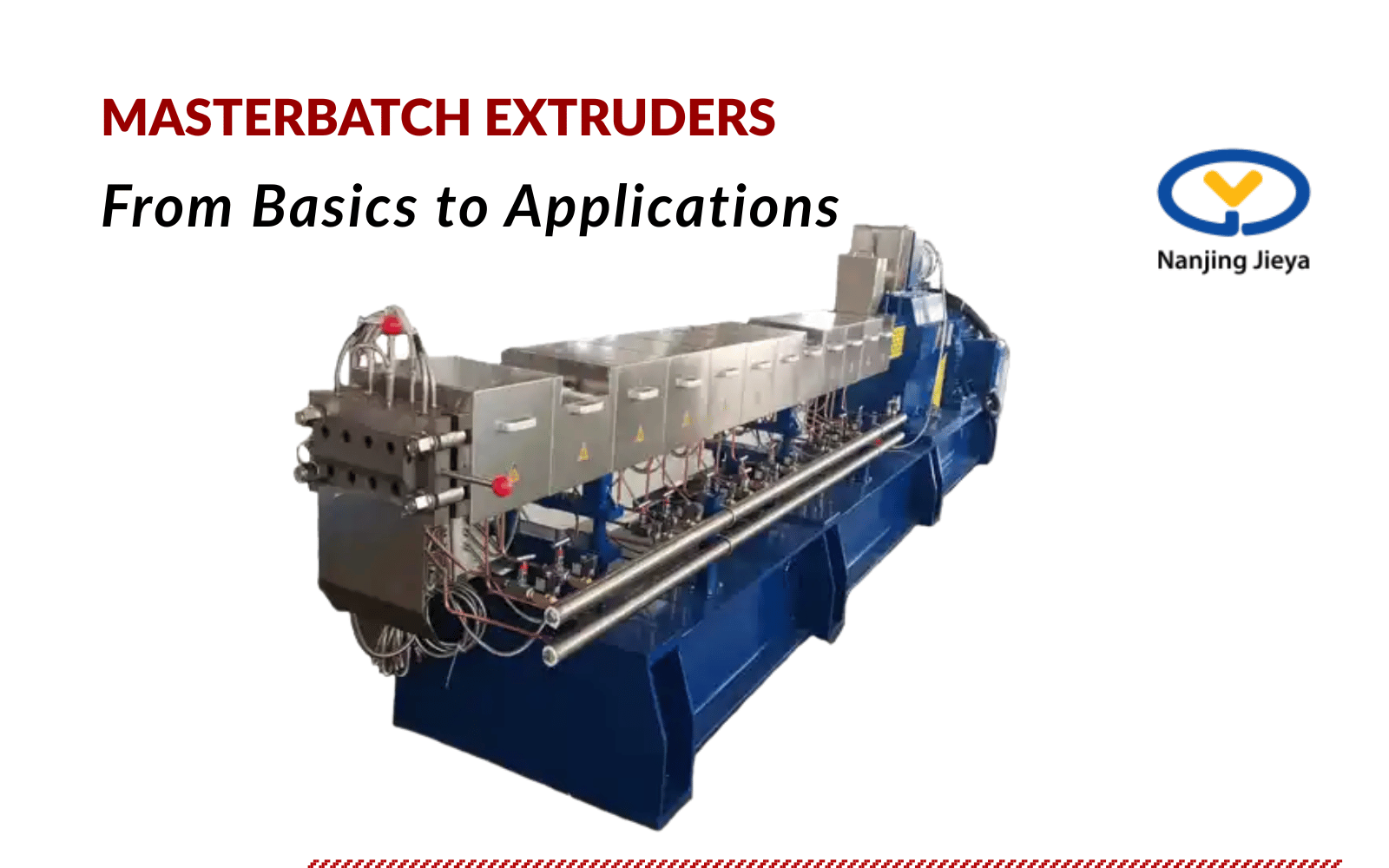
The masterbatch extruder is a specialized and essential piece of equipment in the color and additive industry, specifically designed for the compounding of pigments, additives, and carrier resins. This precision machine plays a pivotal role in creating masterbatches—concentrated mixtures that determine the color, properties, and performance of final plastic products, ranging from automotive parts to everyday household items.
But what exactly is a masterbatch extruder machine? How does it function? And what are its specific uses? In this blog post, we’ll explore the inner workings of the masterbatch extruder, delving into its key elements, operational principles, and the diverse applications that depend on its high-dispersion capabilities.
Table of Contents
ToggleWhat is a Masterbatch Extruder?
A masterbatch extruder is a specialized equipment designed to compound pigments, additives, and carrier resins into a concentrated pellet form. Unlike standard extrusion lines, the masterbatch extruder is specifically configured to handle high ratios of powder additives relative to the polymer base. This specialized configuration ensures that the final masterbatch provides consistent color or performance properties when later diluted into a final plastic product.
The masterbatch extruder’s design allows for exceptional dispersive and distributive mixing, which is critical for breaking down pigment agglomerates. As the screws rotate, they generate specific shear forces that ensure every particle of the additive is thoroughly wetted and homogeneously distributed within the polymer melt. This capability is vital for preventing streaks or specks in the final application, ensuring high-quality coloration and functionality.
The Significance of Masterbatch Extruders in Plastic Processing
In plastic processing, the masterbatch extruder plays a vital role in uniformly dispersing pigments and additives into a polymer carrier. The screws’ specialized design generates shear forces that help break down powder agglomerates, ensuring thorough wetting and distribution of the active ingredients. This results in a consistent concentrate that effectively enhances plastic properties, such as vivid color, UV resistance, and flame retardancy.
One of the most common applications of the masterbatch extruder is in the production of materials for the packaging, automotive, and construction industries. These extruders are designed to handle high concentrations of additives, providing superior mixing efficiency and dispersion to ensure consistent product quality across these demanding sectors.
Understanding the Difference Between Standard Extruders and Masterbatch Extruders
Compared to standard extruders, masterbatch extruders offer specific advantages tailored for high-concentration compounding. They are renowned for their superior dispersive mixing capabilities, which is essential for achieving the uniform distribution of high pigment loadings or additive concentrations. Additionally, masterbatch extruders are engineered to handle the specific rheological challenges of mixing large amounts of powder into a polymer matrix, making them more effective for color and additive concentrate production.
The difference between standard and masterbatch extruders lies in their screw configuration and torque capabilities. Standard extruders typically focus on melting and conveying for general shaping. In contrast, masterbatch extruders utilize aggressive screw geometries and high-torque gearboxes to generate the intense shear needed to break down agglomerates. Masterbatch extruders also offer optimized wetting zones and split-feed options, enabling the precise incorporation of difficult-to-disperse fillers that standard machines cannot process efficiently.
Key Elements of a Masterbatch Extruder
The masterbatch extruder is a sophisticated machine comprising several vital components that ensure effective compounding and color dispersion. Among the most critical parts are the screws, which are engineered in specific geometries to handle high pigment loadings.
1. Screws
- Co-rotating Screws: These are widely used for masterbatch production, providing excellent dispersive mixing to break down pigment agglomerates effectively.
- High-Torque Configurations: Masterbatch extruders often utilize high-torque screw shafts to manage the viscosity and resistance of heavily filled compounds.
- Segmented Screws: The screws are typically segmented, allowing manufacturers to customize the profile with specific conveying and kneading elements for optimal additive distribution.
2. Barrel
The screws rotate within a segmented barrel that provides the heat required to plasticize the polymer carrier. This barrel typically features multiple temperature zones, ensuring precise thermal management, which is critical for processing heat-sensitive pigments without degradation.
3. Feed Zone
This is the entry point where the formulation components—polymer carrier, pigments, and functional additives—are introduced. A well-designed feed zone ensures the smooth intake of these often disparate materials, preventing bridging or inconsistent feeding.
4. Melting and Conveying Zones
As the mixture progresses, it passes through these zones, where external heat and mechanical shear work together to melt the polymer carrier. This prepares the base resin to accept and encapsulate the solid additives.
5. Kneading and Mixing Zones
These crucial sections use specialized elements, such as kneading blocks, to generate intense shear forces. This action is vital for de-agglomerating pigment particles and distributing them uniformly throughout the polymer melt to ensure consistent color strength.
6. Venting and Vacuum Zones
Masterbatch extruders frequently include vacuum venting ports to extract trapped air, moisture, or volatiles released during compounding. This step is essential for producing void-free pellets that deliver a high-quality surface finish in final applications.
7. Die
Located at the discharge end, the die shapes the fully compounded melt into strands or underwater droplets. This determines the final size and shape of the masterbatch pellets before they are cooled and solidified.
By mastering the specific functions of these elements, particularly the screw design and mixing zones, operators can maximize the masterbatch extruder’s efficiency. This ensures the production of high-quality concentrates with superior dispersion and color consistency for demanding plastic applications.
How Does a Masterbatch Extruder Work?
The working principle of a masterbatch extruder is based on its specialized design, typically utilizing twin screws that rotate within a heated barrel to process high concentrations of additives. This configuration plays a crucial role in efficiently dispersing pigments and fillers into a polymer matrix. Let’s discuss how the masterbatch extruder works step by step.
1. Material Feeding and Initial Mixing
The extrusion process begins by introducing the raw materials, which include the polymer carrier, pigments, and additives, into the barrel through a primary hopper or side feeders. This ensures a consistent and controlled flow of the formulation onto the screws, often requiring precise gravimetric feeding to maintain exact ratios.
2. Conveying and Compression
As the screws rotate, they convey the solid mixture towards the processing zones of the barrel. During this process, the screws’ specific geometry compresses and compacts the powder and pellet mixture, generating heat through friction and preparing the material for the melting phase.
3. Melting and Plasticization
As the material progresses along the screws, the combination of external heat from the barrel heaters and the mechanical shear gradually melts and plasticizes the polymer carrier. This converts the solid resin into a viscous fluid that can wet out the solid pigments and additives.
4. Intensive Mixing and Dispersion
The screws provide a high degree of dispersive and distributive mixing action, which is the most critical step in masterbatch production. This step ensures a thorough breakdown of pigment agglomerates and the uniform dispersion of additives throughout the polymer melt, resulting in a consistent, high-quality concentrate.
5. Pelletizing Through the Die
Once the masterbatch is fully compounded and homogenized, the screws continue to pump the molten mixture towards the end of the barrel, where it is forced through a die plate. The die shapes the material into continuous strands or, in the case of underwater pelletizing, cuts it immediately into pellets.
6. Cooling and Calibration
As the extruded masterbatch emerges from the die, it undergoes immediate cooling and solidification, often using water baths or air cooling systems. This is followed by drying and size classification to ensure the final pellets are uniform in size and moisture-free, ready for packaging and shipping.
The masterbatch extruder’s specialized design, with its aggressive mixing elements and precise temperature control, makes it highly efficient for processing difficult-to-disperse pigments. The ability to handle high filler loadings while maintaining uniform dispersion contributes to the machine’s essential role in the plastic coloration and modification industry.
Advantages of Masterbatch Extruders
Masterbatch extruders offer several distinct advantages over standard extruders, making them the preferred choice for compounding high concentrations of pigments and additives. Let’s explore some of the key benefits that masterbatch extruders provide.
- Superior Mixing and Dispersion: Masterbatch extruders are engineered for exceptional mixing, generating high shear forces that ensure complete breakdown and uniform dispersion of pigment agglomerates and additives.
- High Output Rates and Production Efficiency: Enabled by specialized screw designs and powerful motors, these extruders allow for continuous, high-speed processing, resulting in increased production throughput for masterbatch manufacturing.
- Versatility in Processing: They can handle a wide range of materials, including challenging pigments, abrasive fillers, and a broad range of polymer carriers, from commodity plastics to engineering resins.
- Precise Temperature Control: With multiple heating and cooling zones along the barrel, masterbatch extruders offer precise temperature control, which is crucial for processing heat-sensitive pigments and polymers without degrading them.
- Consistent Quality and Uniformity: The intense mixing action produces a homogeneous, consistent masterbatch, ensuring uniform color and additive distribution throughout every pellet, which translates to better quality in the final plastic product.
- Modular Design: The screws and barrels are often modular, allowing for easy reconfiguration or replacement of elements. This enables adaptability to different formulations and simplifies maintenance.
Types of Masterbatch Extruders
While masterbatch extruders share many common features and principles, there are different types designed to cater to specific applications and requirements. Two main categories of masterbatch extruders are widely used in the industry:
1. Single-Screw Masterbatch Extruders
This type of extruder features a single rotating screw within the barrel and represents a simpler, more cost-effective solution for basic masterbatch production.
Single-screw extruders are best suited for materials that are easy to mix and do not require the high shear forces needed to break down tough pigment agglomerates.
They are commonly used for producing masterbatches with lower additive concentrations or for processing polymers that are less heat-sensitive and have good melt stability.
2. Twin-Screw Masterbatch Extruders
As the premier choice for high-quality masterbatch, this type of extruder features two intermeshing screws that rotate together.
The co-rotating, intermeshing action provides superior dispersive and distributive mixing, making them ideal for achieving uniform dispersion of high pigment and additive loadings.
Twin-screw extruders are particularly useful for materials that require intensive mixing, high shear rates, or precise temperature control, such as engineering plastics, heat-sensitive pigments, and highly filled compounds. They are the industry standard for producing high-performance color and additive concentrates.
The choice between a single-screw and a twin-screw masterbatch extruder depends on factors such as pigment type, additive concentration, polymer carrier, and desired product quality. Manufacturers often collaborate with extruder suppliers to select the most suitable type and configuration for their specific applications, ensuring optimal performance and product quality.
Applications of Masterbatch Extruders
Masterbatch extruders are versatile machines that find applications across a wide range of industries, thanks to their ability to efficiently produce high-quality color and additive concentrates for plastics. Let’s explore some of the key applications of masterbatch extruders:
- Plastics Industry: This is the core application, where extruders are used for compounding various concentrates. They produce color masterbatches for aesthetics, additive masterbatches to impart properties like UV stability or flame retardancy, and filler masterbatches to reduce cost or modify physical properties. These concentrates are then used in nearly all forms of plastic processing, from injection molding to film extrusion.
- Packaging Industry: Masterbatch extruders are crucial for enhancing the appearance and functionality of plastic packaging. They create vibrant colors that make products stand out on shelves and produce additive masterbatches that provide benefits such as UV protection for the contents, anti-static properties for electronics packaging, and slip agents for easy-to-open bags.
- Automotive Industry: The high shear and efficient mixing of masterbatch extruders are essential for producing high-performance compounds for automotive components. They are used to create custom colors for interior and exterior parts and to incorporate additives that provide long-term UV resistance, flame retardancy for safety, and impact modifiers for durability in bumpers and dashboards.
- Construction Industry: In construction, these extruders produce robust masterbatches for durable goods like pipes, window profiles, siding, and decking. Additives compounded into masterbatch provide weatherability, color stability under sunlight exposure, and the mechanical strength required for long-service-life building materials.
- Recycling and Reprocessing: Masterbatch extruders contribute to sustainability by enabling the use of recycled materials. They can effectively incorporate post-consumer or post-industrial resins into new masterbatch formulations and create “black” masterbatch from mixed plastic waste. This allows recycled content to be colored and functionalized for use in new products, promoting a circular economy.
With their versatility, efficiency, and ability to handle a wide range of additives, masterbatch extruders remain indispensable in various manufacturing processes, driving innovation and enabling the production of high-quality, functional plastic products across diverse industries.
Final Thoughts on Masterbatch Extruders
In conclusion, the masterbatch extruder is a remarkable piece of machinery that has revolutionized the plastics industry. From packaging and automotive to construction and recycling, these specialized machines have proven their worth through their excellent dispersion capabilities, high efficiency, and ability to handle a diverse range of pigments, additives, and polymer carriers.
Whether you’re looking to produce high-quality color concentrates, compound materials with functional additives, or explore sustainable production solutions, a masterbatch extruder can be the key to unlocking a new level of quality and performance for your business. We encourage you to consider how this technology can meet your specific compounding requirements.
FAQ (Frequently Asked Questions)
1. What are the key advantages of using a twin-screw extruder for masterbatch production?
Upgrading to a twin-screw extruder for masterbatch offers superior dispersive and distributive mixing, which is critical for breaking down pigment agglomerates and achieving uniform color. This leads to higher, more consistent product quality. Twin-screw models also provide greater processing flexibility for a wider range of polymers and additives and typically deliver higher output rates, boosting overall production efficiency.
2. How does a masterbatch extruder improve product quality and color consistency?
The intermeshing screw design of a twin-screw masterbatch extruder creates intense shear forces, ensuring that high concentrations of pigments and additives are blended thoroughly and evenly into the polymer carrier. The system also allows for precise temperature control along the barrel, which is crucial for preventing the degradation of heat-sensitive pigments. This level of process control results in a reliably consistent and high-quality concentrate with excellent color strength.
3. Our masterbatch formulation involves difficult-to-disperse pigments. Is a twin-screw extruder a suitable choice?
Absolutely. Twin-screw extruders are highly versatile and excel at processing materials that are difficult for single-screw systems, including abrasive pigments, high-structure carbon blacks, and delicate special-effect pigments. For especially demanding jobs, specialized screw configurations and high-torque gearboxes are available. Consulting with an expert supplier can help you select the optimal machine setup for your specific formulation challenges.
4. How can a masterbatch extruder support a company’s sustainability and recycling goals?
Masterbatch extruders are ideal for recycling applications because their excellent mixing capabilities can effectively colorize and functionalize mixed or recycled plastic waste. They can be used to create black masterbatch from post-consumer waste or to compound additives that improve the properties of recycled resins. By enabling the use of recycled content in new, high-value products, a masterbatch extruder is a cornerstone of a successful circular economy initiative.
5. What is the potential ROI when investing in a dedicated masterbatch extruder?
The return on investment for a masterbatch extruder is driven by several factors, including higher throughput, improved product quality (less color variation), and reduced scrap rates in the final application. Their efficiency and specialized design for high pigment loadings also lead to lower production costs compared to using general-purpose compounders. While the initial investment is significant, the increased productivity and ability to produce high-value concentrates often result in a fast ROI.


 English
  Portuguese
  Spanish
  Korean
  Russian
  German