


The bio extruder is a specialized, increasingly vital piece of equipment in sustainable manufacturing, particularly for processing biodegradable and bio-based polymers. This innovative machine plays a crucial role in transforming renewable raw materials into a wide range of eco-friendly products, from compostable packaging to advanced bioplastic components.
But what exactly is a bio extruder? How does it differ from a conventional extruder? And what are its applications? In this blog post, we’ll explore the inner workings of the bio extruder, delving into its key elements, operational principles, and the diverse applications that leverage its unique capabilities for a greener future.
What is a Bio Extruder?
A bio extruder is a specialized equipment designed to process and extrude biodegradable polymers and bio-based materials. Unlike conventional extrusion systems, the bio extruder features specific screw geometries tailored to handle the sensitive thermal properties of organic compounds. This specialized configuration offers precise control, making it an essential choice for sustainable manufacturing applications.
The bio extruder’s design allows for gentle mixing, kneading, and homogenization of sensitive bioplastics. As the screws rotate, they create a controlled shear environment that prevents thermal degradation of natural polymers, ensuring consistent and uniform extrusion. This feature is particularly beneficial when working with heat-sensitive materials like PLA or starch blends.
The Significance of Bio Extruders in Sustainable Processing
When prioritizing sustainability, the bio extruder plays a vital role in melting, mixing, and shaping renewable materials into eco-friendly forms. The screws’ specialized action generates controlled shear forces that help process biodegradable pellets or granules, ensuring thorough plasticization without compromising the material’s integrity. This results in a stable melt that can be extruded through a die to produce various green products, such as compostable packaging and bio-based components.
One of the most significant impacts of the bioextruder is seen in industries such as packaging, agriculture, and the medical sector. Bio extruders are designed to handle the unique properties of biodegradable materials, providing precise temperature control and efficient processing to ensure consistent quality in sustainable applications.
Understanding the Difference Between Standard Extruders and Bio Extruders
Compared to standard extruders designed for petrochemical-based plastics, bio extruders offer several distinct advantages for sustainable materials. They are known for their superior temperature control and gentle processing, which are essential for handling heat-sensitive biopolymers such as PLA and PHA. Additionally, bio extruders are optimized to process materials with varying moisture content, a common characteristic of bio-based feedstocks.
The difference between standard and bio extruders lies in their design and operational principles. Standard extruders rely on high shear and temperature to process robust fossil-fuel-based polymers. In contrast, bio extruders utilize specialized screw designs and advanced heating/cooling systems to provide better control over residence time and melt temperature, enabling the precise processing of sensitive and biodegradable materials without causing degradation.
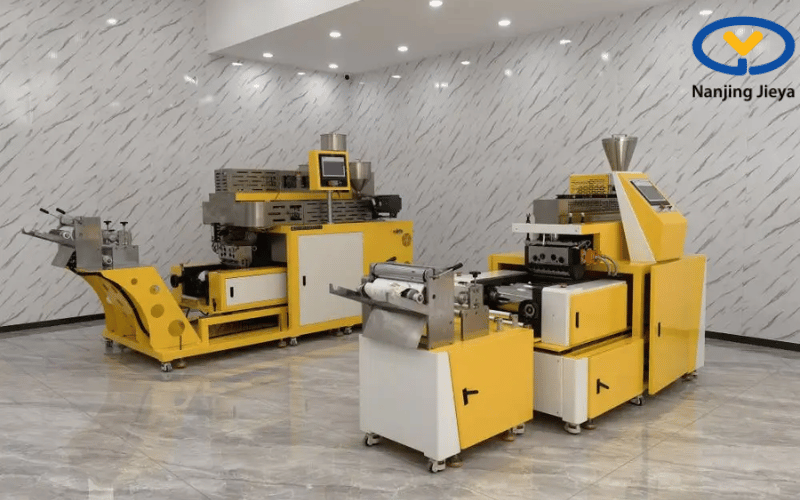
Key Elements of a Bio Extruder
The bio extruder is a complex piece of equipment with several key components that contribute to its efficient operation and performance, especially when handling sensitive biopolymers. One of the most crucial elements is the screws themselves, which come in various types and configurations.
1. Screws
- Low-Shear, Low-Compression Designs: Bio extruders use screws with gentle flight profiles to minimize shear heating, which can degrade biopolymers such as PLA. The compression ratio is kept low to avoid excessive temperature spikes.
- Co-rotating Twin Screws: This design is standard for compounding bioplastics with additives or fillers, as it provides excellent mixing at lower temperatures and shorter residence times, protecting the material.
- Corrosion-Resistant Materials: Since many bio-based materials can release acidic byproducts during processing, the screws and other components are often made from special corrosion-resistant alloys to ensure longevity.
2. Barrel
The screws are encased within a heated barrel, which provides precise temperature control for melting and processing the biopolymer. The barrel is divided into multiple zones, each with advanced heating and cooling systems (often liquid-cooled) for rapid temperature adjustments, preventing overheating and material degradation.
3. Feed Zone
This zone is where the raw bio-based material, often in pellet, granule, or powder form, is introduced. For bioplastics, this area must accommodate materials with varying bulk densities and ensure consistent feeding, sometimes requiring specialized feeders to prevent bridging or inconsistent flow.
4. Melting and Conveying Zones
As the material moves along the screws, it encounters these zones. Here, a combination of gentle heat from the barrel and low shear from the screws gradually melts and plasticizes the biopolymer, transforming it into a homogeneous melt without breaking down its molecular structure.
5. Kneading and Mixing Zones
These zones feature specific screw elements, such as low-intensity kneading blocks or distributive mixing sections. They provide the necessary mixing action to homogenize the melt or disperse additives such as colorants or natural fibers, while generating minimal frictional heat.
6. Venting and Vacuum Zones
Bio extruders often incorporate extensive venting or multi-stage vacuum zones. These are critical for removing moisture and other volatiles common in bio-based feedstocks (such as starch or wood-plastic composites), thereby improving the overall quality and surface finish of the extruded product.
7. Die
The die is the final component, where the molten and homogenized biopolymer is forced through a shaped orifice to form the desired product shape, such as compostable films, bio-based profiles, or sheets for thermoforming.
By understanding the functions and interactions of these key elements, particularly the specialized screws and precise temperature-control systems, manufacturers can optimize the bio extruder’s performance and achieve consistent, high-quality extrusion results across a wide range of sustainable materials and applications.
How Does a Bio Extruder Work?
The working principle of a bio extruder is based on its specialized design, featuring screws and a barrel optimized for the gentle processing of biodegradable and bio-based materials. This configuration plays a crucial role in efficiently processing these sensitive materials without causing thermal degradation. Let’s discuss how the bio extruder works step by step.
1. Material Feeding and Initial Processing
The extrusion process begins by introducing the raw bio-based material, typically pre-dried pellets, granules, or powder, into the barrel through a hopper. This ensures a consistent, controlled flow of material onto the screws. Accurate feeding is critical to maintain stable processing conditions and prevent material degradation.
2. Conveying and Compression
As the screws rotate, they convey the raw material toward the end of the barrel. During this process, a low-compression screw design gently compacts the material, removing air and generating minimal heat through friction. This controlled compression is vital to avoid premature melting or degradation of the heat-sensitive biopolymers.
3. Melting and Plasticization
As the material progresses along the screw, the combination of precise heat from the barrel’s multiple zones and low shear forces gradually melts and plasticizes the raw material. This converts the solid biopolymer into a homogeneous molten mixture while preserving its molecular structure and desired properties.
4. Intensive Mixing and Dispersion
Specialized low-intensity mixing sections on the screw provide a gentle but thorough mixing action. This enhances the homogenization of the molten bio-based material and ensures uniform dispersion of additives, such as natural fibers or colorants, without generating excessive heat that could damage the polymer.
5. Shaping the Bio-Based Material Through the Die
Once the material is fully melted and homogenized, the screws continue to convey and pump the molten mixture towards the end of the barrel, where it is forced through a carefully designed die. The die shapes the molten material into the desired eco-friendly form, such as compostable films, sheets, or profiles.
6. Cooling and Calibration
As the extruded bio-based product emerges from the die, it undergoes immediate cooling and calibration. This could involve air cooling systems, water baths, or sizing equipment to ensure consistent dimensions and properties. Proper cooling is crucial for achieving the final material characteristics and a high-quality surface finish.
The bio extruder’s unique design, with its low-shear screws and precise temperature control, makes it highly efficient for processing a wide range of sensitive bio-based materials. The ability to handle materials prone to thermal degradation contributes to the machine’s versatility in the growing sustainable products industry.
Advantages of Bio Extruders
Bio extruders offer several distinct advantages over conventional extruders, making them a preferred choice for processing sustainable materials. Let’s explore some key benefits of bio extruders.
- Superior Processing of Biodegradable Materials: Bio extruders are engineered explicitly for the gentle handling of heat-sensitive biopolymers. Their low-shear screw designs and precise temperature control prevent thermal degradation, ensuring the final product retains its intended mechanical and biodegradable properties.
- High Output Rates and Production Efficiency: Enabled by optimized screw designs and continuous operation, bio extruders enable efficient processing of bio-based materials, leading to increased production throughput of eco-friendly products.
- Versatility in Handling Bio-based Polymers: These extruders can process a wide range of materials, from PLA and PHA to starch-based blends and wood-plastic composites. This versatility is critical for developing new and innovative sustainable products.
- Precise Temperature Control: Featuring multiple, highly responsive heating and cooling zones along the barrel, bio extruders provide the tight temperature management needed to process materials with a narrow processing window, preventing melt degradation and ensuring consistent quality.
- Contribution to Sustainability: By enabling the efficient processing of renewable and compostable materials, bio extruders are fundamental to the circular economy. They help reduce reliance on fossil fuels and create products that can be returned to the earth at the end of their life.
- Cost-Effectiveness in Eco-Friendly Production: While specialized, bio extruders are efficient, and their potential use of lower-cost, renewable feedstocks makes the production of sustainable goods more economically viable.
Types of Bio Extruders
While bio extruders share many standard features and principles, there are different types designed to cater to specific applications and the sensitive nature of biopolymers. Two main categories of bio extruders are widely used in sustainable manufacturing:
1. Single-Screw Bio Extruders
This type of bio extruder features a single rotating screw with a low-shear design, making it suitable for basic processing needs.
- Single-screw configurations are designed with gentle compression ratios to prevent thermal degradation of sensitive materials such as PLA.
- Single-screw bio extruders are known for their reliability and cost-effectiveness, making them a good choice for applications involving pre-compounded, homogeneous bioplastics.
- They are commonly used in the production of simple bio-based products like films, sheets, and basic profiles, where high-intensity mixing is not the primary requirement.
2. Twin-Screw Bio Extruders
As the name suggests, this type of bio extruder features two intermeshing screws, offering advanced processing capabilities.
- The co-rotating or counter-rotating screws provide superior mixing and homogenization at lower temperatures and shorter residence times.
- The design enables excellent dispersion of natural fillers (such as wood or starch), additives, and colorants, which is crucial for creating high-quality, consistent bio-composites.
- Twin-screw bio extruders are particularly useful for compounding raw bio-based ingredients or processing materials that require significant devolatilization (moisture removal).
- They are commonly employed in industries like sustainable packaging, agriculture, and consumer goods for processing a wide range of complex biopolymer formulations.
The choice between a single-screw or twin-screw bio extruder depends on factors such as material properties, desired product characteristics, and whether compounding is needed during extrusion. Manufacturers often collaborate with extruder suppliers to select the most suitable configuration for their specific applications, ensuring optimal performance and product quality.
Applications of Bio Extruders
Bio extruders are versatile machines that find applications across a wide range of industries, thanks to their ability to efficiently process sensitive, renewable materials and produce high-quality, eco-friendly products. Let’s explore some of the key applications of bio extruders:
1. Packaging Industry
Bio extruders play a vital role in the sustainable packaging industry, where they are used for creating compostable films, bags, and rigid containers. They are employed in the production of single-use food packaging, shopping bags, and protective wrapping from materials like PLA and starch blends. Bio extruders are also used to create multi-layer films that offer barrier properties while remaining biodegradable, helping to reduce plastic pollution.
2. Agriculture
The gentle processing and efficiency of bio extruders make them suitable for producing agricultural products that can safely break down in the soil. They are used in the production of biodegradable mulch films that suppress weeds and conserve water, and are then composted directly in the field. Bio extruders are also used to create plant pots and seed trays that can be planted directly in the ground, reducing transplant shock and plastic waste.
3. Medical Industry
In the medical industry, bio extruders are utilized for processing biocompatible and bioresorbable polymers for devices and components. They are used in hot-melt extrusion processes to produce items such as dissolvable sutures, drug delivery systems, and temporary scaffolds for tissue engineering. The precise temperature and shear control of these machines are critical for maintaining the purity and structural integrity of medical-grade biopolymers.
4. Consumer Goods
Bio extruders contribute to the growing market for eco-friendly consumer goods by enabling the mass production of disposable and durable items from renewable resources. They are used to manufacture products like compostable cutlery, straws, coffee capsules, and various household items. The ability to process bio-composites also allows for the creation of durable goods with a lower carbon footprint.
5. Recycling and Reprocessing
Bio extruders support circular economy initiatives by enabling the recycling and reprocessing of bio-based plastic waste. They are used to convert post-industrial or post-consumer bioplastic scrap into usable pellets or compounds. This reduces landfill waste and promotes the reuse of valuable renewable materials, further enhancing the sustainability of bio-based products.
With their versatility, efficiency, and ability to handle a wide range of sensitive materials, bio extruders remain indispensable in various manufacturing processes, driving innovation and enabling the production of high-quality, sustainable products across diverse industries.
Final Thoughts on Bio Extruders
The bio extruder is a remarkable piece of machinery that has revolutionized sustainable manufacturing across numerous industries. From packaging and agriculture to consumer goods and medical applications, these specialized machines have proven their worth through their gentle processing capabilities, precise temperature control, and ability to handle a diverse range of sensitive, renewable materials.
Whether you’re looking to produce high-quality compostable products, compound materials with natural fillers, or explore innovative recycling solutions for bioplastics, a bio extruder can be the key to unlocking new possibilities for your business. It represents a critical technology in the transition toward a more circular and environmentally responsible economy.
FAQ (Frequently Asked Questions)
1. What are the key advantages of using a twin-screw bio extruder for processing bioplastics?
Using a twin-screw bio extruder offers superior low-shear mixing and homogenization, which is critical for processing heat-sensitive biopolymers like PLA and PHA without degradation. Unlike standard extruders, these specialized machines allow for compounding natural fibers or starch additives at lower temperatures while ensuring uniform dispersion. This leads to higher, more consistent product quality and maintains the structural integrity of the biodegradable material.
2. How does a bio extruder ensure the quality and consistency of heat-sensitive materials?
The specialized screw design of a bio extruder is engineered to minimize shear heat, preventing the thermal degradation that often ruins bioplastics. The system also features precise, multi-zone temperature control along the barrel to maintain a stable processing window. This level of control ensures that the melt remains homogeneous and stable, resulting in a reliably consistent final product free from discoloration or brittleness.
3. Our formulations include natural fibers and starch. Is a bio extruder a suitable choice?
Absolutely. Bio extruders are highly versatile and excel at processing materials with varying bulk densities and moisture contents, such as wood flour, starch blends, and natural fibers. They are equipped with specific venting zones to remove moisture released during processing and use gentle kneading elements to disperse fibers without damaging them. Consulting with an expert supplier can help you select the optimal screw configuration for your specific bio-composite challenges.
4. How does a bio extruder support our company’s sustainability and circular economy goals?
Bio extruders are the engine behind the production of compostable and biodegradable products, directly enabling the shift away from fossil-fuel-based plastics. They are also ideal for reprocessing bio-based production waste. By efficiently converting renewable raw materials into high-quality packaging or agricultural products that return to the earth, a bio extruder becomes a cornerstone of any successful green manufacturing initiative.
5. What is the potential ROI when investing in a specialized bio extruder?
The return on investment for a bio extruder is driven by higher throughput of sensitive materials, significantly reduced scrap rates due to precise temperature management, and energy efficiency. Furthermore, it opens access to the rapidly growing, high-value market for sustainable and eco-friendly products. While the initial investment reflects the specialized engineering, the ability to produce premium green products efficiently results in a compelling long-term ROI.


 English
  Portuguese
  Spanish
  Korean
  Russian
  German