


The XLPE extruder is a versatile and essential piece of equipment in manufacturing, particularly for processing cross-linked polyethylene (XLPE) and other materials. This powerful machine plays a crucial role in transforming raw materials into a wide range of products, from high-quality cables to durable insulation materials.
But what exactly is an XLPE extruder machine? How does it work? And what are its applications? In this blog post, we’ll explore the inner workings of the XLPE extruder, delving into its key elements, operational principles, and the diverse applications that leverage its capabilities.
What is an XLPE Extruder?
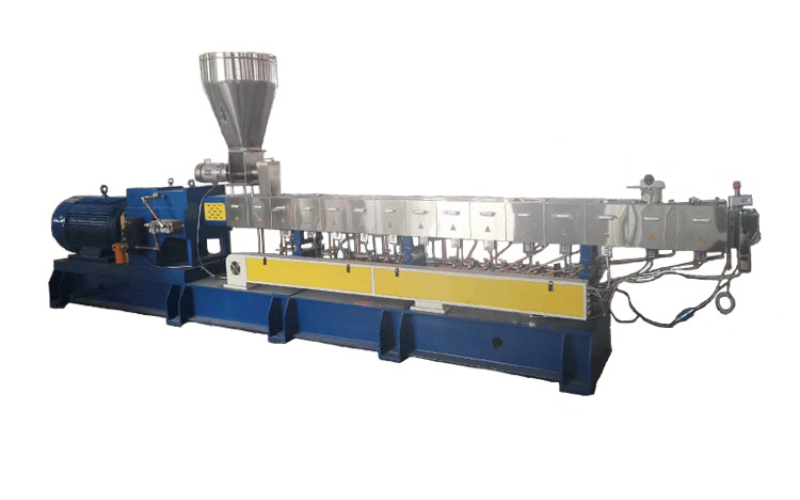
An XLPE extruder is specialized equipment designed to process and extrude cross-linked polyethylene materials. Unlike standard extruders, the XLPE extruder features precise temperature control systems and a specialized screw design that are critical to the unique cross-linking chemical reaction. This unique configuration offers several advantages, making it the preferred choice for high-performance manufacturing applications.
The XLPE extruder’s design enables efficient mixing, controlled heating, and uniform pressure throughout processing. As the screw rotates, it creates an optimized shearing action that ensures consistent melting and homogenization. This feature is particularly beneficial when handling the specific properties of XLPE, ensuring consistent quality and performance in the final product.
The Significance of XLPE Extruders in Material Processing
When processing XLPE, the extruder plays a vital role in melting, mixing, and shaping the material into the desired form. The screw’s specialized design generates shear forces that help break down the polyethylene granules, ensuring thorough melting and dispersion of cross-linking agents and other additives. This results in a homogeneous melt that can be extruded through a die to produce various high-performance products, such as cable insulation, pipes, and heat-resistant components.
One of the most common applications of the XLPE extruder is in the production of power cables. XLPE cable extruders are designed to handle the unique requirements of insulating high-voltage conductors, providing precise temperature control and efficient mixing to ensure consistent quality and electrical performance.
Understanding the Difference Between Single Screw and XLPE Extruders
Compared to single screw extruders, XLPE extruders offer several advantages. They are known for their superior mixing capabilities and precise temperature control, which are essential for the cross-linking process. Additionally, XLPE extruders can process the specific rheological properties of cross-linkable polyethylene, including high viscosity, making them well-suited to these demanding applications.
The difference between single screw and XLPE extruders lies in their design and operational principles. Single screw extruders rely on a single rotating screw to convey and melt the material. In contrast, XLPE extruders use specialized screw geometries and heating/cooling zones to improve mixing and thermal management. XLPE extruders also offer better control over residence time and shear rates, enabling more precise processing of these sensitive materials.

Key Elements of an XLPE Extruder
An XLPE extruder is a sophisticated machine comprising several essential components working together to ensure efficient processing and high-quality output. Understanding these core elements is vital for optimizing the cross-linked polyethylene extrusion process.
1. Screws
The screws are the heart of the extruder, specifically engineered for the unique demands of XLPE. Their design is critical for achieving optimal mixing of the polyethylene with cross-linking agents and other additives. The screw geometry facilitates the necessary shear and pressure to ensure a uniform, homogenous melt before the cross-linking reaction is initiated, which is fundamental to the final properties of the insulated cable or pipe.
2. Barrel
Encasing the screws is the barrel, which plays a crucial role in thermal management. It is segmented into various zones, each equipped with independent heating and cooling systems. This enables precise temperature control along the entire length of the extruder, which is essential for processing temperature-sensitive XLPE compounds and controlling cross-linking initiation.
3. Feed Zone
This is the entry point where raw material, typically in the form of XLPE pellets or granules, is introduced into the extruder. A well-designed feed zone ensures a consistent, steady supply of material to the screws, preventing interruptions and output variations that could compromise product quality.
4. Melting and Conveying Zones
As the XLPE material travels along the screws, it passes through the melting and conveying zones. Here, a combination of thermal energy from the heated barrel and mechanical shear from the rotating screws gradually melts the solid pellets into a plasticized, molten state, preparing them for the subsequent stages.
5. Kneading and Mixing Zones
These sections of the screw are designed to apply intensive mechanical energy to the molten polymer. The purpose is to ensure the thorough and uniform dispersion of cross-linking agents, antioxidants, and other additives throughout the polyethylene matrix. This homogeneity is critical for consistent cross-linking and final product performance.
6. Venting and Vacuum Zones
XLPE extruders often include venting ports, sometimes under a vacuum. These zones are designed to remove any trapped air, moisture, or other volatile byproducts generated during the melting and mixing process. This devolatilization step is crucial for ensuring material purity and preventing voids or defects in the final extruded product.
7. Die
The die is the final component in the extrusion line. It is a specially shaped tool through which the molten, homogenized XLPE is forced. The die shapes the material into its final form, such as the insulation layer around a conductor wire or a standalone pipe, with precise dimensional accuracy.
By mastering the function and interplay of these key elements, operators can fine-tune the XLPE extrusion process to produce high-quality, durable products that meet stringent industry standards.
How Does an XLPE Extruder Work?
The working principle of an XLPE extruder is centered on its specialized design, engineered to process cross-linked polyethylene. This configuration is essential for efficiently transforming raw polymer into a durable, high-performance final product, such as insulated cables or pipes. Let’s explore the step-by-step process of how an XLPE extruder functions.
1. Material Feeding
The process starts with the introduction of raw material, usually XLPE pellets or granules, into the extruder’s barrel via a hopper. This step ensures a consistent and controlled supply of the material onto the screw or screws for processing.
2. Conveying and Compression
As the screw rotates, it conveys the XLPE material away from the feed opening and toward the die end of the barrel. During this stage, the screw’s design compresses the material, increasing its density and generating initial heat through friction and shear.
3. Plasticization and Melting
As the material moves forward, the combination of heat from the extruder’s barrel and the intense shearing action of the screw melts the solid pellets. This process, known as plasticization, transforms the raw XLPE into a uniform molten polymer stream.
4. Intensive Mixing and Cross-Linking
This stage is critical for XLPE. The screw design provides a high degree of mixing, which ensures that cross-linking agents, antioxidants, and other additives are thoroughly dispersed throughout the molten polyethylene. This guarantees a consistent and homogenous melt ready for the cross-linking reaction.
5. Melt Pumping and Die Formation
Once the material is completely melted and mixed, the screw acts as a pump, forcing the molten polymer at high pressure toward the end of the barrel. Here, the material is pushed through a specially designed die that shapes the molten XLPE into its final form, such as a cable’s insulation layer.
6. Cooling and Calibration
After the extruded XLPE product exits the die, it undergoes cooling and calibration. This may involve passing through a long, pressurized tube (a CV tube) with steam or nitrogen to facilitate the cross-linking reaction, followed by water cooling systems to solidify the material and ensure it meets precise dimensional specifications.
The XLPE extruder’s ability to precisely control temperature and provide intensive mixing makes it highly effective for processing this advanced material. The careful management of each stage ensures the final product has the superior thermal, electrical, and mechanical properties required for demanding industrial applications.
Advantages of XLPE Extruders
XLPE extruders provide several significant advantages over standard extrusion equipment, making them the preferred choice for producing high-quality cross-linked polyethylene products. Let’s look at the key benefits that XLPE extruders offer.
- Superior mixing and cross-linking capabilities: ensured by specialized screw designs that generate the ideal shear and thermal conditions for a uniform dispersion of cross-linking agents.
- High output rates and production efficiency: achieved through optimized process control and continuous operation, enabling faster manufacturing and increased throughput.
- Precise temperature control for sensitive materials: with distinct, independently controlled zones along the barrel, which is critical for managing the cross-linking reaction of XLPE compounds.
- Versatility in processing various XLPE formulations: capable of handling a wide range of formulations, from cable insulation to pipes, including those with different additives and fillers.
- Improved product quality with consistent cross-linking: resulting in a homogenous final product with enhanced thermal, mechanical, and electrical properties, free from defects or inconsistencies.
- Energy efficiency and reduced environmental impact: modern designs often consume less energy per unit of output compared to older systems, leading to lower operational costs and a smaller carbon footprint.
These advantages make XLPE extruders an indispensable and efficient choice for industries that rely on high-performance cross-linked polyethylene, including power cable manufacturing, pipe production, and automotive components.
Types of XLPE Extruders
While XLPE extruders share many standard features and principles, they come in different types designed to meet specific applications and requirements. Two main categories of XLPE extruders are widely used in various industries:
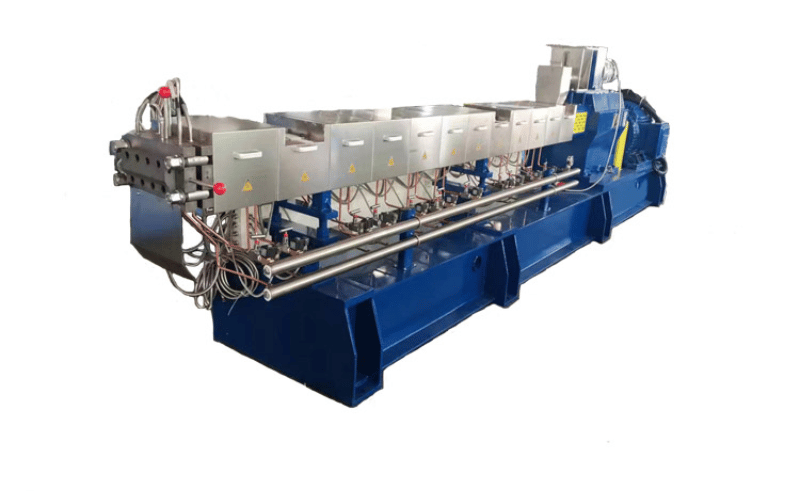
1. Parallel XLPE Extruder
This type of XLPE extruder features two parallel screws that rotate in the same direction, typically co-rotating for optimal mixing.
Co-rotating screws rotate in the same direction, while counter-rotating screws rotate in opposite directions.
Parallel XLPE extruders are known for their excellent mixing and homogenization capabilities, making them suitable for applications requiring uniform dispersion of cross-linking agents.
They are commonly used in the cable and wire industries to process materials such as power cable insulation, ensuring high dielectric strength and consistency.
2. Conical XLPE Extruder
As the name suggests, this type of XLPE extruder features screws with a conical or tapered design.
The screws have a larger diameter at the feed end and gradually decrease in diameter towards the discharge end.
The conical design allows for better control over the pressure and shear forces experienced by the material during processing.
Conical XLPE extruders are particularly useful for materials that require high shear rates or pressure buildup, such as in the production of high-density pipes.
They are commonly employed in industries like plumbing and infrastructure for processing materials with high viscosities or specific structural requirements.
The choice between a parallel or conical XLPE extruder depends on factors such as material properties, desired product characteristics, processing requirements, and production volumes. Manufacturers often collaborate with extruder suppliers to select the most suitable type and configuration for their specific applications, ensuring optimal performance and product quality.

Applications of XLPE Extruders
XLPE extruders are versatile machines that find applications across a wide range of industries, thanks to their ability to process this advanced material efficiently and produce high-quality, durable products. Let’s explore some of the key applications of XLPE extruders:
1. Cable Insulation
XLPE extruders play a vital role in the wire and cable industry, where they are used for applying insulation to conductors. They are employed in the production of low, medium, and high-voltage power cables as well as communication cables. The excellent dielectric strength, thermal resistance, and durability of extruded XLPE make it a superior material for protecting electrical conductors in construction, automotive, and power distribution applications.
2. Pipes and Tubing
The superior heat resistance and durability of cross-linked polyethylene make it ideal for pipes and tubing. XLPE extruders are used to manufacture piping systems for hot and cold water distribution, radiant heating, and chemical transport. These pipes offer excellent performance, longevity, and corrosion resistance, making them a preferred choice in the plumbing, construction, and industrial sectors.
3. Automotive Components
In the automotive industry, XLPE extruders are used to produce components that require high heat and chemical resistance. This includes fuel lines, wire insulation, and other under-the-hood parts exposed to harsh operating conditions. The ability of extruded XLPE to withstand high temperatures and resist degradation from automotive fluids ensures reliability and safety in modern vehicles.
4. Construction Materials
XLPE extruders are used in the construction industry to produce specialized materials such as insulation foam and protective layers. The cross-linked foam offers excellent thermal and acoustic insulation properties for buildings. Extruded XLPE sheets can also be used as durable, moisture-resistant protective barriers in various construction assemblies, contributing to energy efficiency and structural integrity.
5. Recycling and Reprocessing
XLPE extruders contribute to sustainable practices by enabling the recycling and reprocessing of XLPE waste materials. Although cross-linked polymers are challenging to recycle, specialized extrusion processes can convert post-industrial scrap into reusable compounds for less-critical applications, reducing environmental impact and promoting circular economy initiatives within the plastics industry.
With their versatility, efficiency, and ability to process this high-performance polymer, XLPE extruders remain indispensable in various manufacturing processes, driving innovation and enabling the production of high-quality extruded products across diverse industries.
Final Thought
The XLPE extruder is a remarkable piece of machinery that has revolutionized manufacturing processes across numerous industries. From power cables and piping to automotive and construction, these specialized machines have proven their worth through their excellent cross-linking capabilities, high output rates, and ability to handle the demanding properties of cross-linked polyethylene.
Whether you’re looking to produce high-quality insulated cables, manufacture durable heat-resistant pipes, or explore efficient production solutions for advanced polymers, an XLPE extruder can be the key to unlocking new possibilities for your business.
Visit our website to learn more about XLPE Extruders. We also offer standard Single Screw Extruders as part of your comprehensive solution. If you are looking for an XLPE Extrusion machine and need guidance on choosing the right instrument for your specific needs, don’t hesitate to get in touch with us now.
Video
Kneader + Twin Screw Extruder+Single Screw Extruder for Low Smoke Halogen Free XLPE Cable Compounds


 English
  Portuguese
  Spanish
  Korean
  Russian
  German