


Long Fiber Reinforced Thermoplastics (LFT) have become a game-changer in modern industries, offering a unique combination of strength, lightweight properties, and durability. These materials are engineered by embedding long fibers, such as glass or carbon, into a thermoplastic matrix, creating a composite that outperforms traditional plastics in demanding applications. Industries such as automotive, aerospace, and construction rely on LFT to reduce weight while maintaining structural integrity, making it a preferred choice for components that must endure high stress and harsh environments.
The importance of LFT lies in its ability to bridge the gap between metals and conventional plastics. It delivers the strength and rigidity of metals without the added weight, enabling manufacturers to improve fuel efficiency in vehicles or enhance the portability of consumer products. At the same time, its durability ensures long-lasting performance, even under challenging conditions. These properties make LFT a versatile material that continues to drive innovation across multiple sectors.
This article explores the benefits of LFT, its diverse applications, and the manufacturing process that brings this advanced material to life. By understanding how extrusion technology shapes LFT, manufacturers can unlock its full potential and create solutions that meet the evolving demands of modern industries.
What are Long Fiber Reinforced Thermoplastics (LFT)?
Long Fiber Reinforced Thermoplastics (LFT) are advanced composite materials that combine the strength of long fibers, such as glass or carbon, with the versatility of a thermoplastic matrix. These materials are designed to deliver exceptional performance in applications where traditional plastics or metals fall short. By embedding long fibers into the polymer matrix, LFT achieves a unique balance of strength, lightweight properties, and durability, making it a preferred choice for industries like automotive, aerospace, and construction.
Key Properties of LFT
The defining characteristics of LFT set it apart from other materials, offering a range of benefits that cater to demanding applications:
- High Strength and Rigidity: The long fibers in LFT act as reinforcements, significantly enhancing the material’s mechanical properties. This strength allows LFT to replace metals in structural components, reducing weight without compromising performance. For example, automotive manufacturers use LFT for under-the-hood parts that must endure high stress and vibration.
- Lightweight for Improved Efficiency: LFT’s lightweight nature is a game-changer for industries focused on efficiency. In automotive applications, reducing weight directly improves fuel efficiency and lowers emissions. Similarly, in the aerospace industry, lightweight materials contribute to enhanced payload capacity and energy savings.
- Superior Impact, Thermal, and Chemical Resistance: LFT excels in environments where durability is critical. Its impact resistance makes it ideal for applications like bumpers and protective casings, while its thermal stability ensures reliable performance in high-temperature conditions. Additionally, its chemical resistance enables it to withstand exposure to harsh substances, making it suitable for use in industrial and chemical processing equipment.
Common Matrices for LFT
The choice of thermoplastic matrix plays a crucial role in determining the properties and performance of LFT. Some of the most commonly used matrices include:
- Polypropylene (PP): Recognized for its exceptional chemical resistance and cost-effectiveness, PP is widely utilized in automotive and consumer goods applications.
- Polyamide (PA): Also known as nylon, PA offers superior strength, thermal stability, and wear resistance, making it ideal for high-performance applications like gears and engine components.
- Polybutylene Terephthalate (PBT): PBT provides excellent dimensional stability and electrical insulation properties, making it a popular choice for electronics and electrical components.
By understanding the unique properties and matrix options of LFT, manufacturers can tailor these materials to meet the specific demands of their applications. LFT is not just a material; it’s a solution that bridges the gap between performance and efficiency, enabling innovation across industries.
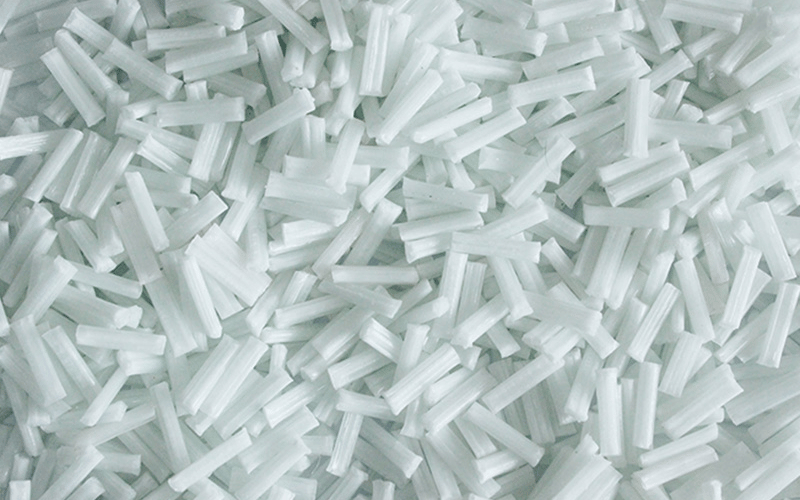
The LFT Manufacturing Process
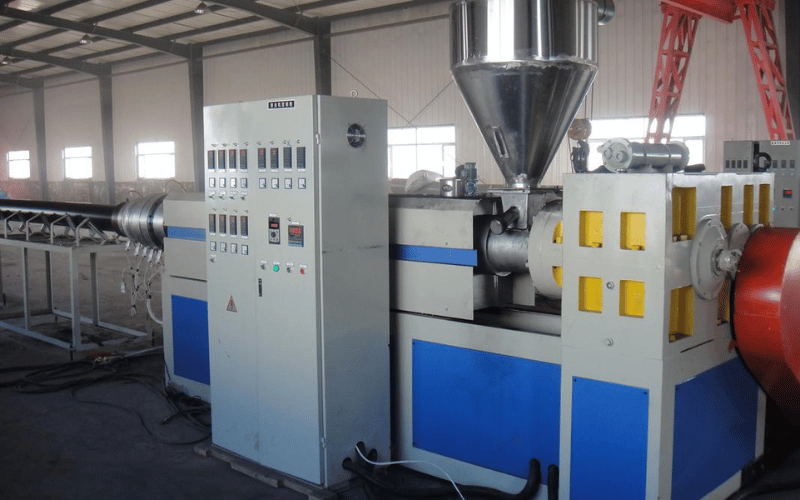
The manufacturing process of Long Fiber Reinforced Thermoplastics (LFT) is a carefully orchestrated sequence that ensures the fibers and thermoplastic matrix combine seamlessly to deliver exceptional performance. At the heart of this process lies the twin screw extruder, a machine that acts as both a craftsman and a guardian, ensuring the fibers are evenly integrated while preserving their length for optimal mechanical properties. Let’s break down the key steps in this process and the critical role extrusion plays.
Role of Extrusion in LFT Manufacturing
Extrusion is the backbone of the LFT manufacturing process, responsible for achieving the perfect marriage between fibers and the thermoplastic matrix. Twin screw extruders excel in this role due to their ability to provide precise control over mixing and material flow.
- Ensures Even Fiber Integration: The twin screw extruder’s segmented design allows for customizable zones that promote uniform mixing. This provides the fibers are evenly distributed throughout the matrix, eliminating weak spots and ensuring consistent performance.
- Minimizes Fiber Breakage: Long fibers are the key to LFT’s superior mechanical properties, and preserving their length during processing is critical. Twin screw extruders use low-shear screw elements and optimized screw speeds to minimize fiber breakage, maintaining the material’s strength and rigidity.
With extrusion as the central pillar, the LFT manufacturing process achieves the precision and consistency required for high-performance applications.
Process Steps in LFT Manufacturing
The journey from raw materials to finished LFT products involves several critical steps, each contributing to the material’s final properties.
Fiber Pre-Treatment: Preparing for Adhesion
Before fibers can be integrated into the thermoplastic matrix, they undergo surface treatment to improve adhesion. This step often involves applying a coupling agent, such as silane, to the fiber surface. The coupling agent enhances the bond between the fibers and the matrix, ensuring the composite can withstand mechanical stress without delamination. Please think of this step as priming the fibers for their role as reinforcements.
Fiber-Matrix Compounding: The Heart of the Process
In this step, the fibers and thermoplastic matrix come together inside the twin screw extruder. The extruder’s segmented screws create zones for feeding, melting, and mixing, ensuring the fibers are uniformly dispersed without compromising their length. Precise temperature control prevents polymer degradation, while the screw design promotes thorough blending. This stage is where the material’s core properties are defined, making it the most critical part of the process.
Shaping and Cooling: From Melt to Solid
Once the fiber-matrix compound exits the extruder, it is shaped into strands or other forms, depending on the application. These strands are then cooled, typically using a water bath, to solidify the material. After cooling, the strands are pelletized into uniform granules, ready for further processing. This step ensures the material is easy to handle and compatible with secondary manufacturing methods.
Final Processing: Shaping the End Product
The final step involves converting the LFT pellets into finished products through secondary processes, such as injection molding or compression molding. These methods allow manufacturers to create complex shapes and structures while retaining the material’s enhanced properties. For example, automotive parts such as bumper beams or seat structures are often produced using injection molding, which leverages LFT’s strength and lightweight characteristics.
By following these steps and leveraging the capabilities of twin screw extruders, manufacturers can produce LFT materials that meet the highest standards of performance and reliability. Each stage of the process plays a vital role in unlocking the full potential of LFT, making it a cornerstone of modern material innovation.
Optimizing Extrusion Parameters for Fiber Integrity
When manufacturing Long Fiber Reinforced Thermoplastics (LFT), maintaining the integrity of the fibers is paramount. The strength and performance of LFT rely heavily on preserving fiber length and ensuring proper integration into the thermoplastic matrix. Optimizing extrusion parameters is not just a technical necessity—it’s an art that requires precision and a deep understanding of the interplay between machine settings and material behavior. Let’s explore the key factors that influence fiber integrity and how to fine-tune them for the best results.
Maintaining Fiber Length
Preserving fiber length during extrusion is crucial to achieving the mechanical properties that distinguish LFT. However, the extrusion process can subject fibers to significant stress, leading to breakage if not carefully managed.
- Relationship Between Screw Speed, Shear Rate, and Fiber Attrition: High screw speeds and excessive shear rates can cause fibers to break, reducing their reinforcing capabilities. To minimize fiber attrition, adjust the screw speed to a moderate level that balances mixing efficiency with gentle handling of the fibers. Use screw elements designed for low shear, such as wide-pitch conveying elements, to reduce mechanical stress on the fibers.
- Techniques to Minimize Stress on Fibers: Configure the screw with fewer kneading blocks in the mixing zones to limit shear forces. Additionally, optimize the feed rate to ensure a steady flow of material without overloading the extruder. Please consider the fibers as delicate threads that require careful handling to maintain their strength and functionality.
Achieving Consistent Fiber Wetting
Proper wetting of the fibers by the thermoplastic matrix is essential for creating a strong bond and ensuring uniform material properties. Inconsistent wetting can lead to weak spots and compromised performance.
- Importance of Melt Temperature and Pressure Control: Maintaining a consistent melt temperature ensures the polymer flows smoothly and fully saturates the fiber bundles. A temperature that is too low can result in incomplete wetting, while excessive heat may degrade the polymer. Similarly, control the pressure within the extruder to promote thorough impregnation of the fibers.
- Methods for Ensuring Complete Saturation of Fiber Bundles: Use mixing elements that promote distributive rather than dispersive mixing, as this encourages even distribution of the polymer around the fibers without excessive shear. Additionally, monitor the melt viscosity to ensure it is within the optimal range for fiber wetting. The goal is to create a seamless bond between the fibers and the matrix, much like weaving a fabric where every thread is perfectly aligned.
Temperature and Output Control
Balancing temperature and output rate is a delicate dance that directly impacts the quality of the final LFT product. Mismanagement in these areas can lead to thermal degradation or inconsistent material properties.
- Managing Thermal Degradation of the Polymer: Set the barrel temperature profile to match the polymer’s thermal characteristics. Gradually increase the temperature along the extruder zones to ensure proper melting without overheating. Incorporate degassing zones to remove any volatiles that could compromise the material’s integrity.
- Balancing Throughput Rate and Final LFT Quality: While higher throughput rates can improve productivity, they can also increase the risk of fiber breakage and uneven mixing. Find the sweet spot by adjusting the screw speed and feed rate to maintain a steady flow of material without overloading the system. Utilize real-time monitoring tools to track parameters such as torque and melt pressure, making adjustments as necessary to ensure consistent quality.
By carefully optimizing these extrusion parameters, manufacturers can preserve fiber integrity and produce LFT materials that deliver exceptional performance. Each adjustment, whether to screw speed, temperature, or pressure, plays a critical role in shaping the final product. Mastering these techniques ensures that the fibers and matrix work together in perfect harmony, creating a composite material that meets the highest standards of strength and durability.
Applications of LFT
Long Fiber Reinforced Thermoplastics (LFT) have carved out a vital role across industries, offering a unique combination of strength, lightweight properties, and durability. Their versatility enables them to replace traditional materials, such as metals and short-fiber composites, in demanding applications. Let’s explore how LFT is transforming key sectors and the specific benefits it brings to each.
Automotive: Driving Safety and Efficiency
The automotive industry has embraced LFT for its ability to deliver high performance while reducing vehicle weight. Components like door modules, bumpers, seat structures, and dashboards benefit from LFT’s exceptional mechanical properties.
- Door Modules and Bumpers: LFT provides the impact resistance needed to enhance passenger safety during collisions. Its lightweight nature also reduces the overall weight of the vehicle, improving fuel efficiency and lowering emissions.
- Seat Structures and Dashboards: LFT’s rigidity and dimensional stability make it ideal for structural components, such as seat frames and dashboards, where durability and precision are critical. By replacing metal with LFT, manufacturers can achieve significant weight savings without compromising strength.
In automotive applications, LFT acts as a silent partner, ensuring safety, efficiency, and sustainability in every mile traveled.
Aerospace: Lighter, Greener, and Stronger
In aerospace, every gram saved translates to fuel savings and reduced emissions. LFT’s lightweight properties and high strength make it a go-to material for components that must endure extreme conditions.
- Lightweight Components: From interior panels to structural reinforcements, LFT reduces the weight of aircraft without sacrificing performance. Its thermal stability and resistance to fatigue ensure reliability in high-stress environments.
- Fuel Savings and Emission Reduction: By incorporating LFTs into their designs, aerospace manufacturers can enhance fuel efficiency and comply with stringent environmental regulations. LFT’s ability to replace heavier materials, such as aluminum, contributes to greener aviation.
LFT’s role in aerospace is clear: it helps the industry soar higher while leaving a smaller environmental footprint.
Electronics: Durable and Reliable Solutions
The electronics industry demands materials that can withstand wear and tear while protecting sensitive components. LFT rises to the challenge, offering durability and precision for both consumer and industrial devices.
- Durable Shells: LFT is commonly used for the outer casings of devices like laptops, smartphones, and industrial equipment. Its impact resistance and dimensional stability ensure these products can endure daily use and harsh environments.
- Structural Parts: For internal components, LFT provides the strength needed to support intricate assemblies. Its ability to maintain performance under thermal and mechanical stress makes it a reliable choice for electronics manufacturers.
In electronics, LFT acts as a shield and a backbone, protecting devices while ensuring they perform flawlessly.
Construction: Building Strength and Longevity
The construction industry relies on materials that can withstand heavy loads and harsh conditions. LFT’s high strength and durability make it an ideal choice for a variety of applications.
- High-Strength Panels and Pipes: LFT is used to manufacture panels and pipes that must endure significant stress and exposure to the elements. Its resistance to corrosion and chemicals ensures long-lasting performance.
- Reinforcement Structures: In applications like bridge reinforcements and building supports, LFT provides the necessary strength while reducing weight, simplifying installation, and lowering costs.
In construction, LFT serves as a steadfast ally, delivering materials that stand the test of time and the elements.
By tailoring LFT to the specific needs of each industry, manufacturers can unlock its full potential. Whether it’s improving fuel efficiency in vehicles, reducing emissions in aerospace, protecting electronics, or reinforcing infrastructure, LFT continues to prove its value as a versatile and high-performance material.
Challenges and Solutions in LFT Manufacturing
Manufacturing Long Fiber Reinforced Thermoplastics (LFT) is a complex process that demands precision and control. While the benefits of LFT are undeniable, the manufacturing process comes with its own set of challenges. Each issue, if not addressed, can compromise the material’s performance and quality. Let’s delve into the most common challenges and explore actionable solutions to overcome them.
Fiber Breakage
Maintaining fiber length is crucial to achieving the mechanical properties that distinguish LFT. However, the extrusion process can subject fibers to excessive stress, leading to breakage and reduced performance.
- Cause: Excessive Shear Forces During Mixing
High shear forces, often caused by improper screw design or excessive screw speed, can break fibers into shorter lengths, diminishing their reinforcing capabilities. - Solution: Optimize Screw Design and Mixing Zones
To minimize fiber breakage, configure the screw with low-shear elements such as wide-pitch conveying sections and fewer kneading blocks in the mixing zones. Adjust the screw speed to a moderate level that balances mixing efficiency with gentle handling of the fibers. Additionally, monitor the torque and pressure within the extruder to ensure the fibers are not subjected to unnecessary stress. Think of the screw as a careful craftsman, shaping the material without damaging its core components.
Inconsistent Fiber Distribution
Uniform fiber distribution is essential for ensuring consistent material properties throughout the LFT product. Poor mixing or uneven dispersion can lead to weak spots and compromised performance.
- Cause: Poor Mixing or Uneven Dispersion
Inadequate mixing zones or insufficient control over material flow can result in fibers clustering in certain areas, leaving other regions under-reinforced. - Solution: Use Advanced Extruders with Precise Control
Invest in twin screw extruders equipped with advanced control systems that allow for precise adjustments to mixing parameters. Incorporate distributive mixing elements into the screw design to promote even dispersion of fibers within the matrix. Additionally, ensure the feed system delivers a consistent flow of material into the extruder. By fine-tuning these variables, you can achieve a uniform blend that maximizes the performance of the final product.
Thermal Degradation
Thermal degradation is a silent threat in LFT manufacturing, capable of compromising both the polymer matrix and the fibers. Overheating during extrusion can lead to discoloration, reduced strength, and poor overall quality.
- Cause: Overheating During Extrusion
Excessive barrel temperatures or prolonged residence times can cause degradation of the polymer and weaken the bond between the fibers and the matrix. - Solution: Implement Accurate Temperature Control Systems
Utilize extruders equipped with segmented barrel zones that enable precise temperature control at each stage of the process. Gradually increase the temperature along the barrel to ensure proper melting without overheating. Implement real-time monitoring systems to track melt temperatures and make adjustments as necessary. Additionally, consider using cooling zones or degassing systems to remove excess heat and volatiles. Think of temperature control as the conductor of an orchestra, ensuring every element works in harmony without overheating the performance.
By addressing these challenges with targeted solutions, manufacturers can unlock the full potential of LFT. Each adjustment, whether to screw design, mixing parameters, or temperature control, plays a critical role in ensuring the material’s quality and performance. With the right approach, the challenges of LFT manufacturing can be turned into opportunities to refine the process and deliver superior results.
Future Trends in LFT Manufacturing
The manufacturing of Long Fiber Reinforced Thermoplastics (LFT) is evolving rapidly, driven by technological advancements and the growing demand for sustainable materials. As industries push for higher performance and environmental responsibility, LFT manufacturing is adapting to meet these challenges. Let’s explore the future trends shaping this field and how they promise to redefine the possibilities of LFT.
Advances in Extruder Technology
Extruder technology is at the heart of LFT manufacturing, and ongoing innovations are enhancing both efficiency and product quality. These advancements aim to address the challenges of maintaining fiber integrity, improving throughput, and enhancing process control.
- New Designs Focused on Reduced Shear and Increased Throughput
Modern twin screw extruders are being designed with specialized screw elements that minimize shear forces while maintaining high throughput. For example, wide-pitch conveying elements and low-shear kneading blocks are being integrated to preserve fiber length during processing. Additionally, extruders with larger diameters and optimized L/D (length-to-diameter) ratios are enabling higher material output without compromising quality. These designs allow manufacturers to scale production while maintaining the mechanical properties that make LFT so valuable. - Integration of Real-Time Monitoring and Control Systems
The future of extrusion lies in smart manufacturing. Advanced extruders now feature real-time monitoring systems that track critical parameters like melt temperature, pressure, and torque. These systems use AI-driven algorithms to make instant adjustments, ensuring consistent quality and reducing waste. For instance, if a sensor detects a rise in melt temperature, the system can automatically adjust the barrel heating zones to prevent thermal degradation. This level of precision transforms the extruder into a self-optimizing machine, capable of delivering superior results with minimal human intervention.
Sustainable LFT Materials
As sustainability becomes a priority across industries, the development of eco-friendly LFT materials is gaining momentum. These innovations aim to reduce the environmental impact of LFT manufacturing while maintaining its high-performance characteristics.
- Development of Bio-Based Long Fiber Reinforced Thermoplastics
Researchers are exploring the use of bio-based polymers, such as polylactic acid (PLA), as matrices for LFT. When combined with natural fibers like hemp or flax, these materials offer a sustainable alternative to traditional petroleum-based composites. Bio-based LFT not only reduces reliance on fossil fuels but also provides a lower carbon footprint, making it an attractive option for industries like automotive and construction. - Improvements in Recycling Methods for LFT Waste
Recycling LFT has historically been a challenge due to the difficulty of separating fibers from the polymer matrix. However, advancements in mechanical and chemical recycling methods are changing the game. For example, new processes use controlled heat and solvents to break down the matrix, allowing the fibers to be recovered and reused. These innovations are helping manufacturers close the loop on LFT production, reducing waste and promoting a circular economy.
The future of LFT manufacturing is bright, with advances in extruder technology and sustainable materials paving the way for greater efficiency and environmental responsibility. By embracing these trends, manufacturers can stay ahead of the curve, delivering high-performance composites that meet the demands of a rapidly changing world.
FAQ:
Q: What distinguishes long fiber reinforced thermoplastics from short fiber composites?
A: Long fiber reinforced thermoplastics (LFT) contain fibers that are significantly longer than those in short fiber composites, typically exceeding 10 mm in length. This added length provides superior mechanical properties, including higher strength, stiffness, and impact resistance. LFT also offers better load transfer and durability, making it ideal for structural applications, whereas short fiber composites are more suited for less demanding uses.
Q: How does the extrusion process preserve the desired length of the reinforcing fibers?
A: The extrusion process preserves fiber length by using optimized screw designs and controlled processing parameters. Low-shear screw elements, such as wide-pitch conveying sections and gentle kneading blocks, minimize mechanical stress on the fibers. Additionally, maintaining moderate screw speeds and carefully managing feed rates reduces the risk of fiber breakage. These measures ensure the fibers retain their reinforcing capabilities throughout the process.
Q: What are the primary applications of extruded long fiber thermoplastic pellets?
A: Extruded LFT pellets are widely used in industries that demand high-performance materials. In automotive, they are used for components like bumpers, seat structures, and under-the-hood parts. Aerospace applications include lightweight panels and reinforcements. In electronics, LFT pellets are used for durable casings and structural parts, while in construction, they are utilized for high-strength panels, pipes, and reinforcement structures.
Q: Which thermoplastic materials are most commonly used in LFT extrusion?
A: The most commonly used thermoplastic materials in LFT extrusion include polypropylene (PP), polyamide (PA or nylon), and polybutylene terephthalate (PBT). PP is valued for its chemical resistance and cost-effectiveness, PA offers excellent strength and thermal stability, and PBT provides dimensional stability and electrical insulation properties. The choice of matrix depends on the specific performance requirements of the application.
Q: What quality control measures ensure the mechanical strength of LFT products?
A: Quality control measures for LFT products include monitoring fiber length distribution, ensuring uniform fiber dispersion, and maintaining consistent melt temperature during extrusion. Mechanical testing, such as tensile and impact tests, verifies the material’s strength and durability. Additionally, real-time monitoring systems in the extruder track parameters like torque and pressure, allowing for immediate adjustments to maintain product quality.
Conclusion
Long Fiber Reinforced Thermoplastics (LFT) play a crucial role in modern industries, offering unmatched strength, lightweight properties, and durability for demanding applications. Advanced extrusion technology drives efficient manufacturing by ensuring precise fiber integration and consistent material quality. By adopting innovative techniques, manufacturers can enhance performance, reduce environmental impact, and meet the growing demand for sustainable, high-performance materials.


 English
  Portuguese
  Spanish
  Korean
  Russian
  German