


Engineering plastic compounding plays a pivotal role in modern manufacturing, shaping the way industries create high-performance materials for demanding applications. This process involves blending base polymers with additives, fillers, and reinforcements to enhance specific properties, such as strength, durability, and thermal resistance. Manufacturers rely on these customized compounds to meet the rigorous requirements of industries such as automotive, aerospace, electronics, and healthcare.
The importance of engineering plastic compounding lies in its ability to transform standard polymers into tailored solutions. By adjusting the composition, manufacturers can achieve materials that withstand extreme conditions, deliver superior performance, and meet precise design specifications. This customization not only drives innovation but also ensures efficiency and sustainability in the production process.
In this article, we will examine the techniques employed in engineering plastic compounding, the challenges encountered during the process, and the innovative solutions that address these challenges. Whether you’re a manufacturer seeking to optimize material performance or a professional curious about the science behind advanced plastics, this guide will provide valuable insights into the world of engineering plastic compounding.
What is Engineering Plastic Compounding?
Engineering plastic compounding is the art and science of transforming base polymers into high-performance materials tailored for specific applications. At its core, this process involves blending polymers with carefully selected additives, fillers, and reinforcements to achieve desired properties. Think of it as crafting a recipe where each ingredient plays a critical role in enhancing the final product’s performance.
The benefits of engineering plastic compounding are as diverse as the industries it serves. By fine-tuning the composition, manufacturers can unlock a range of advanced properties that elevate the material’s functionality and durability. Let’s delve into the key advantages that make this process indispensable in modern manufacturing.
Key Benefits of Engineering Plastic Compounding
- Enhanced Strength, Rigidity, and Impact Resistance
Compounding allows materials to withstand mechanical stress and maintain structural integrity under demanding conditions. For instance, automotive components like bumpers and dashboards rely on compounded plastics to endure impacts without compromising safety or aesthetics. - Improved Thermal Stability and Chemical Resistance
By incorporating heat-resistant additives, compounded plastics can perform reliably in high-temperature environments, such as engine compartments or industrial machinery. Additionally, chemical-resistant compounds are essential for applications in medical devices and chemical processing equipment. - Tailored Electrical Conductivity or Insulation
Whether you need a material that conducts electricity for electronic components or insulates against it for safety, compounding offers precise control over electrical properties. This versatility is critical in industries like electronics and telecommunications.
Applications Across Industries
Engineering plastic compounding finds its way into a wide array of industries, each with unique demands. In the automotive sector, it enables lightweight yet durable parts that improve fuel efficiency. Electronics benefit from materials with precise electrical properties, while the construction industry relies on compounded plastics for weather-resistant and long-lasting components. Even the medical field depends on these materials for biocompatible and sterilizable devices.
By understanding the nuances of engineering plastic compounding, manufacturers can push the boundaries of innovation and deliver solutions that meet the ever-evolving needs of modern industries.
Key Techniques in Plastic Compounding
Plastic compounding is a meticulous process that demands precision, expertise, and the right tools to achieve optimal results. Each step, from material selection to process control, plays a pivotal role in determining the quality and performance of the final product. Let’s break down the key techniques that drive success in this field.
Material Selection: The Foundation of Compounding
Selecting the right materials is the cornerstone of effective plastic compounding. Every polymer and additive brings its own personality to the mix, and understanding how they interact is crucial to achieving the desired properties.
- Base Polymers: Common choices include PA (polyamide), PBT (polybutylene terephthalate), PC (polycarbonate), and CPVC (chlorinated polyvinyl chloride). Each polymer offers unique strengths—PA for its toughness, PBT for its dimensional stability, PC for its impact resistance, and CPVC for its heat tolerance. The challenge lies in matching the polymer to the application’s specific demands.
- Additives: Reinforcements like glass or carbon fibers enhance strength and rigidity, while impact modifiers improve toughness. Flame retardants ensure safety in high-risk environments, and stabilizers protect against thermal or UV degradation. The art of compounding lies in balancing these additives to achieve the perfect harmony of performance, cost, and processability.
Material selection is not just about picking components; it’s about crafting a formula that meets the application’s needs while staying within budget and ensuring manufacturability.
Mixing and Extrusion: The Heart of the Process
Once the materials are selected, the real magic happens in the mixing and extrusion stage. This is where twin-screw extruders take center stage, acting as the workhorses of the compounding process.
- Twin-Screw Extruders: These machines excel at high-shear mixing and uniform dispersion of additives. Their segmented screws allow for customizable feeding, melting, and mixing zones, ensuring that each material is processed under optimal conditions.
- Controlled Temperature Profiles: Maintaining precise temperature control is critical to prevent polymer degradation. Overheating can compromise the material’s properties, while insufficient heat can lead to poor mixing and inconsistent quality.
- Uniform Dispersion: The goal is to achieve a homogeneous blend where every additive is evenly distributed. This ensures that the final product performs consistently, whether it’s a car dashboard or a medical device.
The twin-screw extruder is more than just a machine; it’s a partner in the compounding process, working tirelessly to bring your material formulations to life.
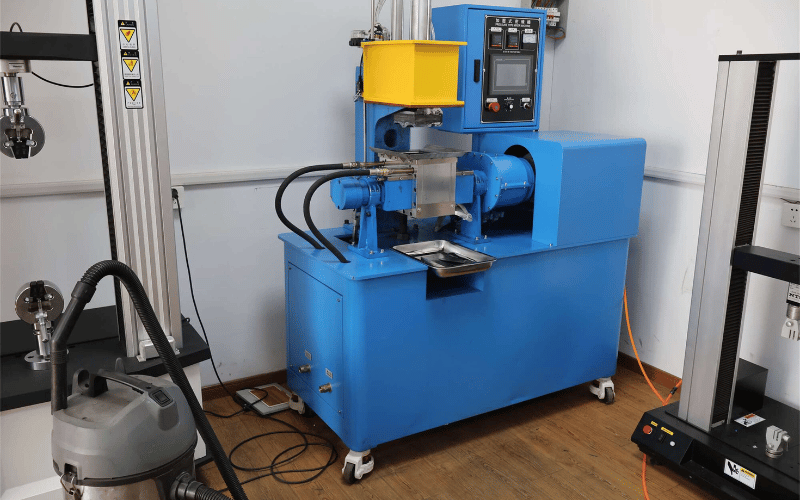
Process Control: Ensuring Consistency and Quality
Even the best materials and equipment can’t guarantee success without robust process control. This is where technology steps in to monitor and fine-tune every aspect of the operation.
- Sensors: Advanced sensors measure torque, pressure, and melt temperature in real time, providing critical data to ensure the process stays on track.
- Automated Feedback Loops: These systems adjust parameters automatically to maintain consistent quality, reducing the risk of human error and ensuring repeatability.
- Quality Tests: Post-production testing, including melt flow index and thermal analysis, ensures that the compounded material meets the required specifications. These tests are not just checkpoints; they are the final guardians of quality, ensuring that the material is ready to perform in its intended application.
Process control transforms compounding from an art into a science, providing the precision and reliability needed to meet today’s demanding standards. By mastering these techniques, manufacturers can produce materials that not only meet but exceed expectations.
Challenges and Solutions
Plastic compounding is a complex process, and even the most advanced systems can encounter challenges that threaten the quality and consistency of the final product. However, with a clear understanding of the root causes and targeted solutions, these obstacles can be effectively managed. Let’s explore some common challenges and how to address them with precision and expertise.
Inconsistent Filler Distribution
Achieving uniform filler distribution is critical to ensuring the material performs as intended. When fillers like glass fibers or mineral reinforcements are unevenly dispersed, the final product may exhibit weak spots or inconsistent properties.
- Cause: Poor mixing or uneven dispersion often stems from suboptimal screw design or inadequate mixing zones within the extruder. If the fillers are not properly integrated into the polymer matrix, the material’s mechanical properties can suffer.
- Solution: The key lies in optimizing the screw design and configuring the mixing zones to promote thorough blending. Segmented screws with specialized kneading elements can enhance shear and ensure uniform dispersion. Additionally, adjusting the screw speed and feed rate can help achieve a more consistent mix. Think of the screw as the conductor of an orchestra, ensuring every component plays its part in harmony.
Thermal Degradation
Thermal degradation is a silent enemy in plastic compounding, capable of compromising the polymer’s integrity and rendering the material unusable. Preventing this requires a delicate balance of heat and time.
- Cause: Excessive heat during extrusion can break down the polymer chains, leading to discoloration, reduced strength, and poor performance. This often occurs when temperature profiles are not carefully controlled or when volatile compounds are trapped in the melt.
- Solution: Implementing controlled temperature profiles is essential to avoid overheating. Use precise heating zones along the extruder barrel to maintain the ideal temperature for each stage of the process. Incorporating degassing systems can also help remove volatile compounds and prevent degradation. Think of the extruder as a chef, carefully controlling the heat to cook the perfect dish without burning it.
Moisture Contamination
Moisture is a common but often underestimated challenge in plastic compounding, particularly when working with hygroscopic resins like nylon or polycarbonate. Even trace amounts of moisture can lead to defects such as voids, poor surface finish, or reduced mechanical properties.
- Cause: Improper drying of hygroscopic resins allows moisture to remain in the material, which can vaporize during extrusion and create defects.
- Solution: Pre-drying systems are your first line of defense against moisture contamination. Use desiccant dryers or vacuum dryers to remove moisture from the resin before it enters the extruder. Additionally, moisture monitoring systems can provide real-time data to ensure the material is adequately dried. Think of these systems as vigilant gatekeepers, ensuring only dry, high-quality resin enters the process.
By addressing these challenges with targeted solutions, manufacturers can maintain the integrity of their compounded materials and deliver consistent, high-performance products. Each challenge is an opportunity to refine the process and push the boundaries of what’s possible in plastic compounding.
Practical Applications
Twin screw extruders are the unsung heroes behind many of the advanced materials we encounter daily. Their ability to precisely blend polymers and additives makes them indispensable across a wide range of industries. Let’s explore how this technology powers innovation in key sectors, delivering materials tailored to meet specific demands.
Automotive: Lightweight Components with High Impact Resistance
In the automotive industry, the demand for lightweight yet durable materials is relentless. Twin screw extruders enable the production of compounded plastics that reduce vehicle weight without compromising safety or performance. For example, reinforced polyamide (PA) compounds are commonly used for under-the-hood components like air intake manifolds and engine covers. These materials offer high impact resistance and thermal stability, essential for withstanding the harsh conditions of an engine bay.
To achieve these properties, the extruder must ensure uniform dispersion of reinforcements like glass fibers. Customizable screw configurations allow for precise control over the mixing process, ensuring that every fiber is evenly distributed. This meticulous attention to detail results in materials that not only meet but exceed the stringent requirements of the automotive sector.
Electronics: Flame-Retardant Materials for Safety
Safety is paramount in the electronics industry, where materials must meet strict flame-retardant standards to prevent fire hazards. Twin screw extruders play a critical role in producing compounds with flame-retardant additives, such as halogen-free flame retardants or phosphorus-based systems.
The challenge lies in achieving a homogeneous blend without degrading the additives. Controlled temperature profiles and specialized screw elements are essential to prevent thermal degradation while ensuring thorough mixing. The result? High-performance materials used in applications like circuit boards, connectors, and enclosures, where safety and reliability are non-negotiable.
Construction: Durable and Weather-Resistant Profiles
The construction industry demands materials that can withstand the test of time and the elements. Compounded plastics, such as weather-resistant PVC or UV-stabilized polycarbonate, are widely used for applications like window profiles, roofing sheets, and outdoor decking.
Twin screw extruders excel at incorporating stabilizers and impact modifiers into these materials, enhancing their durability and resistance to environmental factors. For instance, UV stabilizers protect against sun damage, while impact modifiers ensure the material can endure physical stress. By fine-tuning the extrusion process, manufacturers can produce construction materials that combine strength, longevity, and aesthetic appeal.
Medical: Biocompatible and Sterilizable Materials
In the medical field, precision and safety are paramount. Twin screw extruders enable the production of biocompatible and sterilizable materials used in devices like catheters, surgical instruments, and implantable components. Polymers such as medical-grade polycarbonate or polyethylene are compounded with additives to enhance their performance in critical applications.
The extrusion process must be carefully controlled to avoid contamination and ensure consistent quality. Degassing systems remove any volatile impurities, while precise temperature control prevents degradation of sensitive materials. The result is a final product that meets the rigorous standards of the medical industry, ensuring patient safety and reliability.
By tailoring materials to the unique demands of each industry, twin screw extruders empower manufacturers to innovate and deliver solutions that drive progress. Each application is a testament to the versatility and precision of this technology, proving its indispensable role in modern manufacturing.
Future Trends in Plastic Compounding
The plastic compounding industry is evolving rapidly, driven by technological advancements and the growing demand for sustainable solutions. Twin screw extruders are at the forefront of this transformation, adapting to meet the challenges of tomorrow. Let’s explore the key trends shaping the future of plastic compounding and how they are redefining the industry.
Smart Manufacturing: Precision Meets Intelligence
The integration of smart technologies into plastic compounding is revolutionizing how manufacturers approach efficiency and quality. Twin screw extruders are no longer just machines; they are becoming intelligent systems capable of making real-time decisions.
- AI-Assisted Controls for Real-Time Adjustments: Advanced AI algorithms are now being integrated into extruder control systems, enabling real-time monitoring and adjustments. For example, sensors can detect variations in torque, pressure, or melt temperature, and AI can instantly tweak parameters like screw speed or feed rate to maintain optimal performance. This ensures consistent quality while minimizing waste. Think of AI as the extruder’s brain, constantly analyzing and fine-tuning the process to perfection.
- Predictive Maintenance to Reduce Downtime: Downtime is the enemy of productivity, and predictive maintenance is the solution. By analyzing data from sensors, manufacturers can predict when components like screws or bearings are likely to fail and schedule maintenance before a breakdown occurs. This proactive approach not only reduces downtime but also extends the lifespan of the equipment, saving costs in the long run.
Smart manufacturing is transforming twin screw extruders into self-optimizing systems, paving the way for greater efficiency and reliability in plastic compounding.
Sustainability: Compounding for a Greener Future
As environmental concerns take center stage, the plastic compounding industry is under pressure to adopt more sustainable practices. Twin screw extruders are rising to the challenge, enabling the development of eco-friendly materials and energy-efficient processes.
- Energy-Efficient Extruders and Recyclable Materials: Modern twin screw extruders are designed with energy efficiency in mind, featuring advanced heating systems and optimized screw designs that reduce energy consumption. Additionally, these machines are instrumental in processing recyclable materials, such as post-consumer plastics, into high-quality compounds. This not only reduces waste but also supports the circular economy.
- Formulations with Reduced Environmental Impact: The focus is shifting toward developing formulations that minimize environmental harm. For instance, bio-based polymers and biodegradable additives are gaining traction as alternatives to traditional plastics. Twin screw extruders play a crucial role in blending these materials while maintaining their performance characteristics. By carefully controlling the process, manufacturers can create sustainable compounds that meet both environmental and functional requirements.
Sustainability is no longer an option; it’s a necessity. Twin screw extruders are leading the charge, enabling the industry to balance performance with environmental responsibility.
The future of plastic compounding is bright, driven by smart manufacturing and a commitment to sustainability. By embracing these trends, manufacturers can stay ahead of the curve and contribute to a more efficient and eco-friendly industry.
Q: What is the difference between engineering plastics and commodity plastics?
A: Engineering plastics offer superior mechanical, thermal, and chemical properties compared to commodity plastics. They are designed for demanding applications like automotive parts, electronics, and medical devices, where strength, durability, and performance are critical. Commodity plastics, on the other hand, are used for everyday items like packaging and household goods due to their lower cost and ease of processing.
Q: Which compounding method gives the best fiber length retention?
A: To achieve optimal fiber length retention, use a twin screw extruder with a low-shear screw design. Configure the screw with gentle mixing elements and avoid excessive shear forces during processing. Additionally, control the feed rate and temperature to minimize fiber breakage while ensuring uniform dispersion.
Q: How do I set a temperature profile for a new formulation?
A: Start by researching the melting and degradation temperatures of the base polymer and additives. Divide the extruder barrel into zones and set the initial temperatures slightly below the polymer’s melting point. Gradually increase the temperature in subsequent zones to ensure proper melting and mixing. Monitor the melt temperature closely and adjust as needed to avoid degradation.
Q: What is the best way to dry hygroscopic resins like PA and PET?
A: Use a desiccant dryer or vacuum dryer to remove moisture from hygroscopic resins like PA and PET. Set the drying temperature based on the resin’s specifications—typically 80–120°C for PA and 150–180°C for PET. Ensure the drying time is sufficient, usually 4–6 hours, and monitor the dew point to confirm effective drying.
Q: When should I use a masterbatch instead of direct addition?
A: Use a masterbatch when precise dosing of additives is critical or when handling powders directly is impractical. Masterbatches simplify the process by pre-dispersing additives in a carrier resin, ensuring consistent quality and reducing the risk of contamination. They are especially useful for colorants, flame retardants, and stabilizers.
Q: How can I improve dispersion without degrading the polymer?
A: To enhance dispersion, optimize the screw design with kneading blocks and mixing elements that promote uniform blending. Reduce the screw speed and processing temperature to prevent polymer degradation. Additionally, pre-mix additives with the base polymer before feeding them into the extruder.
Q: Which flame retardant systems are halogen-free and RoHS compliant?
A: Phosphorus-based flame retardants, such as aluminum diethylphosphinate and ammonium polyphosphate, are halogen-free and RoHS compliant. These systems provide effective flame retardancy while meeting environmental and safety standards. They are suitable for applications in electronics, automotive, and construction.
Q: How do I measure and control residual moisture in pellets?
A: Use a moisture analyzer or Karl Fischer titration to measure residual moisture in pellets. To control moisture, ensure proper drying before processing and monitor the dew point of the drying system. Install inline moisture sensors in the extruder feed throat for real-time monitoring and adjustments.
Q: What tests confirm good filler dispersion and morphology?
A: Perform scanning electron microscopy (SEM) or optical microscopy to visually inspect filler dispersion and morphology. Use mechanical testing, such as tensile or impact tests, to evaluate the material’s performance. Differential scanning calorimetry (DSC) can also confirm uniform filler distribution by analyzing thermal properties.
Q: How do I prevent plate-out and die build-up during long runs?
A: To minimize plate-out and die build-up, use high-purity additives and ensure proper dispersion during compounding. Optimize the temperature profile to prevent additive migration and degradation. Regularly clean the die and extruder surfaces, and consider using anti-plate-out agents or process stabilizers to reduce residue formation.
Conclusion
Engineering plastic compounding stands as a cornerstone of modern manufacturing, enabling the creation of high-performance materials tailored to meet the demands of diverse industries. Precise formulation and advanced extrusion technology drive the success of this process, ensuring materials achieve the desired properties and performance. By embracing innovative techniques, manufacturers can not only enhance material quality but also improve sustainability, paving the way for a more efficient and eco-conscious future.


 English
  Portuguese
  Spanish
  Korean
  Russian
  German