


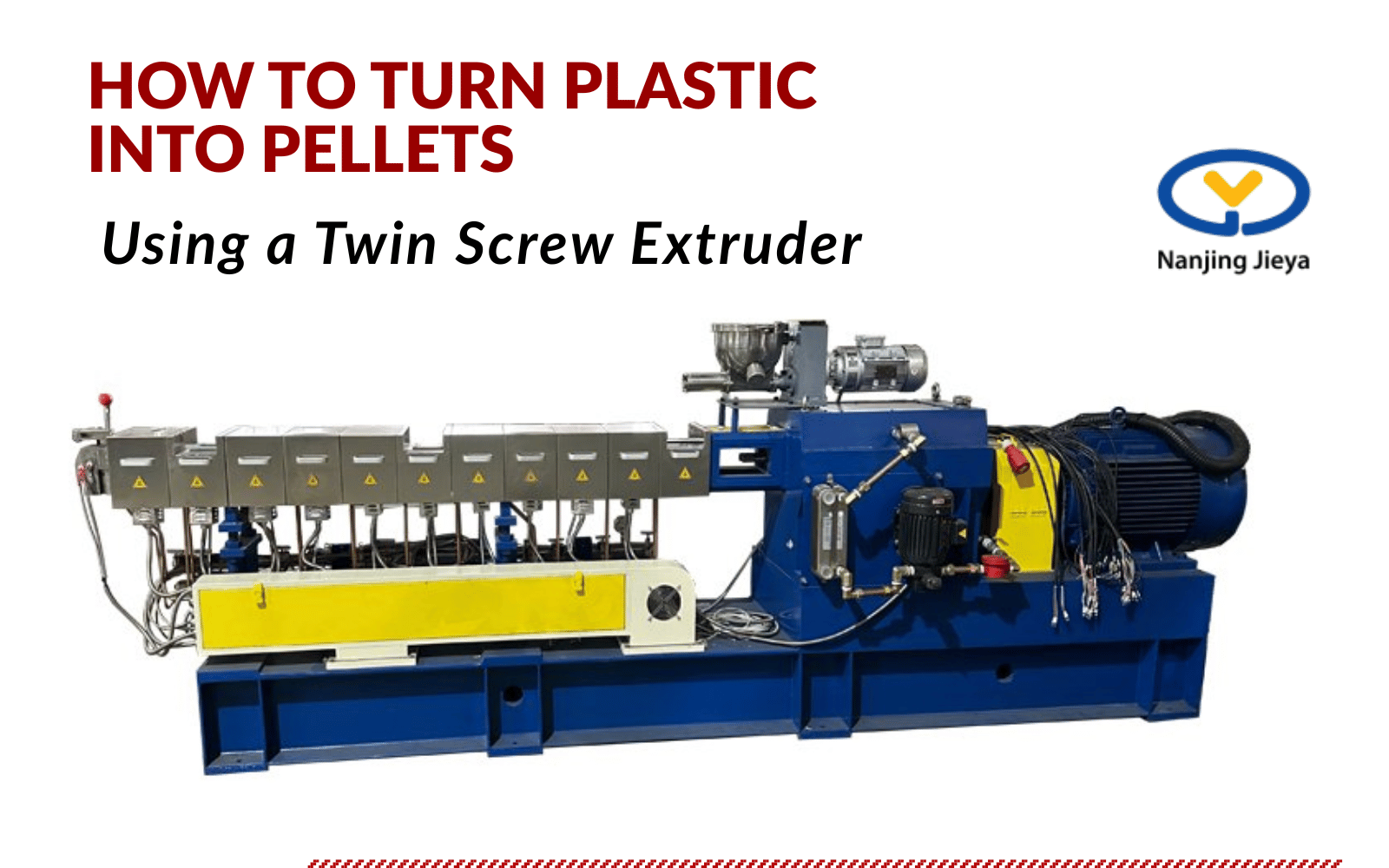
In a world increasingly focused on sustainability, finding innovative ways to recycle plastic waste has become more critical than ever. Have you ever wondered how plastic waste can be transformed into uniform, reusable pellets? The answer lies in the power of a twin screw extruder.
This process isn’t just about recycling—it’s about creating new manufacturing opportunities and reducing environmental impact. By turning plastic into pellets, you’re not only minimizing waste but also paving the way for new products and applications.
Curious to learn how it’s done? Stick around as we break down the step-by-step process of using a twin screw extruder to turn plastic into pellets and explore how this method can revolutionize your production line.
Table of Contents
ToggleWhy Should We Turn Plastic Into Pellets?
You may wonder why it’s necessary to turn plastic into pellets in the first place. Well, plastic pellets have numerous applications across various industries, including manufacturing and recycling. These pellets are widely used to create new plastic products, from packaging materials to automotive components, making them a cornerstone of modern production processes.
Additionally, plastic pellets help reduce waste by enabling efficient recycling. They are easier to handle, transport, and process compared to larger plastic pieces, improving overall material management. By turning plastic into pellets, industries can contribute to a more sustainable future while optimizing their operations.
What Types of Plastics Can Be Turned Into Pellets?
It’s not a one-size-fits-all deal here. Different types of plastics—like PET, HDPE, and PVC—are well-suited for pelletizing, but their unique properties influence the process. For instance, PET is commonly used in packaging and can be efficiently pelletized for recycling. HDPE, known for its durability, is another popular choice for creating pellets used in various applications. PVC, while versatile, may require specialized handling due to its chemical composition.
Each type of plastic presents different challenges and opportunities during the pelletizing process. Understanding these properties is essential to ensuring efficient and effective pellet conversion.
What Machinery Is Involved?
To get down to business, the twin screw extruder is the key machinery for turning plastic into pellets. This versatile machine offers precise temperature control, excellent mixing capabilities, and exceptional durability, making it ideal for processing a wide range of plastics. Its ability to handle complex formulations ensures consistent and high-quality pellet production.
Believe me, investing in a high-quality extruder, like those from Nanjing Jieya, makes a world of difference. These machines are designed with advanced technology and premium materials to deliver optimal results, ensuring efficiency and reliability in your pelletizing process.
What Is the Process?
Here’s where the rubber meets the road—or should I say, where the plastic meets the extruder? The step-by-step process begins with sorting and cleaning the plastic to remove any contaminants. Next, the cleaned plastic is fed into the twin screw extruder, where the real magic happens.
Inside the extruder, the plastic is melted, mixed, and homogenized to ensure a consistent material. Finally, the molten plastic is extruded and cut into uniform pellets, ready for use in manufacturing or recycling. It’s a choreographed dance of precision and technology, with each step playing a crucial role in the final outcome.
What About Safety Measures?
Ah, the million-dollar question! The safety of your personnel and equipment cannot be overstated. Proper operator training is essential to ensure the pelletizing process is carried out correctly and safely. Regular equipment maintenance is another non-negotiable step to prevent malfunctions and reduce risks.
Always adhere to safety protocols and industry guidelines, such as wearing appropriate protective gear and ensuring proper ventilation in the workspace. These measures are critical to creating a safe and efficient working environment.
What Are the Applications of Plastic Pellets?
Once you’ve got your plastic pellets, the sky’s the limit! These versatile materials are widely used in manufacturing new products, such as packaging, automotive parts, and construction materials. Their uniform size and consistency make them ideal for a variety of industrial applications.
Plastic pellets also play a significant role in reducing plastic waste and promoting a circular economy. By recycling and reusing plastic in pellet form, industries can minimize environmental impact while creating high-quality products. Imagine, yesterday’s discarded plastic could be part of tomorrow’s innovation.
Conclusion
Turning plastic into pellets using a twin screw extruder is more than just a recycling method—it’s a game-changer for industries looking to reduce waste and maximize efficiency. From its wide range of applications to its role in promoting sustainability, this process offers immense potential for businesses and the environment alike.
With the right machinery, like the high-quality twin screw extruders from Nanjing Jieya, and a commitment to proper operation and maintenance, you can transform plastic waste into valuable resources.
Now that you know the process, it’s time to take action. Let’s work together to create a cleaner, greener future—one plastic pellet at a time.


 English
  Portuguese
  Spanish
  Korean
  Russian
  German