


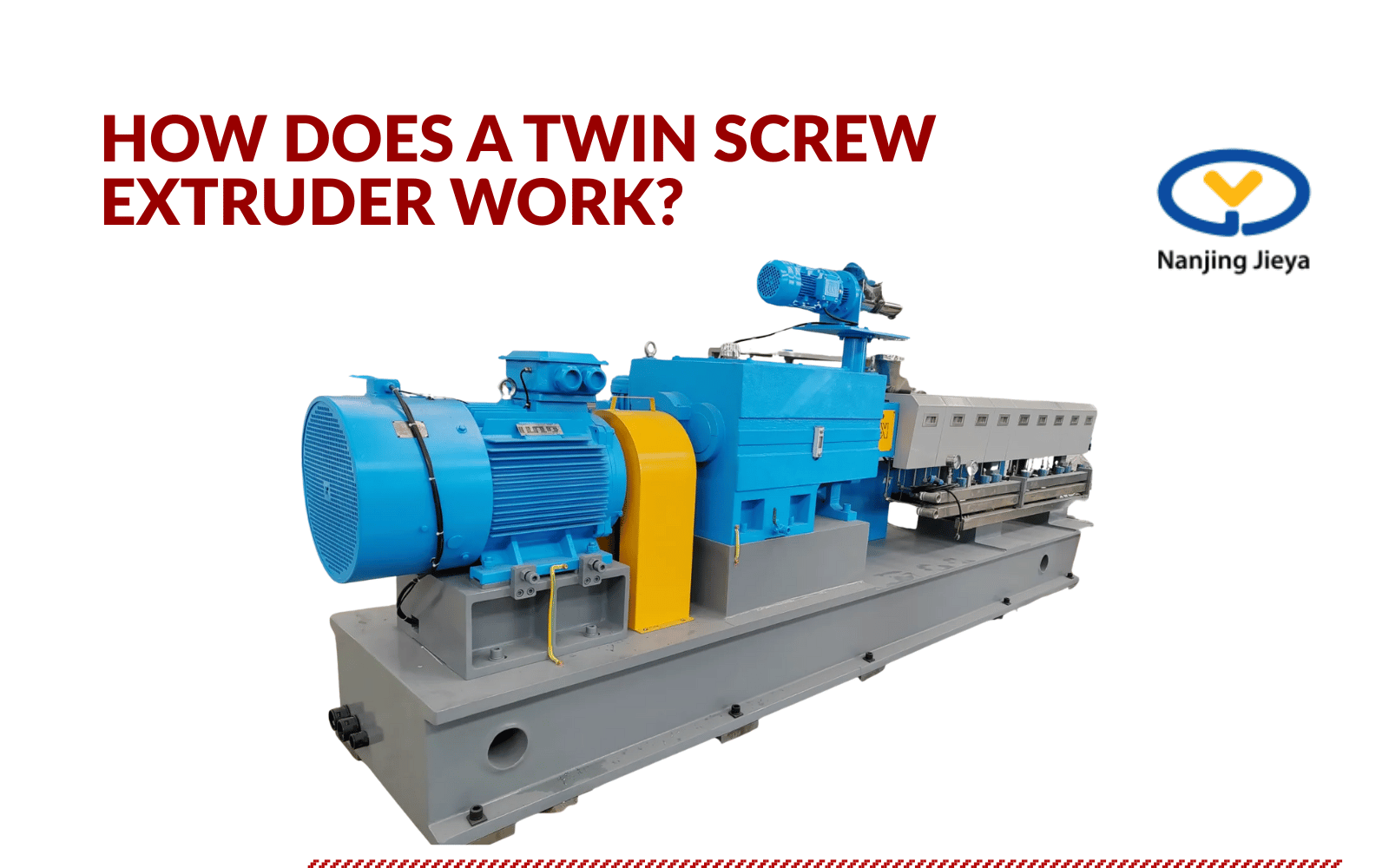
Ever wondered how high-quality plastic products are made? The secret often lies in the machinery behind the process. Twin screw extruders are at the heart of modern plastic processing, playing a crucial role in compounding, mixing, and shaping materials. But understanding how these machines work can feel overwhelming.
So, how does a twin screw extruder work? In simple terms, it uses two intermeshing screws to convey, mix, and melt materials with precision and efficiency. This process ensures consistent material quality, making twin screw extruders indispensable for producing engineering plastics, thermoplastic elastomers, recycled plastics, and more.
Intrigued? Let’s dive into the inner workings of a twin screw extruder and explore why it’s a game-changer for the plastic processing industry.
Table of Contents
ToggleWhat Happens Inside a Twin Screw Extruder?
So, you might be asking, what really happens inside a twin screw extruder? The process is quite fascinating, really. First, materials are fed into the extruder’s hopper, where they begin their journey through the machine. The twin screws, rotating in sync, take over from there, conveying the materials forward while simultaneously mixing and melting them. Imagine two intermeshing screws working together to transform raw materials into a homogeneous melt.
The extruder is divided into zones, each with a specific function. In the feeding zone, materials are introduced and begin to move forward. The melting zone is where heat and mechanical energy combine to melt the materials. Next comes the mixing zone, where the screws ensure a uniform blend of components. Finally, in the metering zone, the material is precisely controlled and prepared for extrusion. The result? A consistent, high-quality output ready for further processing.
Why Is Twin Screw Extrusion So Important?
Why, indeed? Twin screw extrusion is essential for several reasons. First off, it ensures uniform mixing and consistent material properties, which are critical for producing high-quality products. The intermeshing screws provide thorough blending, eliminating inconsistencies in the final material.
But there’s more to it than just uniformity. Twin screw extrusion can handle a wide range of materials, from thermoplastics and elastomers to bio-based polymers. This versatility makes it a go-to solution for diverse applications. And let’s not forget—its efficiency in processing reduces material waste and improves overall production output, making it a win-win for both manufacturers and the environment.
What Types of Materials Can a Twin Screw Extruder Handle?
You might be surprised to learn just how versatile a twin screw extruder can be. These machines can process a wide range of materials, including engineering plastics, thermoplastic elastomers, recycled plastics, and masterbatches. Need to handle specialty compounds? A twin screw extruder can do that too.
The beauty of a twin screw extruder lies in its adaptability. It can manage materials with varying viscosities and compositions, ensuring consistent quality and performance. This versatility makes it an indispensable tool in the plastics and polymer processing industries.
How Does a Twin Screw Extruder Boost Production Efficiency?
Let’s talk efficiency. Twin screw extruders don’t just process materials; they revolutionize production. By ensuring precise temperature and pressure control, these machines deliver consistent material quality, which is critical for high-performance applications.
But the benefits don’t stop there. Twin screw extruders process materials faster and more efficiently compared to single screw extruders, significantly increasing production output. Additionally, their design minimizes energy consumption and reduces material waste, making them a cost-effective and environmentally friendly choice. In today’s competitive market, where efficiency and sustainability are key, twin screw extruders are a game-changer.
What Are the Different Types of Twin Screw Extruders?
Did you know there’s more than one type of twin screw extruder? That’s right—these versatile machines are available in two main types: co-rotating and counter-rotating. Each type is designed to meet specific application needs, offering unique advantages depending on the material and process requirements. Let’s explore these two types in detail to understand their differences and applications.
1. Co-rotating Extruders
In co-rotating twin screw extruders, the screws rotate in the same direction. This synchronized motion creates a self-cleaning effect, preventing material buildup and ensuring efficient mixing. Co-rotating extruders are particularly well-suited for processes that require intensive mixing, high shear, and high throughput.
These extruders are commonly used in applications such as compounding and blending materials, where achieving a homogeneous mixture is critical. For example, they are ideal for processing engineering plastics, masterbatches, and filled polymers. The ability to handle a wide range of materials and additives makes co-rotating extruders a popular choice in industries like automotive, packaging, and electronics.
Another advantage of co-rotating extruders is their flexibility. The screw configuration can be customized to optimize performance for specific processes, whether it’s dispersing pigments, incorporating fillers, or achieving precise material properties. This adaptability makes them a go-to solution for manufacturers looking to innovate and improve product quality.
2. Counter-rotating Extruders
In counter-rotating twin screw extruders, the screws rotate in opposite directions. This motion provides gentler material handling, making these extruders ideal for applications involving heat-sensitive polymers or materials that require minimal shear.
Counter-rotating extruders are often used for processing PVC, wood-plastic composites, and other materials that can degrade under high temperatures or excessive mechanical stress. Their ability to maintain material integrity while still achieving adequate mixing makes them a preferred choice for applications where precision and quality are paramount.
These extruders are also well-suited for processes that require controlled residence time and low energy input. For example, in the production of rigid PVC pipes or profiles, counter-rotating extruders ensure consistent quality without compromising the material’s structural properties.
What Are the Key Components of a Twin Screw Extruder?
Ever wondered what makes a twin screw extruder work? These machines are composed of several key components, each playing a vital role in the extrusion process. Understanding these components and their functions is essential for optimizing performance and achieving consistent, high-quality results. Let’s take a closer look at the main parts of a twin screw extruder:
- The Hopper
The hopper is the starting point of the extrusion process. This is where raw materials, such as pellets, powders, or additives, are fed into the extruder. Designed to handle a wide range of materials, the hopper ensures a steady, controlled flow into the screws. Some hoppers are equipped with feeders or dosing systems to regulate material input, which is especially important for processes that require precise formulations or multiple components.
- The Twin Screws
The twin screws are the heart of the extruder and do most of the heavy lifting. These intermeshing screws perform multiple functions, including conveying, mixing, and melting the materials. As the materials move along the screws, they are subjected to shear forces and heat, which help produce a consistent, homogeneous output. The design of the screws, including their length, pitch, and configuration, can be customized to suit specific applications, making them highly versatile for a range of processes.
- The Barrel
The barrel is the housing that contains the twin screws. It plays a critical role in maintaining precise temperature control throughout the extrusion process. Equipped with heating and cooling systems, the barrel ensures materials are processed at optimal temperatures for melting, mixing, or reacting. This level of control is essential for achieving consistent material quality and preventing issues such as degradation or uneven processing. The barrel is often segmented, allowing for different temperature zones to accommodate complex processes.
- The Die
The die is the final component in the extrusion process and shapes the material as it exits the extruder. It gives the product its desired form and dimensions, whether it’s a sheet, tube, pellet, or other shape. Dies can be customized to meet specific product requirements, and their design directly impacts the quality and precision of the final output. Proper maintenance and alignment of the die are crucial to avoid defects and ensure consistent results.
Each of these components works in harmony to ensure efficient and precise processing. From the hopper to the die, every part plays a specific role in transforming raw materials into finished products. By understanding how these components function together, you can optimize your extrusion process, improve efficiency, and achieve high-quality results tailored to your application needs.
Conclusion
Twin screw extruders are the backbone of efficient and high-quality plastic production. Their ability to handle a wide range of materials, ensure uniform mixing, and optimize production efficiency makes them an essential tool for manufacturers.
At Nanjing Jieya, we specialize in providing advanced twin screw extruders tailored to meet your specific production needs. Whether you’re working with engineering plastics, recycled materials, or thermoplastic elastomers, our extruders deliver exceptional results. Ready to take your production to the next level? Let’s make it happen!


 English
  Portuguese
  Spanish
  Korean
  Russian
  German