


Plastic processing is a complex and precise operation, and selecting the right extruder can significantly impact your production efficiency and product quality. Are you trying to decide between a devolatilization extruder and a reactive extruder? The choice can be challenging, as both serve distinct purposes in advanced plastic manufacturing.
So, what sets a devolatilization extruder apart from a reactive extruder? In simple terms, a devolatilization extruder is designed to remove volatile components like solvents or moisture from polymers, ensuring high-purity output. On the other hand, a reactive extruder facilitates chemical reactions during processing, such as polymerization or cross-linking, to create advanced materials with tailored properties.
Understanding these differences is crucial to optimizing your production process. Let’s dive deeper into the unique features, advantages, and applications of these two extruder types to help you make the right choice.
What Is a Devolatilization Extruder?
A devolatilization extruder, as the name suggests, is designed to remove volatile substances such as solvents, monomers, or moisture from polymers. Its primary function is to ensure the production of high-purity materials by efficiently eliminating unwanted volatiles during the extrusion process.
Devolatilization extruders feature specialized design elements, including vacuum systems and venting zones, which enable effective removal of volatiles. These systems are particularly suitable for applications requiring high-purity polymers or materials that must meet strict quality standards.
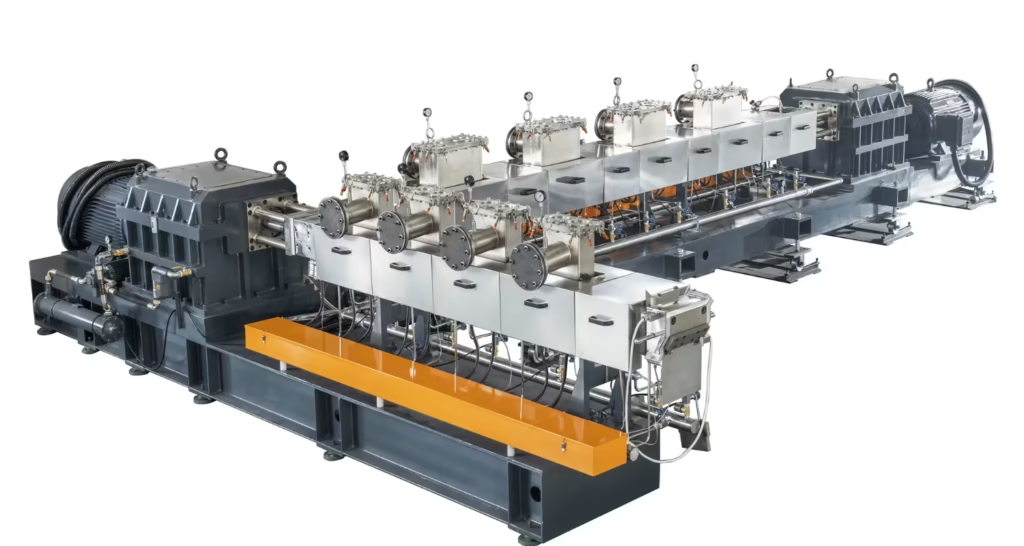
Advantages of Devolatilization Extruders
Devolatilization extruders offer several significant advantages that make them indispensable in specific manufacturing processes:
- High Efficiency: These machines are specifically designed to excel at removing volatile substances from polymers. By efficiently eliminating solvents, monomers, and moisture, they ensure the production of high-quality, high-performing materials.
- Improved Product Quality: Removing volatiles yields high-purity polymers ideal for sensitive applications. This is particularly important in industries where even trace amounts of impurities can affect the functionality or safety of the final product.
- Precision Processing: Devolatilization extruders are perfect for materials that require strict quality control and precise handling. Their advanced systems enable consistent, reliable processing, ensuring the final product meets exacting standards.
Disadvantages of Devolatilization Extruders
While devolatilization extruders offer numerous benefits, they also come with certain limitations that should be considered:
- Complexity: The advanced design and operation of devolatilization extruders make them more complex to use and maintain compared to standard extruders. Operators require specialized training to manage the equipment effectively and ensure optimal performance.
- Limited Applications: Devolatilization extruders are not suitable for processes involving chemical reactions, as their primary function is to remove volatiles rather than facilitate chemical transformations. This limits their versatility in applications that require reactive extrusion.
What Is a Reactive Extruder?
A reactive extruder, as its name implies, is designed to facilitate chemical reactions during extrusion. Its primary function is to enable processes such as polymerization, crosslinking, or grafting, allowing in-situ chemical modification of materials.
Reactive extruders feature specialized screw configurations and advanced temperature control systems, which ensure precise reaction control. These design elements make them ideal for applications requiring advanced material properties or tailored polymer modifications.

Advantages of Reactive Extruders
Reactive extruders offer several notable advantages that make them indispensable in specific industries:
- Complex Reactions: These machines enable intricate chemical reactions during the extrusion process, which would otherwise require separate, more time-consuming steps.
- Advanced Materials: Reactive extruders can produce materials with highly customized and enhanced properties, such as improved strength, flexibility, or thermal resistance. This makes them ideal for creating high-performance polymers tailored to specific applications.
- Versatility: They are suitable for a wide range of polymer modifications, including blending, functionalization, and compounding. This versatility allows manufacturers to experiment with and develop innovative materials for diverse applications.
Disadvantages of Reactive Extruders
Despite their many benefits, reactive extruders also come with certain limitations that must be considered:
- High Costs: The initial investment for a reactive extruder is significantly higher than that of a standard extruder. Additionally, the operational expenses, including maintenance and energy consumption, can be substantial.
- Expertise Needed: Operating a reactive extruder requires specialized knowledge and expertise. Precise control of reaction parameters —such as temperature, pressure, and residence time —is essential to achieving successful outcomes. Without proper training and experience, the risk of errors or suboptimal results increases.
Which Extruder Is Best for You?
Choosing between a devolatilization extruder and a reactive extruder can be challenging, as the decision depends on your specific process requirements, material needs, and budget. Each type of extruder is designed for distinct purposes, and understanding their capabilities will help you make an informed choice. Consider the following factors to guide your decision-making process:
Process Requirements
The first step in selecting the right extruder is to evaluate your process requirements. If your primary goal is to remove volatile substances such as solvents, unreacted monomers, or moisture from polymers, a devolatilization extruder is the ideal choice. These machines are specifically engineered to ensure efficient volatile removal, making them perfect for applications where material purity is critical.
On the other hand, if your process involves chemical reactions such as polymerization, crosslinking, or grafting, a reactive extruder is better suited for the task. Reactive extruders are designed to facilitate in-situ chemical modifications, allowing you to create advanced materials with unique properties directly during the extrusion process.
Material Considerations
The type of material you are working with and the desired end-product properties also play a significant role in determining the best extruder for your needs. For applications requiring high-purity polymers or materials that must meet strict quality standards, devolatilization extruders are the preferred option. These machines excel at producing clean, impurity-free materials ideal for sensitive industries such as medical devices, electronics, and food packaging.
In contrast, reactive extruders are the go-to choice for producing advanced materials with tailored properties. Enabling chemical reactions during extrusion enables manufacturers to create polymers with enhanced strength, flexibility, or thermal resistance. This makes them particularly valuable to industries that demand innovative, high-performance materials, such as automotive, aerospace, and specialty manufacturing.
Budget
Budget considerations are another critical factor when choosing between these two types of extruders. Devolatilization extruders are generally more cost-effective for simpler processes that focus on volatile removal. They require a lower initial investment and have relatively lower operational costs, making them a practical choice for many manufacturers.
However, if your application involves specialized chemical reactions, be prepared for the higher costs associated with reactive extruders. These machines require a significant initial investment due to their advanced design and capabilities. Additionally, their operations often entail higher costs, including energy consumption and the need for skilled personnel to manage complex processes. While the costs are higher, the ability to produce customized, high-performance materials can justify the investment for specific applications.
Conclusion
Choosing between a devolatilization extruder and a reactive extruder depends on your specific production needs. If your goal is to remove volatile components and achieve high-purity polymers, a devolatilization extruder is the ideal choice. However, if your process involves chemical reactions to create advanced materials, a reactive extruder is the way to go.
At Nanjing Jieya, we specialize in providing high-quality extruders tailored to meet diverse production requirements. Whether you need precision devolatilization or advanced reactive processing, we’re here to help you find the perfect solution. Ready to elevate your production process? Let’s work together to make it happen!


 English
  Portuguese
  Spanish
  Korean
  Russian
  German