


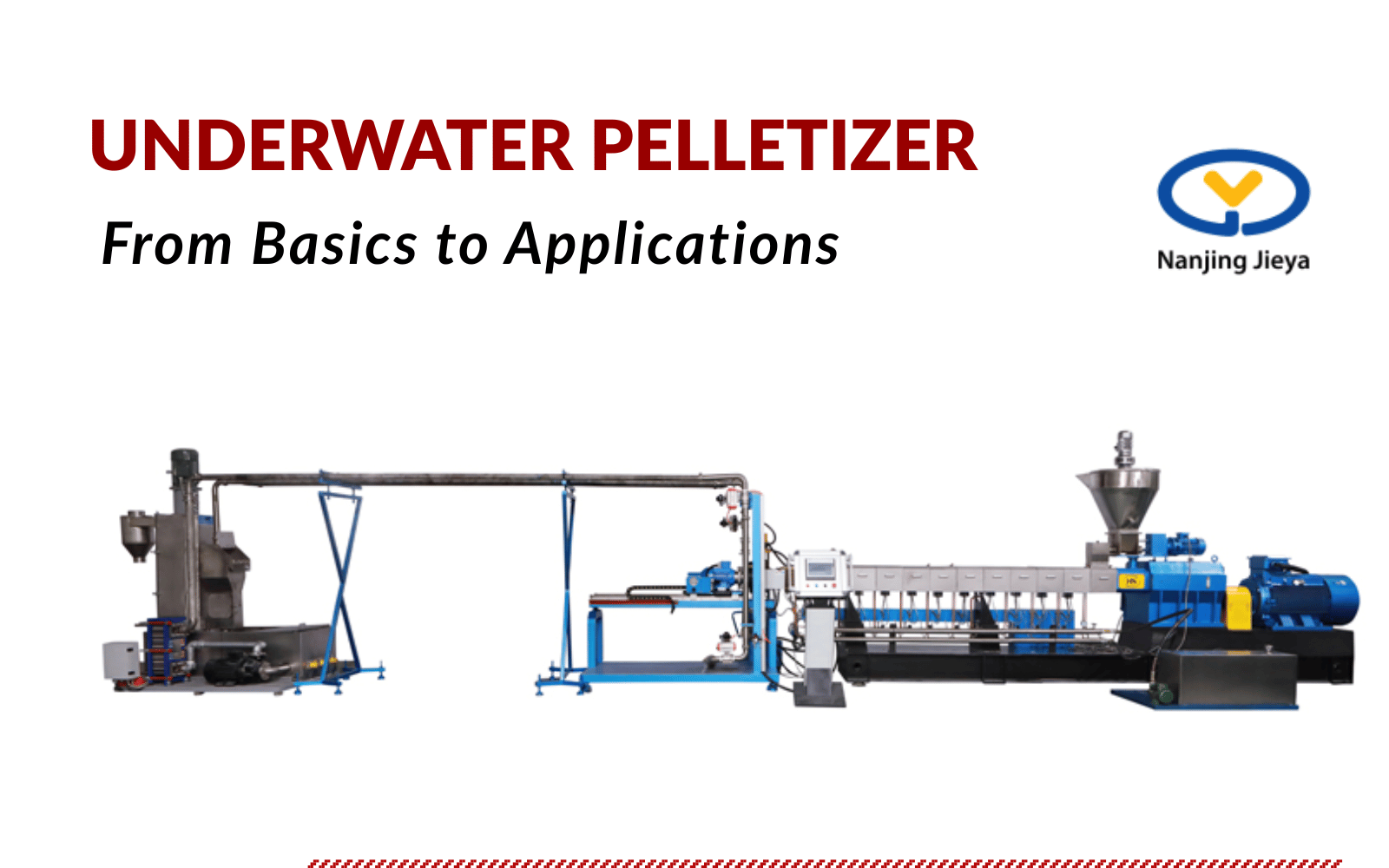
The underwater pelletizer is a critical piece of equipment in the manufacturing industry, particularly in the production of polymer pellets. This innovative machine plays a vital role in transforming molten polymers into uniform pellets, which serve as raw materials for a wide range of applications, from plastic products to advanced composites.
But what exactly is an underwater pelletizer? How does it work? And what are its applications? In this blog post, we’ll explore the inner workings of the underwater pelletizer, delving into its key components, operational principles, and the diverse applications that leverage its capabilities.
What is an Underwater Pelletizer?
An underwater pelletizer is a specialized machine used to produce plastic pellets. It operates by cutting molten polymer strands into uniform pellets while submerged in water. This unique process ensures rapid cooling and solidification of the pellets, making it an efficient and widely used method in the plastics industry.
The design of an underwater pelletizer includes a cutting head, a die plate, and a water system. As the molten polymer exits the die plate, rotating blades cut it into pellets, which are immediately cooled by the surrounding water. This setup prevents the pellets from sticking together and ensures a consistent shape and size.
Underwater pelletizers are particularly advantageous for processing high-viscosity polymers and achieving high production rates. Their ability to handle a wide range of materials makes them a preferred choice for manufacturers seeking efficiency and precision in pellet production.
The Significance of Underwater Pelletizers in Polymer Processing
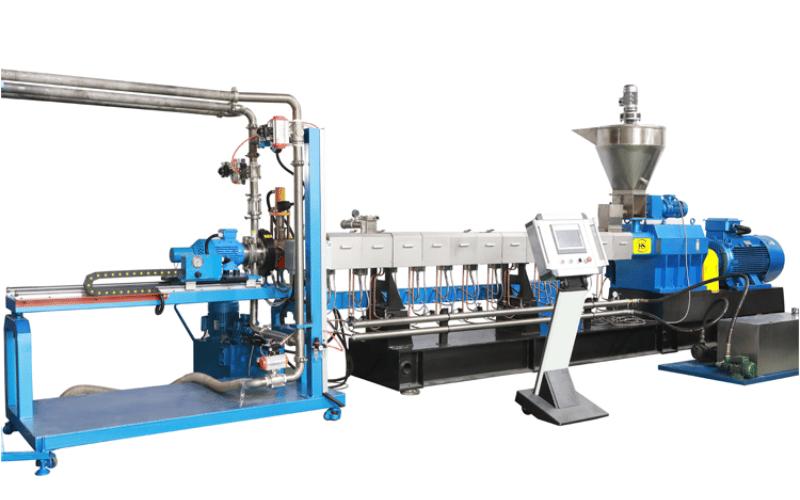
In polymer processing, underwater pelletizers play a crucial role in transforming molten polymers into uniform pellets. The cutting process occurs underwater, allowing for immediate cooling and solidification of the pellets. This ensures consistent pellet quality and prevents issues like deformation or sticking, which are common in other pelletizing methods.
One of the most common applications of underwater pelletizers is in the production of high-viscosity polymers. These machines are designed to handle the unique properties of such materials, providing precise temperature control and efficient cutting to maintain uniform pellet size. This makes underwater pelletizers an essential tool for manufacturers seeking high-quality output in polymer processing.
Understanding the Difference Between Air-Cooled and Underwater Pelletizers
Compared to air-cooled pelletizers, underwater pelletizers offer distinct advantages in polymer processing. Underwater pelletizers excel at handling high-viscosity polymers and ensuring uniform pellet cooling, critical for maintaining consistent pellet quality. On the other hand, air-cooled pelletizers are better suited for low-viscosity materials and applications where immediate cooling is not required.
The difference between air-cooled and underwater pelletizers lies in their cooling and cutting processes. Air-cooled pelletizers rely on ambient air to cool the pellets after cutting, while underwater pelletizers perform cutting submerged in water, allowing rapid cooling and solidification. Underwater pelletizers also provide better control over pellet size and shape, making them ideal for high-precision applications.
Underwater Pelletizer Components
The underwater pelletizer is a sophisticated machine composed of several key components, each playing a vital role in its efficient operation. These components work together to ensure precise cutting, cooling, and drying of polymer pellets.
Cutting Head
The cutting head houses rotating blades that cut the molten polymer strands into uniform pellets as they exit the die plate. Its design ensures consistent pellet size and shape, which is critical for high-quality output.
Die Plate
The die plate is where the molten polymer is extruded through small orifices. It is heated to prevent material from solidifying before cutting, ensuring smooth, continuous operation.
Water Box
The water box surrounds the cutting area, providing immediate cooling to the freshly cut pellets. This rapid cooling prevents the pellets from sticking together and ensures proper solidification.
Pellet Dryer
After cooling, the pellets are transferred to the pellet dryer, which removes excess water. This step ensures the pellets are dry and ready for packaging or further processing.
Control System
The control system manages the underwater pelletizer’s operation, including temperature, cutting speed, and water flow. It ensures precise control over the entire process, optimizing efficiency and product quality.
By understanding the functions of these components, manufacturers can maximize the performance of underwater pelletizers and achieve consistent, high-quality pellet production for various polymer applications.
How Does an Underwater Pelletizer Work?
The working principle of an underwater pelletizer revolves around its ability to cut, cool, and dry polymer pellets in a seamless process. This method is highly efficient and widely used in polymer processing. Let’s break down the process step by step.
1. Polymer Extrusion
The process begins with molten polymer being extruded through a heated die plate. The die plate has multiple small orifices that shape the polymer into strands as it exits. The heating keeps the polymer molten, ready for cutting.
2. Pellet Cutting
As the molten polymer strands exit the die plate, rotating blades in the cutting head slice them into uniform pellets. This cutting action occurs underwater, ensuring immediate cooling and preventing the pellets from sticking together.
3. Cooling in Water
The freshly cut pellets are submerged in water within the water box. This rapid cooling solidifies the pellets, maintaining their shape and quality. The water also acts as a transport medium, moving the pellets to the next stage.
4. Pellet Drying
After cooling, the pellets are transferred to a pellet dryer. The dryer removes excess water, ensuring the pellets are dry and ready for packaging or further processing. This step is crucial for maintaining the pellets’ usability and quality.
The underwater pelletizer’s ability to combine cutting, cooling, and drying in a single process makes it an essential tool for efficient and high-quality polymer pellet production.
Advantages of Underwater Pelletizers
Underwater pelletizers offer several distinct advantages, making them a preferred choice for polymer pellet production. Let’s explore some of the key benefits they provide.
-
Uniform Pellet Quality
The underwater cutting process ensures consistent pellet size and shape. Immediate cooling in water prevents deformation or sticking, resulting in high-quality pellets suitable for a wide range of applications. -
High Production Efficiency
Underwater pelletizers are designed for continuous operation, enabling high output rates. Their ability to handle large volumes of molten polymer makes them ideal for industrial-scale production. -
Versatility in Material Processing
These machines can process a wide range of polymers, including high-viscosity and temperature-sensitive materials. This versatility makes them suitable for a wide range of manufacturing needs. -
Efficient Cooling and Solidification
The water-based cooling system ensures rapid pellet solidification while maintaining their structural integrity. This feature is particularly beneficial for materials requiring precise cooling conditions. -
Compact and Integrated Design
Underwater pelletizers feature a compact design that integrates cutting, cooling, and drying processes. This reduces the need for additional equipment, saving space and simplifying operations. -
Energy Efficiency
The efficient cooling and drying systems reduce energy consumption compared to other pelletizing methods. This leads to cost savings and a lower environmental impact.
These advantages make underwater pelletizers a reliable and efficient solution for producing high-quality polymer pellets across various industries.
Types of Underwater Pelletizers
Underwater pelletizers come in various types, each designed for specific applications and processing requirements. Two main categories of underwater pelletizers are widely used in the polymer industry:
Strand Pelletizers
- Strand pelletizers extrude molten polymer strands through a die plate, which are then cut into pellets by rotating blades.
- The strands are submerged in water immediately after extrusion, ensuring rapid cooling and solidification.
- Strand pelletizers are known for producing uniform pellets with consistent size and shape.
- They are commonly used to process materials such as thermoplastics and elastomers, making them suitable for a wide range of applications.
Die-Face Pelletizers
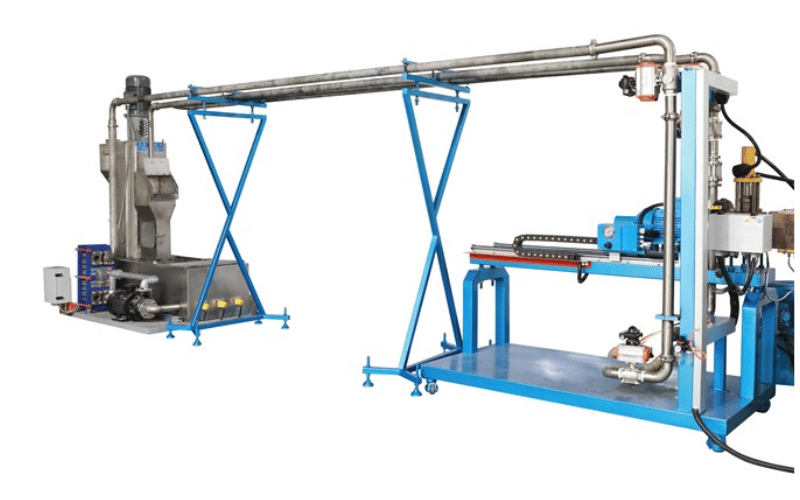
- Die-face pelletizers feature a cutting head mounted directly on the die plate, where the molten polymer is extruded.
- The cutting process occurs underwater, with the blades slicing the polymer into pellets as it exits the die plate.
- This type of pelletizer is ideal for high-viscosity polymers and applications requiring precise pellet size control.
- Die-face pelletizers are widely used in industries that produce high-performance polymers and specialty compounds.
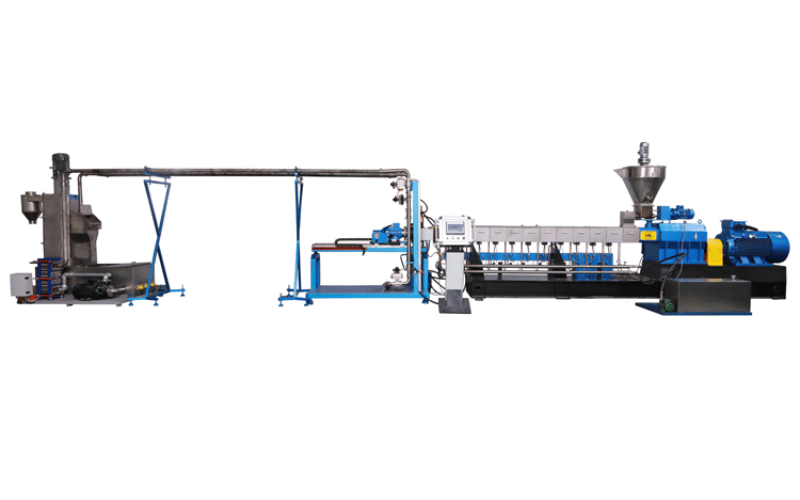
The choice between strand and die-face pelletizers depends on factors such as material properties, production requirements, and desired pellet characteristics. Manufacturers often work closely with equipment suppliers to select the most suitable type for their specific needs, ensuring efficient and high-quality pellet production.
Applications of Underwater Pelletizers
Underwater pelletizers are versatile machines widely used across industries for efficiently producing high-quality polymer pellets. Let’s explore some of their key applications:
1. Plastics Industry
Underwater pelletizers play a crucial role in the plastics industry, producing uniform pellets for the manufacture of thermoplastics. These pellets serve as raw materials for the production of pipes, films, sheets, and molded products used in the construction, automotive, and packaging sectors.
Masterbatch Production
In masterbatch production, underwater pelletizers are essential for creating concentrated polymer pellets infused with pigments, additives, or fillers. These masterbatches are later blended with base polymers to achieve desired properties, such as color, UV resistance, or flame retardancy, in the final product.
3. Recycling and Reprocessing
Underwater pelletizers contribute to sustainable practices by enabling the recycling and reprocessing of plastic waste. They are used to convert post-consumer and industrial plastic waste into high-quality pellets that can be reused in various applications, thereby reducing environmental impact.
4. Specialty Polymers
For specialty polymers, such as high-performance engineering plastics or biodegradable materials, underwater pelletizers ensure precise pellet size and quality. These polymers are used in advanced applications, including aerospace, medical devices, and electronics, where consistency and performance are critical.
With their efficiency, versatility, and ability to handle diverse materials, underwater pelletizers remain indispensable in polymer processing, supporting innovation and sustainability across multiple industries.
Final Thought
The underwater pelletizer is an innovative and essential tool that has transformed polymer processing across various industries. From the plastics sector to specialty polymer production, these machines have demonstrated their value by consistently producing high-quality pellets efficiently.
Whether you’re aiming to manufacture uniform pellets for thermoplastics, create masterbatches with precise formulations, or contribute to sustainable recycling efforts, an underwater pelletizer can be the key to achieving your production goals. Its versatility, efficiency, and ability to handle diverse materials make it an indispensable asset for modern manufacturing.
Visit our website to learn more about Underwater Pelletizers. We also offer Strand Pelletizers and Die-Face Pelletizers for a comprehensive solution. If you’re looking for guidance in selecting the right pelletizer for your specific needs, feel free to contact us today.
Frequently Asked Questions (FAQ)
1. What are the benefits of underwater pelletizing over air-cooled systems?
Underwater pelletizing provides rapid cooling and solidification, ensuring consistent size and shape. Unlike air-cooled systems, it prevents pellet deformation and sticking, making it ideal for high-quality production. Additionally, underwater systems are more efficient for high-viscosity polymers and large-scale operations.
2. How does an underwater pelletizer improve pellet quality?
The immediate cooling in water ensures uniform solidification, enhancing pellet consistency and preventing defects. The precise cutting mechanism also helps maintain uniform pellet size and shape, resulting in superior product quality.
3. Is an underwater pelletizer suitable for high-output production?
Yes, underwater pelletizers are designed for high-output production. Their continuous operation and efficient cooling systems enable them to handle large volumes of molten polymer, ensuring consistent performance even in demanding industrial applications.
4. Can underwater pelletizers handle recycled materials?
Absolutely. Underwater pelletizers are well-suited for processing recycled materials. They can efficiently handle mixed or contaminated polymers, turning them into high-quality pellets. This makes them an excellent choice for recycling and reprocessing applications.
5. What factors should be considered when investing in an underwater pelletizer?
Key factors include the type of materials to be processed, desired pellet size and quality, production capacity, and energy efficiency. It’s also important to evaluate the machine’s compatibility with your existing systems and its long-term maintenance requirements. Consulting with an expert supplier can help you make an informed decision.


 English
  Portuguese
  Spanish
  Korean
  Russian
  German