


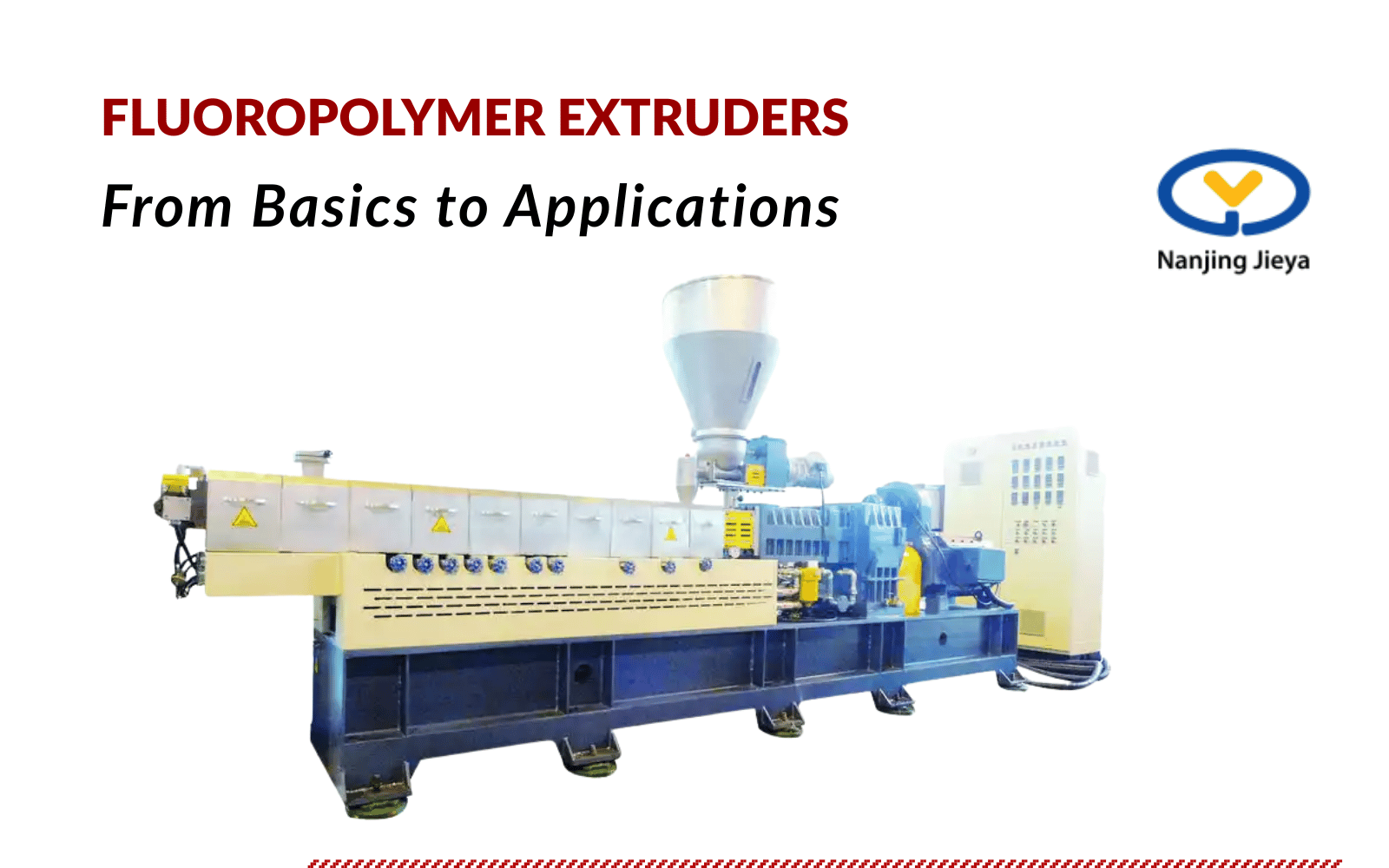
The fluoropolymer extruder is a specialized and critical piece of equipment in the high-performance materials industry, particularly for processing heat-sensitive fluoropolymers. This advanced machine plays a crucial role in manufacturing products with exceptional chemical resistance, thermal stability, and electrical insulation, ranging from protective wire coatings to precision medical tubing.
But what exactly is a fluoropolymer extruder? How does it handle these unique materials? And what are its applications? In this blog post, we’ll explore the basics of the fluoropolymer extruder, delving into its specialized components, processing requirements, and the vital applications that rely on its capabilities.
What is a Fluoropolymer Extruder?
A fluoropolymer extruder is a specialized piece of equipment designed to process and extrude high-performance fluoropolymer materials, such as PTFE, FEP, and PVDF. Unlike standard extruders, a fluoropolymer extruder is built with components resistant to the corrosive nature and high processing temperatures of these materials. This unique configuration is essential for manufacturing in demanding industries.
The fluoropolymer extruder’s design focuses on gentle material handling and precise temperature control. It uses corrosion-resistant alloys for the barrel and screw to prevent degradation caused by off-gassing during fluoropolymer processing. This ensures the material’s integrity and the final product’s quality, which is crucial for applications in the medical, aerospace, and chemical industries.
The Significance of Fluoropolymer Extruders in Material Processing
When processing fluoropolymers, the extruder plays a vital role in melting and shaping the material while preserving its unique properties. The machine’s precise control over temperature and pressure is critical for avoiding thermal degradation, ensuring the final product maintains its exceptional chemical resistance and dielectric strength. This results in a high-quality, uniform output for critical applications such as wire insulation and chemical-resistant tubing.
One of the most important applications is in the production of PFA (perfluoroalkoxy) and FEP (fluorinated ethylene propylene) products. Extruders for these materials are specifically engineered to manage their high melt viscosity and narrow processing window, providing the stability needed to produce consistent, high-performance components for the semiconductor and electronics industries.
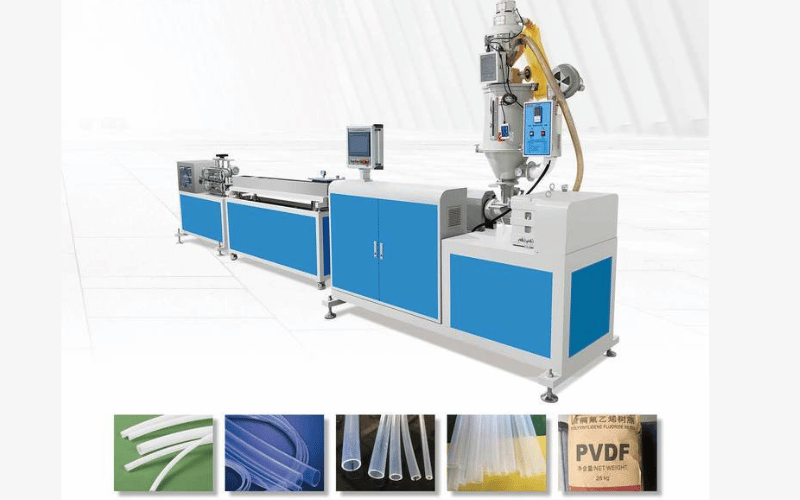
Understanding the Difference Between Standard Extruders and Fluoropolymer Extruders
Compared to standard extruders, fluoropolymer extruders offer several critical advantages. They are specifically engineered for the high temperatures and corrosive environments associated with fluoropolymers, which is essential for preserving the material’s unique properties. Additionally, fluoropolymer extruders can process materials with a very narrow melt processing window, making them more suitable for high-performance applications.
The difference between standard and fluoropolymer extruders lies in their construction and operational principles. Standard extruders are designed for common thermoplastics and cannot withstand the aggressive nature of fluoropolymers. Fluoropolymer extruders use corrosion-resistant alloys and feature advanced temperature control systems, enabling the precise processing required for these sensitive, high-value materials.
Key Elements of a Fluoropolymer Extruder
The fluoropolymer extruder is a complex piece of equipment with several key components that contribute to its specialized operation and performance. One of the most crucial elements is the screw, which is designed specifically for the unique challenges of fluoropolymer processing.
1. Screws
Low-Shear Design: Screws are designed to impart minimal shear to prevent material degradation. The flight geometry is optimized for gentle conveying and melting, which is critical for heat-sensitive fluoropolymers.
Corrosion-Resistant Materials: Screws are made from high-nickel alloys such as Inconel or Hastelloy to resist attack by corrosive gases released during extrusion.
Compression Ratio: The screw’s compression ratio is carefully selected to match the specific fluoropolymer’s melt characteristics, ensuring stable pressure and output.
2. Barrel
The screw is encased within a heated barrel, which provides the necessary temperature control for melting and processing the material. The barrel is typically divided into multiple zones, each with independent, high-precision temperature control, enabling precise management of the temperature profile along the extrusion path to stay within the material’s narrow processing window.
3. Feed Zone
This zone is where the raw material, typically in the form of fluoropolymer pellets or fine powder, is introduced into the extruder. Its design ensures consistent, steady feeding of material onto the screw without premature melting or bridging.
4. Melting and Conveying Zones
As the material moves along the screw, it encounters these zones, where the combination of carefully controlled heat from the barrel and gentle mechanical work from the screw gradually melts and plasticizes the material without causing degradation.
5. Kneading and Mixing Zones
These zones are less common in fluoropolymer extrusion due to the material’s sensitivity to shear. When used, they feature very low-intensity mixing elements to ensure uniform melt temperature and homogeneity without damaging the polymer chains.
6. Venting and Vacuum Zones
Fluoropolymer extruders often incorporate venting or vacuum zones. These are crucial for removing moisture and volatile compounds (such as hydrogen fluoride) that can be released during processing, thereby improving the overall quality and void-free consistency of the extruded product.
7. Die
The die is the final component, where the molten fluoropolymer is forced through a shaped orifice to form the desired product shape. Like the screw and barrel, the die is also constructed from corrosion-resistant alloys to withstand the harsh processing environment.
By understanding the functions and interactions of these specialized elements, manufacturers can optimize the fluoropolymer extruder’s performance and achieve consistent, high-quality extrusion results for critical applications.
How Does a Fluoropolymer Extruder Work?
The working principle of a fluoropolymer extruder is based on its specialized design, which features corrosion-resistant components and precise temperature control within a heated barrel. This configuration plays a crucial role in the careful processing of these sensitive materials. Let’s discuss how the fluoropolymer extruder works step-by-step.
1. Material Feeding
The extrusion process starts by introducing the raw fluoropolymer material, typically in pellet or powder form, into the barrel through a hopper. This ensures a consistent, controlled flow of material onto the rotating screw, preventing bridging and maintaining a steady supply for processing.
2. Conveying and Compression
As the screw rotates, it conveys the raw material toward the end of the barrel. During this process, the screw’s geometry gently compresses the material, generating minimal heat through friction. This gradual compression is vital to avoid premature melting and material degradation.
3. Plasticization and Melting
As the material progresses along the screw, the combination of exact heat from the multi-zone heated barrel and low mechanical shear action gradually melts and plasticizes the raw fluoropolymer, converting it into a homogeneous molten mixture while staying within its very narrow processing window.
4. Low-Intensity Mixing and Homogenization
The screw design provides low-intensity mixing, ensuring a uniform temperature throughout the molten material. This step is critical for achieving a consistent melt without the high shear that could damage the polymer’s molecular structure and compromise its unique properties.
5. Melt Pumping and Die Formation
Once the material is fully and uniformly melted, the screw continues to convey and pump the molten fluoropolymer mixture towards the end of the barrel, where it is forced through a corrosion-resistant, precision-engineered die. The die shapes the molten material into the desired form, such as thin-wall tubing, wire insulation, or films.
6. Cooling and Calibration
As the extruded fluoropolymer product emerges from the die, it undergoes immediate, controlled cooling and calibration. This could involve water baths or air cooling systems, along with sizing equipment to ensure the final product meets exact dimensional specifications and maintains its desired properties.
The fluoropolymer extruder’s specialized design, with its corrosion-resistant construction and precise process control, makes it essential for processing high-performance fluoropolymers. The ability to manage high temperatures and low shear is key to the machine’s role in critical industrial applications.
Advantages of Fluoropolymer Extruders
Fluoropolymer extruders offer several distinct advantages over standard extrusion equipment, making them the required choice for processing high-performance materials. Let’s explore some of the key benefits these specialized extruders provide.
- Superior Processing of High-Performance Materials: Engineered with corrosion-resistant alloys and precision controls to handle the aggressive and sensitive nature of fluoropolymers.
- High-Quality Output: Optimized screw and barrel designs ensure gentle handling of materials, preventing degradation and preserving their inherent properties.
- Versatility in Material Processing: Capable of handling a wide range of fluoropolymer grades, from FEP and PFA to more challenging materials like PTFE paste.
- Precise Temperature Control: Advanced multi-zone heating and cooling systems are crucial for staying within the narrow processing window of fluoropolymers.
- Improved Product Quality: Delivers a homogeneous, void-free melt, contributing to superior product performance, reliability, and dimensional accuracy.
- Reduced Material Degradation: Low-shear designs and controlled residence times help minimize thermal and mechanical stress on sensitive materials.
- Corrosion Resistance: Construction from high-nickel alloys ensures long-term durability and prevents contamination of the polymer melt.
- Enabling Critical Applications: Allows for the production of high-value components for the medical, aerospace, electronics, and chemical processing industries.
These advantages make fluoropolymer extruders indispensable for manufacturers that require the highest quality and performance from their extruded products.
Types of Fluoropolymer Extruders
While fluoropolymer extruders share common principles of corrosion resistance and precise temperature control, they come in different types designed for specific applications and materials. Two main categories are used in the industry, each with unique capabilities for processing these high-performance polymers.
1. Single-Screw Fluoropolymer Extruder
This type of extruder features a single, specially designed screw rotating within the corrosion-resistant barrel.
The screw geometry is optimized for low-shear conveying and melting to prevent material degradation.
Single-screw fluoropolymer extruders are known for their simplicity and reliability, making them suitable for applications involving less complex materials or straightforward profiles like tubing and wire insulation.
They are commonly used for processing melt-processable fluoropolymers like FEP, PFA, and ETFE, where high mixing intensity is not the primary requirement.
2. Ram and Paste Extruders
As the name suggests, this type of extruder uses a ram or plunger to force material through the die, rather than a rotating screw.
This method is essential for non-melt-processable materials like PTFE (polytetrafluoroethylene).
Ram extruders are used to process granular or powdered PTFE into solid rods and tubes, while paste extruders are designed for PTFE fine powders mixed with a lubricant to create thin-wall tubing or wire coatings.
They are handy for materials that cannot be processed using conventional melt extrusion due to their extremely high melt viscosity.
The choice between a single-screw, ram, or paste extruder depends on the specific fluoropolymer being processed, its form (pellet, powder, or paste), and the final product requirements. Manufacturers work closely with equipment suppliers to select the most suitable type for their applications, ensuring optimal performance and quality.
Applications of Fluoropolymer Extruders
Fluoropolymer extruders are indispensable machines for creating critical components across a wide range of high-tech industries, thanks to their ability to process materials that can withstand extreme conditions. Let’s explore some of the key applications.
1. Medical Industry
Fluoropolymer extruders play a vital role in the medical field, producing biocompatible, chemically inert components. They are used to manufacture life-saving devices such as catheters, surgical tool insulation, and fluid-handling tubing, where purity and performance are non-negotiable. Extruded fluoropolymers like FEP and PTFE are essential for creating devices that are both safe for patient contact and resistant to sterilization processes.
2. Electronics and Semiconductor Industry
The exceptional dielectric properties of fluoropolymers make them ideal for the electronics industry. Extruders are used to create high-performance insulation for wires and cables used in data communications, aerospace, and consumer electronics. In semiconductor manufacturing, PFA tubing extruded with high purity is essential for transporting ultra-pure water and aggressive chemicals without contamination.
3. Chemical Processing Industry
The high chemical and thermal resistance of fluoropolymers makes them perfect for harsh chemical environments. Extruders are used to produce corrosion-resistant linings for pipes and tanks, as well as seals, gaskets, and tubing that handle aggressive substances. These components ensure safety and equipment longevity in chemical plants and processing facilities.
4. Aerospace and Automotive Industries
In aerospace and automotive applications, fluoropolymer extruders are used to manufacture lightweight, high-performance components that can endure extreme temperatures and exposure to fuels and hydraulic fluids. Applications include wire and cable jacketing, fuel hoses, and protective sleeves that enhance reliability and safety while reducing weight.
5. Industrial and Energy Applications
Fluoropolymer extruders contribute to various industrial processes by producing durable and reliable parts. They are used to create coatings for industrial rollers, heat-exchanger tubing, and films for architectural membranes. In the energy sector, extruded components are used in downhole applications for oil and gas exploration and in fuel cells due to their thermal stability and chemical resistance.
With their unique ability to handle demanding materials, fluoropolymer extruders continue to drive innovation and enable the production of high-value products that perform in the world’s most challenging environments.
Final Thoughts
The fluoropolymer extruder is a remarkable piece of machinery that has enabled manufacturing breakthroughs across the most demanding industries. From medical devices and semiconductors to aerospace and chemical processing, these specialized machines have proven their value through precise temperature control, corrosion resistance, and the ability to handle sensitive, high-performance materials gently.
Whether you are looking to produce critical-purity tubing, high-frequency coaxial cables, or chemically resistant linings, a fluoropolymer extruder is the key to achieving the quality and performance your application demands.
Visit our website to learn more about our specialized Fluoropolymer Extruders. We offer both single-screw and ram extruder solutions for your comprehensive manufacturing needs. If you are looking for a fluoropolymer extrusion line and need guidance in choosing the right instrument for your specific material, please get in touch with us now.
FAQ (Frequently Asked Questions)
1. What are the key business advantages of using a specialized fluoropolymer extruder compared to a standard machine?
Using a dedicated fluoropolymer extruder is essential because standard machines cannot withstand the corrosive gases and high temperatures involved. Specialized extruders use corrosion-resistant alloys (like Hastelloy or Inconel) for the barrel and screw. This ensures equipment longevity, prevents metallic contamination of the melt, and avoids costly downtime, protecting both your investment and your product quality.
2. How does a fluoropolymer extruder ensure product quality and consistency?
The machine is engineered with precise, multi-zone temperature control and low-shear screw geometry. This is critical for keeping the material within its narrow processing window to prevent thermal degradation. By maintaining a stable, homogeneous melt without overheating, the extruder ensures that final products, like medical tubing or wire insulation, maintain their exceptional chemical and electrical properties without defects.
3. Our application involves highly corrosive materials like FEP and PFA. Is this extruder a suitable choice?
Absolutely. These extruders are specifically built to handle the aggressive nature of fluoropolymers. All wetted parts are constructed from high-nickel corrosion-resistant alloys to resist the hydrofluoric acid gas often released during processing. This specialized construction ensures that even the most challenging materials are processed safely and efficiently without damaging the machine or compromising melt purity.
4. How does a fluoropolymer extruder support production efficiency and waste reduction?
Given the extremely high cost of fluoropolymer resins, minimizing waste is a critical business goal. These extruders feature advanced process controls that stabilize output quickly, significantly reducing startup scrap. Additionally, the gentle processing minimizes material degradation, lowering the rate of rejected parts. This efficiency is vital for maintaining profitability when working with such high-value raw materials.
5. What is the potential ROI when investing in a dedicated fluoropolymer extrusion line?
The return on investment is driven by the ability to produce high-margin components for demanding industries like medical, aerospace, and semiconductor manufacturing. The ROI is further enhanced by significant savings in material costs due to reduced scrap rates and the extended lifespan of the corrosion-resistant equipment. While the initial cost is higher than a standard extruder, the reliability and capability to access premium markets ensure a strong long-term return.


 English
  Portuguese
  Spanish
  Korean
  Russian
  German