


Plastic extrusion serves as a cornerstone in modern manufacturing, transforming raw polymers into continuous, high-volume products with precision and efficiency. This process involves melting plastic materials and forcing them through a shaped die to create items like pipes, sheets, films, and profiles. Its ability to produce consistent, scalable outputs makes it indispensable across industries ranging from construction to packaging.
Manufacturers rely on plastic extrusion to meet the demand for durable, lightweight, and cost-effective components. Whether producing miles of tubing or intricate window profiles, extrusion delivers the versatility and reliability needed for high-volume production. Its continuous nature not only minimizes waste but also ensures uniformity, making it ideal for applications where consistency is critical.
This article delves into the fundamentals of plastic extrusion, breaking down the process, examining the materials used, and highlighting its practical applications. By understanding these elements, you can better appreciate how extrusion shapes the products we use daily and why it remains a vital part of the manufacturing landscape.
What is Plastic Extrusion?
Plastic extrusion stands as one of the most versatile and widely used processes in polymer manufacturing. It transforms raw polymer materials into continuous, uniform shapes by melting and forcing them through a custom-designed die. This process is the backbone of numerous industries, producing a wide range of products, including pipes, films, intricate profiles, and sheets.
Key Features of Plastic Extrusion
Plastic extrusion operates as a continuous process, making it ideal for high-volume production. Unlike batch processes, extrusion allows manufacturers to produce long, uninterrupted lengths of material, which can then be cut or shaped to meet specific requirements.
- Profiles, Tubes, Films, and Sheets: Extrusion excels at creating consistent cross-sectional shapes. Whether you need a hollow tube, a flat sheet, or a complex profile for window frames, extrusion delivers precision and repeatability.
- Difference from Other Processes: Unlike injection molding, which focuses on creating discrete parts by injecting molten plastic into a mold, extrusion produces continuous products. Blow molding specializes in producing hollow objects, such as bottles, while thermoforming shapes pre-extruded sheets into specific forms. Each process has its strengths, but extrusion dominates when continuous, uniform output is required.
Industries That Rely on Plastic Extrusion
Plastic extrusion supports a wide range of industries, each with unique demands and applications:
- Construction: Extruded profiles for window frames, pipes, and insulation materials form the backbone of modern building projects.
- Medical: Tubing for catheters, IV lines, and other medical devices requires the precision and consistency that extrusion provides.
- Packaging: Films and sheets for flexible packaging, as well as rigid containers, rely on extrusion for their uniformity and scalability.
- Automotive: Extruded seals, gaskets, and trim components play a crucial role in enhancing vehicle durability and performance.
- Consumer Goods: Products such as garden hoses, furniture edging, and even toys often start their journey as extruded materials.
By understanding the fundamentals of plastic extrusion, you can better appreciate its role in shaping the products we use daily. Its ability to produce continuous, high-quality outputs makes it an indispensable process across industries, ensuring efficiency and reliability in manufacturing.
How Plastic Extrusion Works
Plastic extrusion is a finely tuned process that transforms raw polymer materials into continuous, high-quality products. Each step in the process plays a critical role, and understanding these stages can help you optimize performance and troubleshoot issues effectively. Let’s break it down step by step and explore the key components that make it all possible.
Step-by-Step Process
The extrusion process follows a logical sequence, with each stage building on the last to ensure consistent and precise output.
- Material Feeding: The process begins at the hopper, where raw polymer material—often in the form of pellets or granules—is fed into the extruder. To ensure smooth operation, use materials with consistent particle size and minimal contamination.
- Melting, Mixing, and Pressurizing: Inside the extruder, the material is heated and melted as it moves along the barrel. Twin screw extruders excel here, as their intermeshing screws provide superior mixing and homogenization. Adjust barrel temperatures and screw speed to match the polymer’s melting point and flow characteristics.
- Die Shaping: The molten polymer is forced through a custom-designed die, which gives the material its final cross-sectional shape. Whether you’re producing a flat sheet or a complex profile, the die must be precisely engineered and maintained to ensure uniformity.
- Cooling: After exiting the die, the material enters the cooling system, typically a water bath or air-cooling chamber. Cooling must be gradual and controlled to prevent warping or internal stresses. Monitor water temperature and flow rate to maintain consistent cooling conditions.
- Haul-Off: The cooled material is pulled through the system by the haul-off unit, which ensures steady tension and prevents sagging or stretching. Adjust haul-off speed to match the extrusion rate for optimal results.
- Cutting, Winding, or Stacking: Finally, the extruded product is cut to length, wound onto spools, or stacked for further processing. Use precision cutting equipment to achieve clean, accurate cuts without damaging the material.
Key Components
Each component in the extrusion system plays a specific role, and their performance directly impacts the quality of the final product.
- Hopper: The hopper feeds raw material into the extruder. Use a hopper with a consistent feed mechanism to avoid surges or interruptions. For moisture-sensitive materials, consider adding a dryer or dehumidifier.
- Extruder: The extruder, equipped with twin screws, melts, mixes, and pressurizes the material. Regularly inspect the screws and barrel for wear, as even minor damage can affect mixing efficiency.
- Die: The die shapes the molten polymer into its final form. Clean and inspect the die regularly to prevent blockages and ensure even flow. For complex profiles, work with a die manufacturer to design a custom solution.
- Cooling System: The cooling system solidifies the extruded material. Use water baths, air-cooling chambers, or a combination of both, depending on the material and product requirements.
- Haul-Off: The haul-off unit maintains tension and ensures consistent product dimensions. Calibrate the haul-off speed to match the extrusion rate and prevent defects such as stretching or compression.
- Finishing Equipment: Cutting, winding, or stacking equipment prepares the product for storage or further processing. Choose equipment that matches your production speed and product specifications to avoid bottlenecks.
By understanding how each step and component contributes to the extrusion process, you can fine-tune your system for maximum efficiency and product quality. Whether you’re troubleshooting an issue or optimizing for a new material, this knowledge will guide you toward better results.
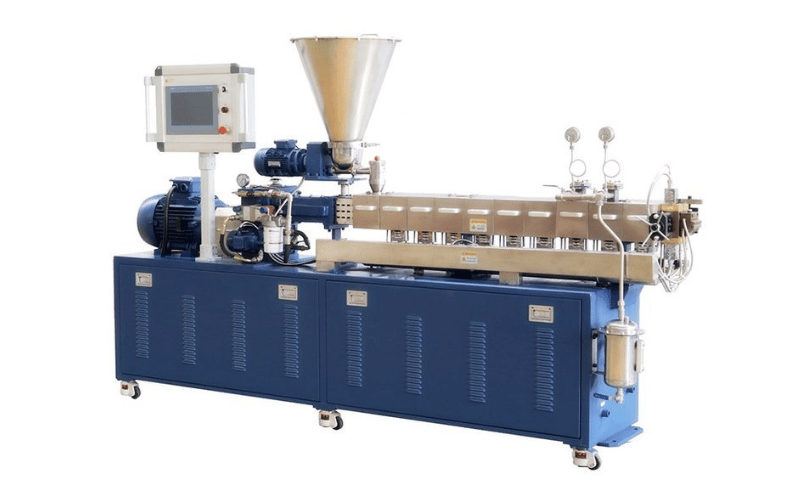
Types of Plastic Extrusion
Plastic extrusion is not a one-size-fits-all process. Each type of extrusion is tailored to specific applications, materials, and product requirements. By understanding the nuances of these processes, you can select the right approach for your production needs and achieve optimal results. Let’s explore the major types of plastic extrusion and their unique characteristics.
Profile Extrusion
Profile extrusion creates custom shapes with consistent cross-sections, making it indispensable for industries like construction and automotive.
Applications: Window frames, weatherstripping, decking, and automotive trim are typical examples of profile extrusion products. These shapes often require tight tolerances and high durability.
Expert Guidance: Work closely with die manufacturers to design dies that meet your specific profile requirements. Use materials with consistent melt flow rates to ensure uniformity along the entire length of the profile. For complex profiles, consider adding vacuum calibration systems to maintain precise dimensions during the cooling process.
Pipe and Tube Extrusion
Pipe and tube extrusion produces hollow products for both pressure and non-pressure applications.
Applications: Pressure pipes for water and gas distribution, non-pressure pipes for drainage, and medical tubing are all created using this process.
Expert Guidance: Select the right polymer for your application—HDPE for pressure pipes, PVC for drainage, or flexible TPU for medical tubing. Use a mandrel inside the die to form the hollow section, and adjust the cooling rates to prevent ovality or variations in wall thickness. For pressure applications, conduct regular burst tests to ensure the pipe meets strength requirements.
Sheet and Film Extrusion
Sheet and film extrusion produce flat products with varying thicknesses, used in packaging, construction, and industrial applications.
Blown Film
Blown film extrusion creates a tubular bubble that is inflated and cooled to form thin, flexible films.
Applications: Grocery bags, shrink wrap, and agricultural films rely on blown film extrusion for their strength and flexibility.
Expert Guidance: Control the bubble’s inflation ratio and cooling rate to achieve a balance of strength and clarity. Use air rings and internal bubble cooling systems to stabilize the bubble and prevent gauge variations. For multilayer films, coextrusion can add barrier properties or improve mechanical performance.
Cast Film
Cast film extrusion uses a flat die to produce films with excellent clarity and precise gauge control.
Applications: Food packaging, medical films, and laminates benefit from the uniformity and transparency of cast films.
Expert Guidance: Utilize chill rolls to cool the film and achieve a smooth surface finish rapidly. Monitor the lip gaps and adjust them to maintain consistent thickness. For high-clarity applications, ensure the polymer is free of contaminants and gels.
Coextrusion
Coextrusion combines multiple layers of different polymers into a single structure, offering enhanced properties.
Applications: Barrier films for food packaging, multilayer sheets for automotive interiors, and medical films with functional layers.
Expert Guidance: Match the melt viscosities of the polymers to ensure even layer distribution. Use feedblocks or multimanifold dies to control layer thicknesses precisely. Regularly inspect the interface between layers to prevent delamination.
Specialty Processes
Beyond standard extrusion types, specialty processes expand the capabilities of plastic extrusion to meet unique demands.
- Foam Extrusion: Produces lightweight, insulating materials for packaging and construction. Use chemical or physical blowing agents to create a uniform cell structure.
- Wire Coating: Encases electrical wires in a protective polymer layer. Maintain precise temperature control to ensure adhesion without damaging the wire.
- Pelletizing: Converts molten polymer into uniform pellets for easy handling and transport. Use underwater or strand pelletizing systems based on the material and throughput requirements.
By selecting the correct type of extrusion for your application and fine-tuning the process parameters, you can achieve consistent, high-quality results. Each type of extrusion offers unique advantages, and understanding these differences allows you to maximize efficiency and product performance.
Recycled Plastic Extruder Parameters
| Model | Screw Diameter (mm) | L/D | Screw RPM | Main motor KW | Torque Grade T/N3 | Capacity kg/h |
|---|---|---|---|---|---|---|
| SHJ-20 | 21.7 | 32-68 | 400/500/600 | 4 | 5.8 | 0.5-15 |
| SHJ-30 | 30 | 32-68 | 400/500/600 | 11 | 5.8 | 5-50 |
| SHJ-36 | 35.6 | 32-68 | 500/600/700/800 | 15-18.5-22 | 5.7 | 20-80 |
| SHJ-42 | 41.2 | 32-68 | 500/600/700/800 | 22-30-37 | 5.7 | 50-120 |
| SHJ-50 | 50.5 | 32-68 | 500/600/700/800 | 37-45-55 | 5.8 | 80-200 |
| SHJ-63 | 62.4 | 32-68 | 500/600/700/800 | 55-75-90 | 5.8 | 150-350 |
| SHJ-72 | 71 | 32-68 | 500/600/700/800 | 90-110-132-160 | 5.7 | 300-600 |
| SHJ-85 | 82 | 32-68 | 500/600 | 160-200 | 5.7 | 600-1000 |
| SHJ-92 | 91 | 32-68 | 500-600 | 250 | 5.8 | 840-1600 |
| SHJ-135 | 133 | 32-68 | 650-750 | 400-500 | 5.8 | 1950-3250 |
Materials and Additives
The choice of materials and additives in plastic extrusion directly impacts product performance, durability, and appearance. Selecting the right combination requires a deep understanding of polymer properties and how additives interact with the extrusion process. Let’s explore the most commonly used resins and additives, along with their specific roles in extrusion applications.
Common Resins
Each resin type brings unique properties to the table, making it essential to match the material to the application’s requirements.
Commodity Resins
Commodity resins are widely used for general-purpose applications due to their cost-effectiveness and versatility.
- Polyethylene (PE): PE is a versatile material used in extrusion for various applications, including films, pipes, and profiles. High-density polyethylene (HDPE) offers excellent strength and chemical resistance, while low-density polyethylene (LDPE) provides flexibility and clarity for films.
- Polypropylene (PP) is ideal for applications that require stiffness and heat resistance, such as automotive components and packaging films. Use nucleating agents to improve clarity and reduce cycle times in PP extrusion.
- Polyvinyl Chloride (PVC): PVC is a go-to material for pipes, window profiles, and medical tubing. Rigid PVC offers strength and durability, while flexible PVC, with added plasticizers, provides elasticity for hoses and cables.
Engineering Resins
Engineering resins deliver enhanced mechanical and thermal properties, making them suitable for demanding applications.
- Acrylonitrile Butadiene Styrene (ABS): ABS combines toughness, impact resistance, and ease of processing, making it a favorite for automotive trim and consumer goods. Use vented barrels in twin screw extruders to remove volatiles during ABS processing.
- Polycarbonate (PC): PC offers exceptional clarity and impact resistance, often used in optical films and protective sheets. Maintain tight temperature control to prevent degradation during extrusion.
- Polyamide (PA), commonly known as nylon, offers excellent strength, wear resistance, and chemical resistance. Pre-dry PA to prevent moisture-related defects, such as bubbles or voids.
Specialty Resins
Specialty resins cater to niche applications that require unique properties, such as flexibility, biocompatibility, or high-temperature resistance.
- Thermoplastic Polyurethane (TPU): TPU is highly elastic and abrasion-resistant, making it ideal for medical tubing and footwear components. Use low screw speeds to prevent overheating during the extrusion process.
- Thermoplastic Elastomers (TPE): TPE combines the elasticity of rubber with the processability of plastics, making it suitable for use in seals, grips, and overmolded parts. Optimize cooling rates to maintain surface finish and dimensional stability.
- Polyether Ether Ketone (PEEK): PEEK is a high-performance resin with exceptional thermal and chemical resistance, used in aerospace and medical implants. Utilize high-temperature extruders and precision dies to handle PEEK effectively.
Additives
Additives enhance the performance, appearance, and processability of resins, allowing you to tailor materials to specific applications.
Functional Additives
Functional additives improve the durability and stability of extruded products.
- Stabilizers: Heat stabilizers protect materials, such as PVC, from thermal degradation during processing. Use calcium-zinc or tin-based stabilizers for medical and food-grade applications.
- UV Absorbers: UV absorbers extend the lifespan of outdoor products by protecting them from degradation caused by sunlight exposure. Incorporate them into films, pipes, and profiles used in construction or agriculture.
- Plasticizers: Plasticizers enhance the flexibility and reduce the brittleness of materials like PVC. Select phthalate-free options for applications that require compliance with health and safety regulations.
- Fillers: Fillers like calcium carbonate or talc reduce material costs and improve stiffness. Utilize coupling agents to improve filler dispersion and adhesion within the polymer matrix.
Aesthetic and Processing Additives
These additives enhance the appearance and processing ease of extruded products.
- Colorants: Masterbatches or liquid colorants provide consistent coloration. Use color-matching services to achieve precise shades for branding or aesthetic purposes.
- Processing Aids: Processing aids reduce friction and improve flow during extrusion. Fluoropolymer-based aids are particularly effective for high-viscosity resins like PVC or TPE.
By carefully selecting resins and additives, you can optimize the extrusion process to meet specific performance and aesthetic goals. Each material and additive choice should align with the application’s requirements, ensuring the final product delivers both quality and functionality.
Advantages of Plastic Extrusion
Plastic extrusion stands out as a manufacturing process that combines efficiency, versatility, and cost-effectiveness. Its ability to produce high-quality, continuous products makes it a cornerstone of modern production. Let’s explore the key advantages that make plastic extrusion a vital process across various industries.
High-Volume Production with Consistent Quality
Plastic extrusion excels in high-volume production environments, consistently delivering high-quality products across extended production runs.
Expert Insight: The continuous nature of extrusion ensures uniformity in product dimensions and properties, even for extended runs. By maintaining precise control over process parameters—such as temperature, pressure, and screw speed—you can achieve repeatable results with minimal variation. For example, in pipe extrusion, consistent wall thickness and diameter are critical, and extrusion delivers this reliability.
Versatility in Shapes, Materials, and Applications
Few manufacturing processes can match the versatility of plastic extrusion. It accommodates a wide range of shapes, materials, and end-use applications.
Expert Insight: Whether you’re producing simple tubes or complex profiles, extrusion adapts to your needs. Custom dies enable intricate cross-sectional shapes, while the process accommodates a wide range of materials, from commodity resins such as PE and PP to high-performance polymers like PEEK. This versatility makes extrusion suitable for industries as diverse as construction, automotive, medical, and packaging. For instance, extruded profiles can serve as window frames in construction or as seals in automotive applications.
Cost-Effective for Continuous Manufacturing
Extrusion’s efficiency makes it one of the most cost-effective methods for producing continuous products.
Expert Insight: By minimizing material waste and maximizing throughput, extrusion keeps production costs low. The process also allows for in-line operations, such as cooling, cutting, and coiling, which reduce the need for additional handling or secondary processes. For example, in film extrusion, the material can be wound directly onto rolls, ready for shipment or further processing. Additionally, using regrind or recycled materials in the extrusion process can further reduce costs without compromising quality.
Customizable for Specific Needs
Plastic extrusion offers unparalleled customization, enabling manufacturers to tailor products to specific requirements.
Expert Insight: Customization begins with the die design, which determines the product’s shape and dimensions. Additionally, you can modify material formulations with additives to enhance properties such as UV resistance, flexibility, or strength. For example, coextrusion enables the combination of multiple layers of different materials, resulting in products with unique performance characteristics, such as barrier films for food packaging. Adjusting process parameters, such as cooling rates or haul-off speeds, further fine-tunes the final product to meet exact specifications.
By leveraging these advantages, plastic extrusion provides a reliable, efficient, and versatile solution for a wide range of manufacturing challenges. Whether you’re scaling up production, exploring new materials, or developing custom products, extrusion delivers the tools and flexibility needed to succeed.
Common Challenges and Solutions
Even with the precision and efficiency of plastic extrusion, challenges can arise that impact product quality and process stability. Identifying the root causes and implementing targeted solutions can help you maintain consistent output and minimize downtime. Below, I’ll address some of the most common challenges and provide actionable solutions to overcome them.
Surface Defects
Surface defects, such as roughness, streaks, or bubbles, can compromise the appearance and functionality of extruded products. These issues often stem from contaminants or improper melt temperature.
Causes:
- Contaminants in the raw material or melt stream.
- Melt temperature that is too high or too low, leading to degradation or incomplete melting.
Solutions:
- Use Proper Filtration: Install melt filters or screen changers to remove contaminants before they reach the die. Regularly inspect and replace filter screens to maintain optimal flow.
- Optimize Temperature Profiles: Adjust barrel and die zone temperatures to match the polymer’s processing window. Use thermal imaging tools to identify and correct hot or cold spots along the extruder. For heat-sensitive materials, consider using vented barrels to remove volatiles that can cause surface defects.
Dimensional Issues
Dimensional inconsistencies, such as variations in wall thickness or cross-sectional shape, can lead to product rejection or performance issues. These problems often originate from die design or cooling inconsistencies.
Causes:
- Poorly designed or worn dies that fail to maintain uniform flow.
- Uneven cooling, which causes warping or shrinkage.
Solutions:
- Adjust Die Design: Work with a die manufacturer to optimize flow channels and ensure uniform material distribution. Inspect dies regularly for wear or damage, and resurface or replace them as needed.
- Refine Cooling Methods: Use water baths, air cooling, or vacuum calibration systems to achieve consistent cooling. Monitor water temperature and flow rate to prevent localized cooling variations. For large profiles, consider using segmented cooling zones to maintain uniform temperature distribution.
Material Challenges
Material-related issues, such as moisture or improper resin selection, can lead to defects like bubbles, voids, or poor mechanical properties.
Causes:
- Moisture in hygroscopic resins, such as nylon or PET.
- Using a resin that is not suited for the application or process conditions.
Solutions:
- Dry Resin Thoroughly: Use desiccant dryers to reduce moisture content to acceptable levels before extrusion. Monitor moisture levels with a moisture analyzer to ensure consistency.
- Match Resin to Application: Select resins with properties that align with the product’s requirements, such as flexibility, strength, or chemical resistance. For example, use HDPE for pressure pipes or TPU for flexible tubing. Consult with material suppliers to identify the best resin for your specific application.
By addressing these common challenges with targeted solutions, you can enhance the efficiency and reliability of your extrusion process. Each adjustment, whether it’s optimizing temperature profiles or refining die design, contributes to producing high-quality, consistent products that meet the demands of your application.
Practical Applications
Plastic extrusion’s versatility makes it a cornerstone of countless industries, delivering products that meet specific performance and design requirements. From construction to consumer goods, the process adapts to a wide range of applications, each with its own unique demands. Let’s explore how extrusion plays a critical role in these key sectors.
Construction
The construction industry relies heavily on extruded products for their durability, precision, and cost-effectiveness.
Applications:
- Window Profiles: Extruded PVC profiles form the backbone of modern window systems, offering weather resistance and thermal insulation. Utilize coextrusion to incorporate UV-resistant outer layers, enhancing longevity.
- Pipes: HDPE and PVC pipes are the primary materials used in water distribution, drainage, and gas transport systems. Optimize wall thickness and diameter during extrusion to meet pressure requirements and regulatory standards.
- Decking: Wood-plastic composite (WPC) decking combines the aesthetics of wood with the durability of plastic. Use twin screw extruders to ensure uniform mixing of wood fibers and polymer for consistent quality.
Packaging
Packaging demands lightweight, flexible, and durable materials, all of which extrusion delivers with precision.
Applications:
- Films: Blown and cast films are used for food packaging, shrink wrap, and agricultural covers. Incorporate barrier layers through coextrusion to enhance shelf life and product protection.
- Bags: LDPE and HDPE bags, from grocery sacks to industrial liners, are extruded for strength and flexibility. Adjust cooling rates to achieve the desired clarity and toughness.
- Liners: Extruded liners for drums and containers provide chemical resistance and leak prevention. Utilize specialty resins, such as LLDPE, for enhanced puncture resistance.
Medical
The medical industry depends on extruded products for their precision, biocompatibility, and reliability.
Applications:
- Tubing: Medical tubing for IV lines, catheters, and oxygen delivery systems requires tight tolerances and consistent wall thickness. Use TPU or silicone for flexibility and biocompatibility.
- Catheter Jackets: Extruded jackets protect catheters from wear and provide a smooth surface for insertion. Incorporate additives, such as radiopaque fillers, for improved visibility under imaging.
Automotive
Extrusion supports the automotive industry by producing components that enhance performance, durability, and aesthetics.
Applications:
- Trim: Extruded profiles for door and window trim provide a sleek finish and weather resistance. Use TPE or PVC for flexibility and durability.
- Seals: Automotive seals, such as those for doors and hoods, rely on coextruded profiles with multiple material layers for optimal sealing performance.
- Ducts: Air ducts for HVAC systems in vehicles are typically extruded from lightweight, heat-resistant materials such as PP or PA. Optimize die design to ensure smooth airflow and consistent dimensions.
Consumer Goods
Extrusion plays a vital role in creating everyday products that combine functionality and design.
Applications:
- Sheets: Extruded sheets are used in furniture, signage, and protective barriers. Use PC or acrylic for high clarity and impact resistance.
- Profiles: Custom profiles for furniture edging, curtain rods, and shelving systems are extruded for precision and durability.
- Lawn Products: Garden hoses, edging, and irrigation tubing are extruded from flexible materials like PVC or PE. Incorporate UV stabilizers to extend product life in outdoor environments.
By tailoring the extrusion process to the specific needs of each application, manufacturers can deliver high-quality products that meet industry standards and customer expectations. Whether it’s a medical catheter or a construction pipe, extrusion provides the precision and versatility needed to succeed in diverse markets.
FAQs About Plastic Extrusion
Q: What is Plastic Extrusion and how does it differ from molding?
A: Plastic extrusion is a continuous process where raw polymer material is melted and forced through a die to create products with consistent cross-sectional shapes, such as pipes, sheets, and profiles. Molding, on the other hand, involves shaping plastic into discrete parts by injecting, blowing, or forming it into a mold. Extrusion excels in high-volume, continuous production, while molding is better suited for individual, complex parts.
Q: Which plastics are best for profile extrusion?
A: PVC, HDPE, and PP are commonly used for profile extrusion due to their durability and ease of processing. For flexible profiles, TPE or TPU works well, while specialty applications may require materials like PEEK or polycarbonate for added strength or heat resistance.
Q: How does coextrusion create multilayer structures?
A: Coextrusion combines multiple polymers by feeding them through separate extruders and merging them in a single die. This process creates multilayer structures where each layer serves a specific function, such as providing strength, barrier properties, or flexibility. Proper melt viscosity matching between layers ensures uniform distribution and adhesion.
Q: What causes gels and black specks in the product?
A: Gels and black specks often result from degraded material, contamination, or improper temperature control. To prevent these defects, clean the extruder and die regularly, use high-quality raw materials, and monitor temperature profiles to avoid overheating.
Q: How do I choose between blown film and cast film?
A: Choose blown film for applications requiring strength and balanced properties, such as grocery bags or shrink wrap. Opt for cast film when clarity, precise gauge control, and smooth surfaces are critical, such as in food packaging or medical films.
Q: What is the role of a melt pump in gauge control?
A: A melt pump stabilizes the flow of molten polymer, ensuring consistent pressure and output. This control minimizes gauge variations, improving product uniformity and reducing material waste.
Q: How much regrind can be used without quality loss?
A: The amount of regrind depends on the material and application. For most resins, 10-20% regrind can be used without noticeable quality loss. Ensure the regrind is clean, dry, and free of contaminants to maintain product integrity.
Q: What parameters control pipe ovality and wall thickness?
A: Die design, cooling rate, and haul-off speed are critical for controlling pipe ovality and wall thickness. Adjust these parameters to ensure uniform material distribution and prevent deformation during cooling.
Q: How does moisture affect PET or nylon extrusion?
A: Moisture in PET or nylon causes hydrolysis during extrusion, leading to reduced molecular weight and poor mechanical properties. Pre-dry these materials using a desiccant dryer to maintain quality and prevent defects like bubbles or voids.
Q: What safety practices apply to high-temperature resins?
A: When working with high-temperature resins like PEEK or polycarbonate, wear heat-resistant gloves and face shields to protect against burns. Ensure proper ventilation to avoid inhaling fumes, and regularly inspect equipment for signs of wear or overheating.
Q: How can I improve line speed without defects?
A: To increase line speed, optimize cooling systems, adjust haul-off speeds, and ensure the die and extruder are operating at peak efficiency. Use processing aids to improve material flow and reduce friction, minimizing the risk of defects.
Q: What certifications matter for food contact films?
A: Look for certifications like FDA compliance, EU Regulation 10/2011, and NSF standards for food contact films. These certifications ensure the materials and processes meet safety and hygiene requirements for food packaging applications.
Conclusion
Plastic extrusion remains a cornerstone of modern manufacturing, driving efficiency and precision across industries. Its versatility allows for the creation of a wide range of products, from medical tubing to construction profiles, meeting diverse application needs. By exploring the possibilities of extrusion, manufacturers can unlock innovative product designs and push the boundaries of what’s achievable in today’s competitive markets.


 English
  Portuguese
  Spanish
  Korean
  Russian
  German