


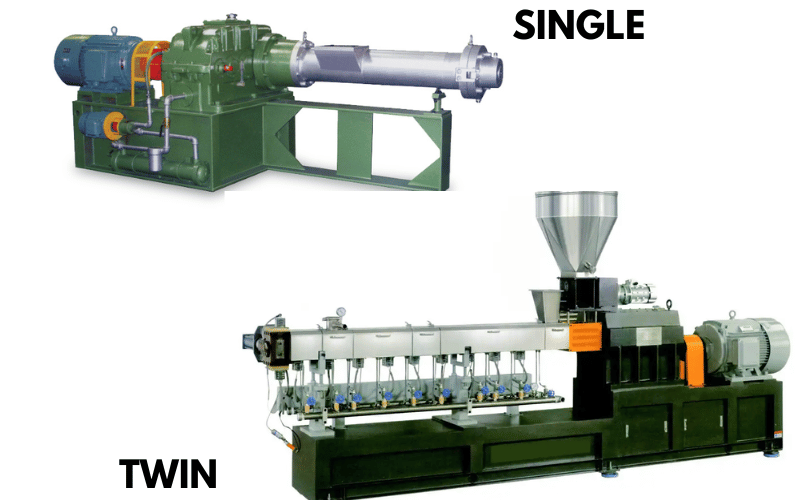
Plastic extrusion plays a vital role in modern manufacturing, shaping a wide range of materials, including packaging and automotive components. This process transforms raw polymers into continuous profiles, sheets, or films, making it a cornerstone of industries that demand precision and efficiency. However, not all extruders are created equal, and selecting the right system can have a significant impact on production costs, operational efficiency, and product quality.
Choosing between single screw and twin screw extruders often feels like navigating a maze of technical specifications and performance metrics. Single screw extruders excel in straightforward applications like melting and shaping polymers, offering simplicity and cost-effectiveness. On the other hand, twin screw extruders bring versatility and precision to complex tasks like compounding, mixing, and devolatilization. Understanding these fundamental differences is crucial for aligning your equipment with your production goals.
This guide explores the practical considerations of each system, enabling you to make an informed decision that balances efficiency, cost, and quality. Whether you’re scaling up production or optimizing an existing line, the right extruder can make all the difference.
Single Screw Extruders: Simplicity and Efficiency
Single screw extruders are the backbone of many manufacturing operations, offering a straightforward yet effective solution for polymer processing. Their design prioritizes simplicity and reliability, making them a go-to choice for high-volume production. Let’s explore their mechanism, performance, applications, and the trade-offs they present.
Mechanism and Design
At the heart of a single screw extruder lies its uncomplicated yet efficient configuration. The system consists of a barrel housing a rotating screw, divided into distinct zones: feed, compression, and metering. Each zone plays a specific role in material processing. The feed zone introduces raw material, the compression zone melts and homogenizes it, and the metering zone ensures consistent flow to the die.
The screw relies on friction and viscous drag to convey and melt the material. As the screw rotates, it generates heat through shear and transfers it to the polymer, gradually transforming solid pellets into a molten state. This simplicity in operation makes single screw extruders highly dependable for straightforward tasks.
Performance Characteristics
Single screw extruders excel in high-throughput applications where minimal material handling or mixing is required. They efficiently process thermoplastics, delivering consistent results for tasks like melting and shaping. However, their capabilities are limited when it comes to complex mixing or handling materials with varying properties.
For example, single screw extruders struggle with powders, low-density materials, or formulations requiring precise dispersion. Their reliance on friction and drag means they lack the versatility needed for advanced compounding or devolatilization tasks.
Applications
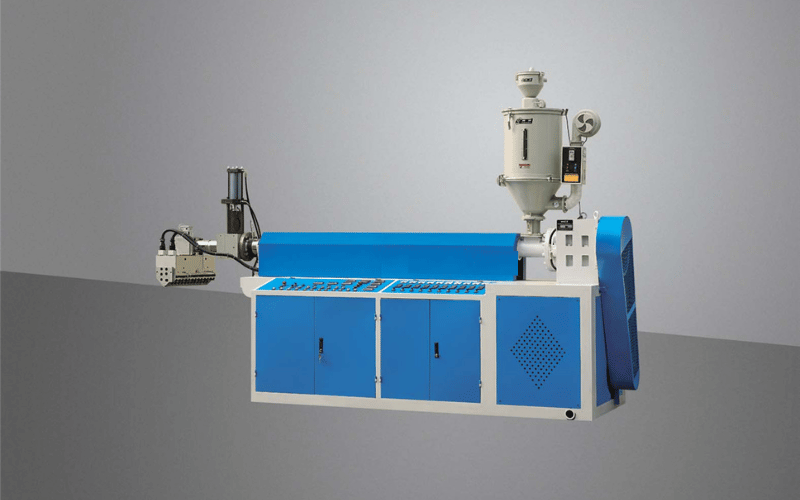
Single screw extruders shine in high-volume production environments. They are ideal for manufacturing pipes, sheets, and profiles, where the focus is on shaping rather than complex material transformations. Thermoplastics like HDPE, LDPE, and PVC are their bread and butter, as these materials melt and flow predictably under the extruder’s straightforward mechanism.
For instance, in the production of PVC pipes, single screw extruders deliver consistent throughput and dimensional accuracy, making them a reliable choice for manufacturers prioritizing efficiency.
Advantages and Limitations
Advantages:
Single screw extruders offer several benefits that make them a popular choice for many operations. Their low cost and robust design ensure long-term reliability with minimal maintenance. Operators appreciate the straightforward setup and ease of use, which reduces downtime and simplifies training.
Limitations:
Despite their strengths, single screw extruders come with notable limitations. Their poor mixing capabilities make them unsuitable for applications requiring precise dispersion or blending. They also struggle with materials like powders or low-density polymers, which can lead to inconsistent feeding and processing. Additionally, their lack of flexibility limits their use in advanced or multi-functional processes.
By understanding the strengths and weaknesses of single screw extruders, manufacturers can align their capabilities with specific production needs. While they may not handle complex tasks, their simplicity and efficiency make them indispensable for straightforward, high-volume applications.
Twin Screw Extruders: Versatility and Precision
Twin screw extruders are the multitaskers of the extrusion world, designed to handle complex processes with precision and adaptability. Their advanced mechanism and modular design make them indispensable for applications requiring superior mixing, feeding control, and material transformation. Let’s break down their design, performance, applications, and the trade-offs they bring.
Mechanism and Design
At the core of a twin screw extruder are two parallel screws, which can operate in either a co-rotating or counter-rotating configuration. Co-rotating screws rotate in the same direction, creating a self-wiping action that prevents material buildup and ensures consistent mixing. Counter-rotating screws, on the other hand, excel in applications requiring high-pressure buildup, such as PVC processing.
The modular design of twin screw extruders sets them apart. Each section of the screw and barrel can be customized to meet specific processing needs. For example, you can configure the screw elements to optimize mixing, kneading, or conveying, depending on the material and application. This flexibility allows operators to fine-tune the extruder for a wide range of tasks, from compounding to reactive extrusion.
Performance Characteristics
Twin screw extruders deliver unmatched performance in processes that demand precision and control. Their superior mixing capabilities ensure uniform dispersion of fillers, additives, and reinforcements, even in challenging formulations. The ability to control feeding rates and devolatilization makes them ideal for handling materials with volatile components or moisture content.
For example, in compounding reinforced polymers, twin screw extruders achieve consistent fiber distribution and matrix bonding, resulting in high-quality end products. Their adaptability also shines in reactive extrusion, where precise temperature and shear control are critical for chemical reactions to occur without degrading the material.
Applications
Twin screw extruders thrive in applications that require advanced material processing. They are the go-to choice for compounding reinforced polymers, masterbatches, and engineered plastics, where uniform mixing and dispersion are essential.
In reactive extrusion, twin screw extruders enable in-situ polymerization, crosslinking, or grafting, making them invaluable for producing specialty materials. They also excel in processing heat-sensitive materials, such as biodegradable polymers, where precise temperature control prevents degradation.
For instance, when producing masterbatches with high pigment loading, twin screw extruders ensure even dispersion without agglomeration, delivering consistent color and performance in the final product.

Advantages and Limitations
Advantages:
Twin screw extruders offer several key advantages that make them a preferred choice for complex processes. Their outstanding mixing capabilities ensure uniformity in even the most challenging formulations. Precise temperature control allows for the processing of heat-sensitive materials without compromising quality. The self-cleaning action of co-rotating screws reduces downtime during material changes, improving overall efficiency.
Limitations:
Despite their versatility, twin screw extruders come with certain trade-offs. Their high initial cost can be a barrier for smaller operations. Maintenance is more complex due to the intricate design and the need for precise alignment of the screws. Additionally, twin screw extruders consume more energy than their single screw counterparts, which can increase operational costs.
By understanding the capabilities and limitations of twin screw extruders, manufacturers can leverage their versatility and precision to tackle even the most demanding applications. Their ability to adapt to complex processes makes them an invaluable asset in modern manufacturing.
Key Differences: Single vs. Twin Screw Extruders
Choosing between single and twin screw extruders requires a clear understanding of how they differ in cost, performance, flexibility, and material handling. Each system has its strengths and trade-offs, and aligning these with your production needs ensures optimal efficiency and product quality. Let’s break down the key differences in detail.
Cost and Economics
Initial investment vs. operational costs
Single screw extruders are the more economical choice upfront, with a lower initial investment and simpler maintenance requirements. They are ideal for operations focused on straightforward tasks like melting and shaping thermoplastics. Twin screw extruders, while more expensive initially, offer long-term value for complex processes. Their ability to handle advanced applications like compounding and reactive extrusion justifies the higher cost for manufacturers requiring versatility.
Cost-effectiveness for simple vs. complex applications
For simple, high-volume production—such as pipes or sheets—single screw extruders deliver excellent cost-effectiveness. However, when dealing with formulations requiring precise mixing or devolatilization, twin screw extruders outperform by reducing material waste and improving product consistency, offsetting their higher operational costs.
Performance Metrics
Mixing efficiency, throughput rate, and temperature control
Single screw extruders excel in high-throughput applications where minimal mixing is required. They rely on friction and viscous drag, which limits their ability to achieve uniform dispersion in complex formulations. Twin screw extruders, on the other hand, deliver superior mixing efficiency through their intermeshing screw design, ensuring even distribution of fillers, additives, and reinforcements.
Temperature control is another area where twin screw extruders shine. Their segmented barrel design allows for precise temperature adjustments across different zones, making them ideal for heat-sensitive materials. Single screw extruders, while reliable, lack this level of control, which can lead to uneven heating in certain applications.
Feeding capabilities for different material types
Single screw extruders handle granules and pellets well but struggle with powders, low-density materials, or liquids due to inconsistent feeding. Twin screw extruders, with their controlled feeding zones and modular screw elements, excel in processing a wide range of materials, including powders, pastes, and even liquids. This versatility makes them indispensable for applications requiring precise material handling.
Flexibility
Modular design of twin screws vs. the simplicity of single screws
The modular design of twin screw extruders offers unmatched flexibility. Operators can configure screw elements to optimize mixing, kneading, or conveying for specific materials and processes. This adaptability allows manufacturers to switch between applications with minimal downtime.
Single screw extruders, while less flexible, benefit from their simplicity. Their straightforward design makes them easy to operate and maintain, which is advantageous for facilities focused on consistent, repetitive tasks.
Material Handling
Shear rate, material degradation, and suitability for powders or liquids
Twin screw extruders provide precise control over shear rates, reducing the risk of material degradation during processing. This makes them ideal for sensitive materials like biodegradable polymers or formulations requiring controlled shear. Single screw extruders, with their reliance on friction, can generate excessive shear, leading to degradation in some materials.
When it comes to handling powders or liquids, twin screw extruders outperform due to their ability to maintain consistent feeding and mixing. Single screw extruders often face challenges with these materials, resulting in uneven processing or blockages.
By understanding these key differences, manufacturers can align their choice of extruder with their specific production goals. Whether prioritizing cost, performance, or flexibility, selecting the right system ensures efficient and reliable operation tailored to your needs.
How to Choose the Right Extruder
Selecting the right extruder is a critical decision that directly impacts production efficiency, product quality, and operational costs. To make an informed choice, you need to evaluate key factors such as material properties, application requirements, production scale, and budget. Let’s break these down to help you align your extruder selection with your specific needs.
Material Properties
The properties of the material you’re processing should guide your extruder choice. Materials with high viscosity, such as heavily filled polymers, require robust mixing capabilities to ensure uniform dispersion. Twin screw extruders excel in these scenarios, offering precise control over shear and temperature to handle challenging formulations.
Thermal stability is another crucial factor. Heat-sensitive materials, like biodegradable polymers or certain engineered plastics, demand precise temperature control to prevent degradation. Twin screw extruders, with their segmented barrel design, allow for fine-tuned temperature adjustments across zones. For less sensitive materials, single screw extruders provide a cost-effective solution.
The material’s state—whether powder, pellet, or liquid—also plays a role. Powders and liquids often pose feeding challenges for single screw extruders, leading to inconsistent throughput. Twin screw extruders, with their controlled feeding zones and modular screw elements, handle these materials with ease, ensuring consistent processing.
Application Requirements
Your application’s complexity determines the type of extruder you need. For simple tasks like melting and pumping thermoplastics, single screw extruders offer a straightforward and economical solution. They perform well in high-volume production of pipes, sheets, and profiles where minimal mixing is required.
However, if your application involves complex mixing, compounding, or reactive extrusion, a twin screw extruder is the better choice. Its superior mixing capabilities ensure uniform dispersion of fillers, additives, and reinforcements, even in challenging formulations. For example, in masterbatch production, twin screw extruders achieve consistent color and performance by thoroughly dispersing pigments and additives.
Production Scale
Matching the extruder size to your production volume is essential for efficiency. Oversized extruders lead to wasted energy and higher operational costs, while undersized machines struggle to meet demand. For small-scale operations or pilot testing, consider compact extruders designed for lower throughput.
For large-scale production, evaluate the extruder’s output capacity and ensure it aligns with your volume requirements. Twin screw extruders, with their high adaptability, can handle a wide range of production scales, making them a versatile choice for growing operations.
Budget Considerations
Balancing performance needs with available capital is often the most challenging part of the decision-making process. Single screw extruders are more affordable upfront and have lower maintenance costs, making them ideal for operations with tight budgets and straightforward applications.
Twin screw extruders, while more expensive initially, offer long-term value for complex processes. Their ability to handle advanced applications, reduce material waste, and improve product consistency often offsets the higher investment. When evaluating your budget, consider not just the initial cost but also the operational savings and product quality improvements a twin screw extruder can deliver.
By carefully assessing these factors, you can choose an extruder that aligns with your material, application, production, and financial goals. The right extruder not only enhances efficiency but also ensures consistent, high-quality output tailored to your specific needs.
FAQs
Q: What are the cost differences between single and twin screw extruders?
A: Single screw extruders cost less upfront and have lower maintenance expenses, making them ideal for simple applications. Twin screw extruders require a higher initial investment due to their advanced design and modular components. However, they offer long-term value by improving efficiency, reducing material waste, and handling complex processes that single screw extruders cannot manage.
Q: Which extruder is better for processing bio-polymers?
A: Twin screw extruders are better suited for processing bio-polymers. Their precise temperature control prevents thermal degradation, and their superior mixing capabilities ensure uniform dispersion of additives or reinforcements. Single screw extruders may struggle with the heat sensitivity and mixing requirements of bio-polymers, leading to inconsistent results.
Q: Can a single screw extruder handle reactive extrusion?
A: Single screw extruders are not ideal for reactive extrusion. They lack the precise temperature control and mixing efficiency required for chemical reactions during processing. Twin screw extruders, with their modular design and ability to control shear and temperature, excel in reactive extrusion applications, ensuring consistent and high-quality results.
Q: What maintenance is required for twin screw extruders?
A: Twin screw extruders require regular maintenance to ensure optimal performance. Inspect and replace worn screw elements and barrel liners to prevent inefficiencies. Clean the screws and barrel thoroughly during material changes to avoid contamination. Calibrate sensors and check the gearbox oil levels periodically. Additionally, monitor key performance indicators like pressure, temperature, and power draw to identify potential issues early.
Conclusion
Single screw extruders offer simplicity, cost-effectiveness, and reliability for straightforward applications, while twin screw extruders provide unmatched versatility, superior mixing, and precise control for complex processes. Align your choice with your specific process needs and material characteristics to achieve optimal results. Consult industry experts to design tailored solutions that maximize efficiency and product quality.


 English
  Portuguese
  Spanish
  Korean
  Russian
  German